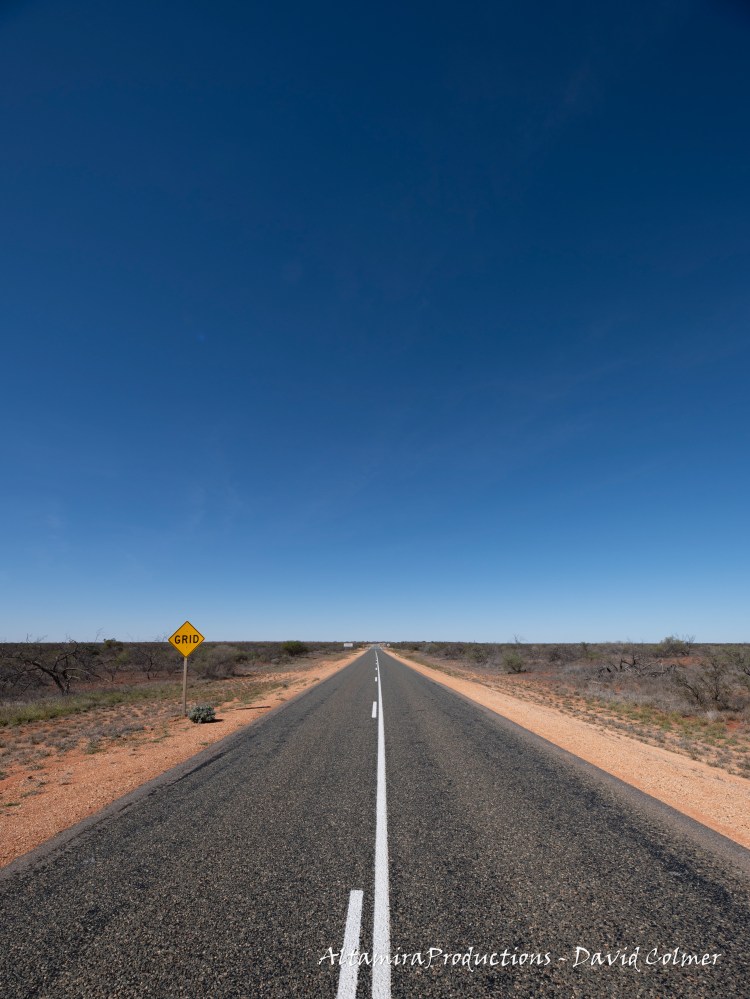
If the getting there summed up the stay then Carnarvon would be a nightmare for me. Fortunately, there is not direct causal impact.
After a week in Perth to celebrate birthdays with Ethan, Thali, Jenni, Georg and Jenna I was due to fly to Carnarvon on the Sunday. We took off but turned back around due to a problem pressurising the cabin. The plane was meant to be repaired and we would take off later but it was cancelled and we were all left stranded with no alternative flight available until Friday.
While we were waiting for the plane to be repaired I struck up conversation with the head of nursing at the hospital in Carnarvon. She had to be at work on Monday which was not going to happen now. When the plane was cancelled I suggested that we stay the night near the airport and hire a car the next day and do the 9 hour drive to Carnarvon, sharing the driving as we go.
So next morning we went back to the airport and hired the car. All was going really well until we made it to a town just outside Geraldton where we noticed that 1 of the tyres was flat. We did manage to get it fixed but took about 3 hours and put us well behind schedule. And what schedule meant was the need to be off the road before dusk otherwise the Kangaroos goats and cows crossing the road become a real issue. Anyway we managed to get to our destination without any more hiccups And so my time began in Western Australian coastal town.
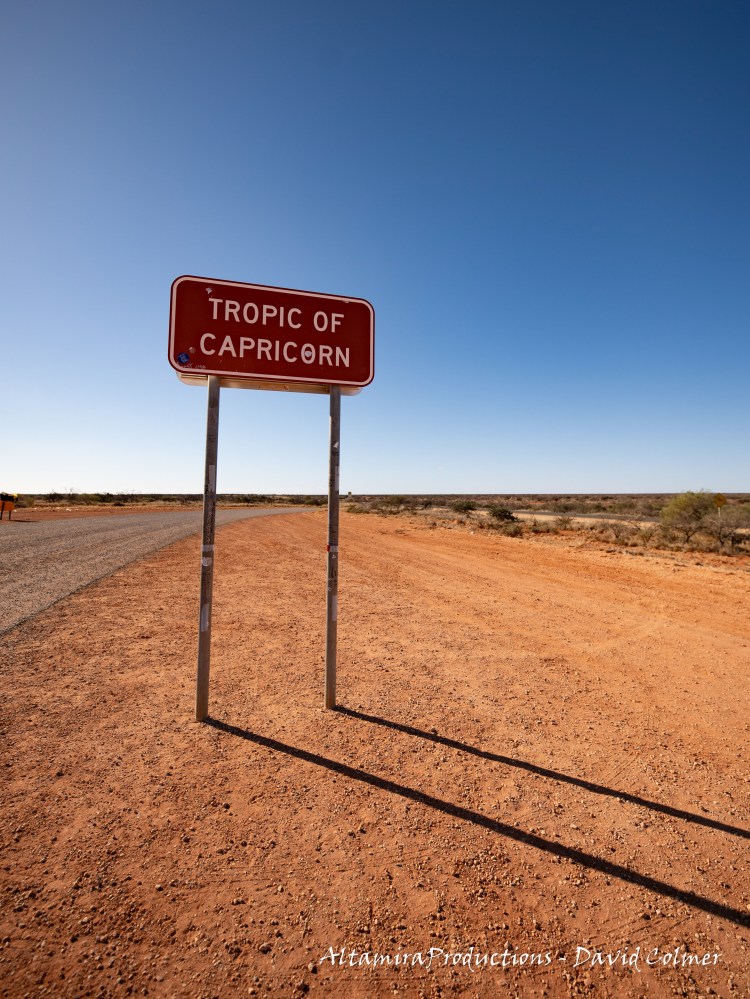
The 1 thing that really Obvious on the car journey north was the lack of rivers. We travelled for 9 hours and probably only crossed less than half a dozen rivers, most of which were bone dry. This part of Australia is really dry, really barren and very harsh. It is probably typified by the fact that the river that goes through I Carnarvon, called the Gascoyne, is what is referred to as an upside down river. On the surface it looks bone dry but underneath there is an aquifer of water running towards the coast. The local indigenous mob used to dig down and access the water enabling them to thrive in this area.
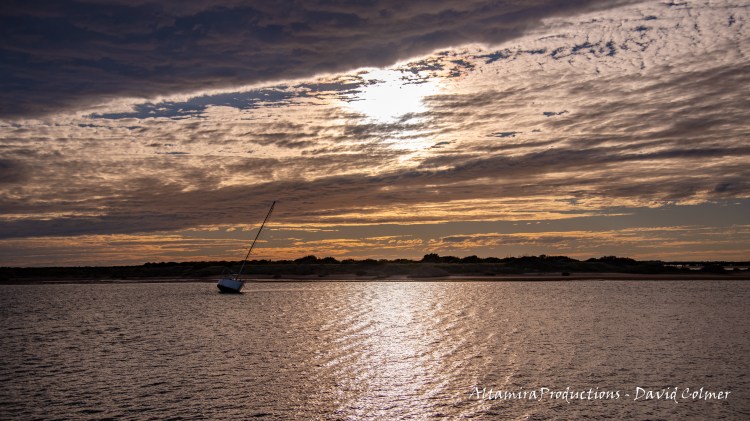
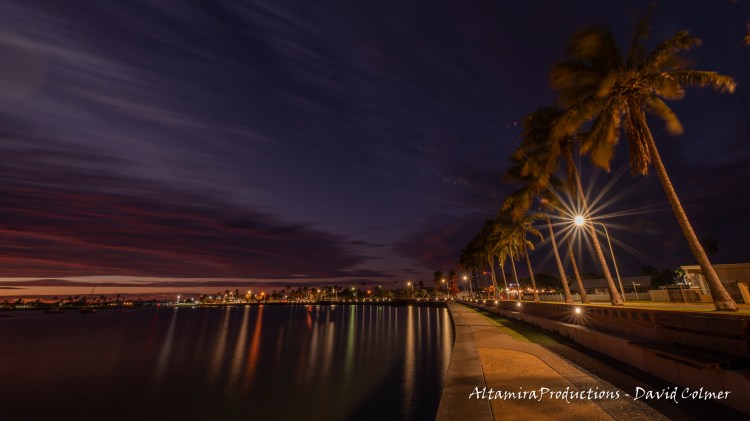
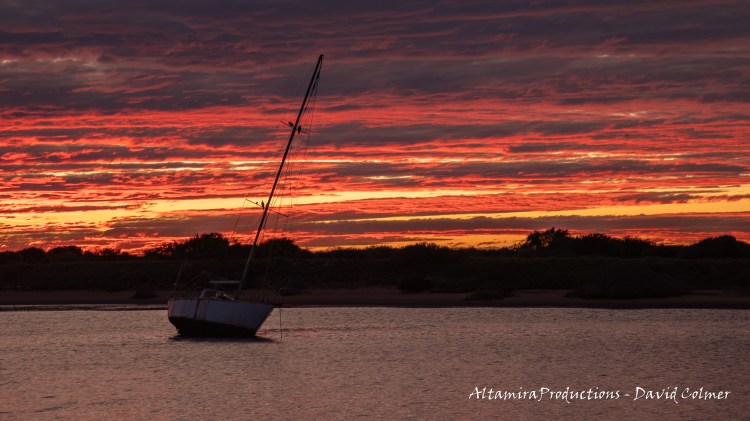
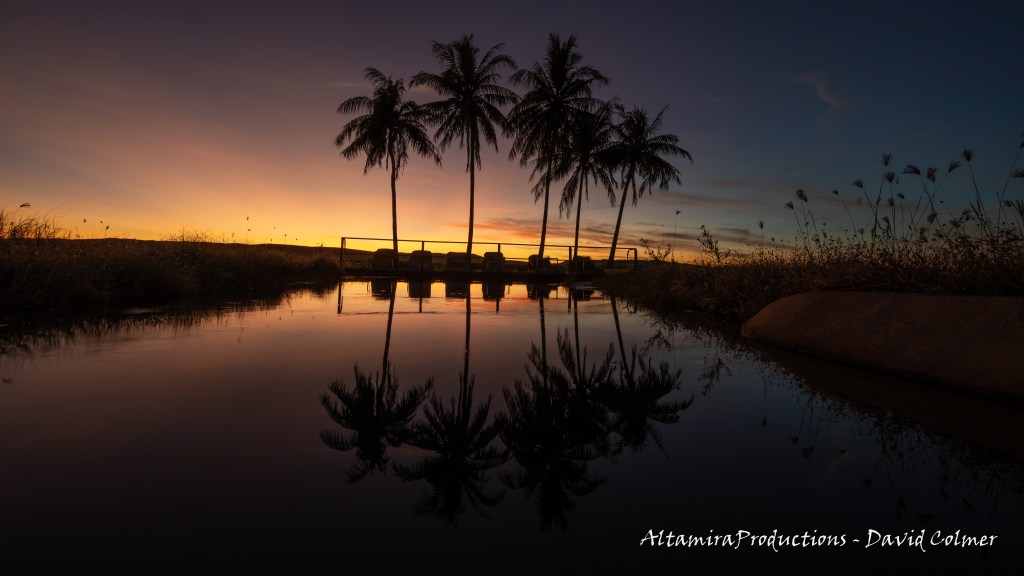
The major feature in Carnarvon is what is called the Fascine which is defined as reinforcements of a bank to allow for a firm path around a boggy patch. Well it is not quite that but what it was was a very nice waterway that I managed to look out over everyday. Apart from that there was not a lot happening in Carnarvon.
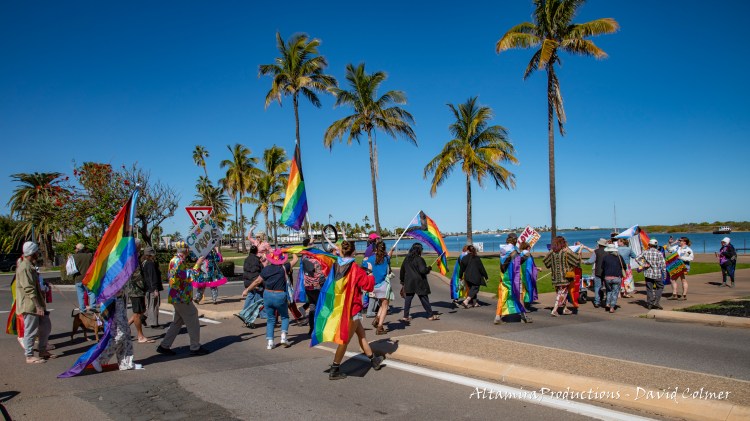
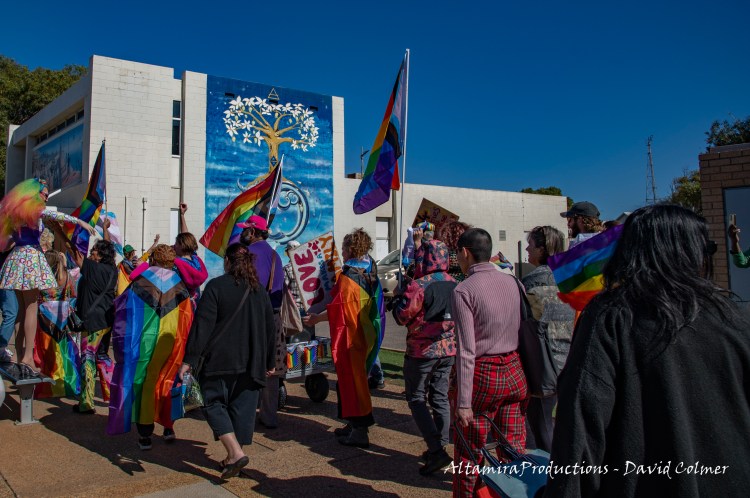
However, one thing that was on while we were there was the pride march affectionately known as Queernarvon. I didn’t march with them but I did hang out and take some photos. The community there was very strong despite the fewer numbers. To be Queer in the city is a challenge enough but to be queer in a small country town where everyone knows your business must be shockingly hard. So I was really quite moved by the closeness of this community and they support they have for each other. I can’t imagine what the other 364 days of the year are like.
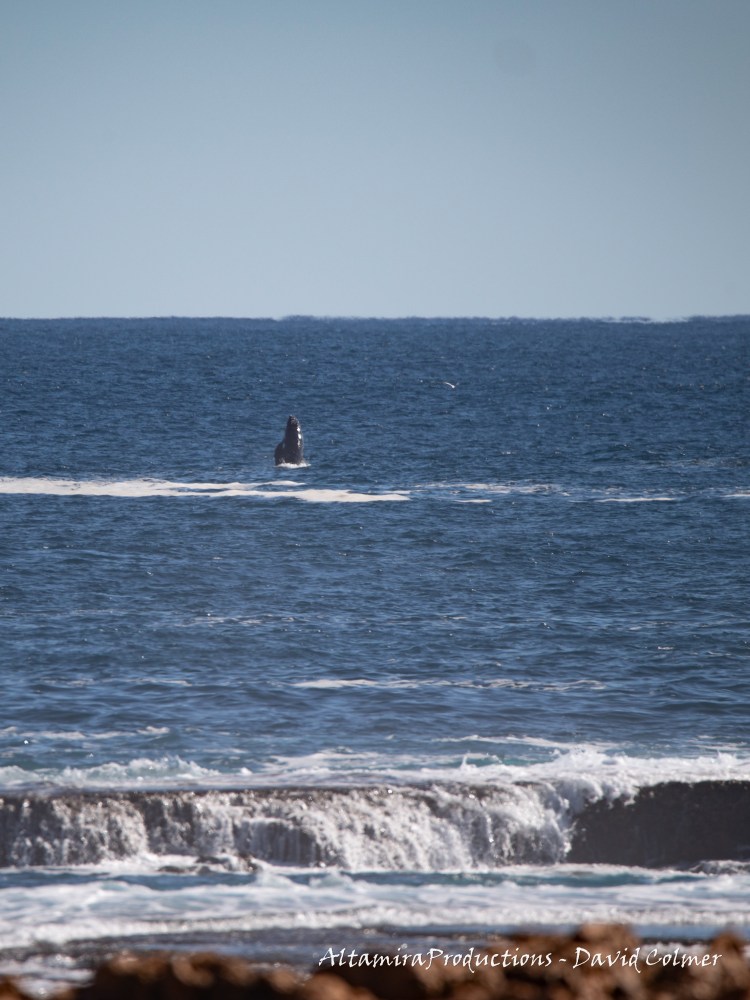
For a large stretch of the coast from north of Carnarvon all the way to Geraldton is the Ningaloo Reef. The home to an amazing array of fish both small and large as well as whales and the famous whale shark. OK it is not the Barrier Reef but on the snorkel I did I managed to see some pretty amazing things. I swear I don’t think I saw the same species of fish twice there were that many. The water is this amazing blue and then it butts up to a red, rocky, barren coast. Incredible contrast. A very special experience and one we really do need to protect. When I was snorkelling I was just mesmerised by this piece of creation that is invisible to us from the land but when you break that barrier and look below you see a myriad of life and beauty. If I can be philosophical for a moment I think people are like the reef. From the outside we only see a fraction of them. It is only when we dig deep and take a look inside someone that we realise what else is there.
Life is hard in small towns. But when you put that small town on the desert coast of the Indian Ocean then you get tough magnified. The people that live there want to be there. They have been born there so appreciate it from that perspective or they just have a thing for that kind of environment. Not my cuppa tea but an amazing place to visit.
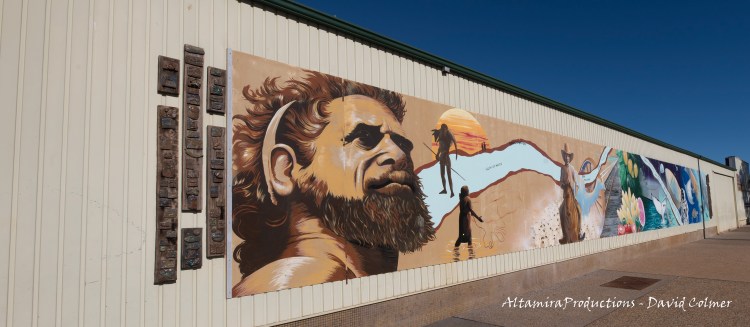
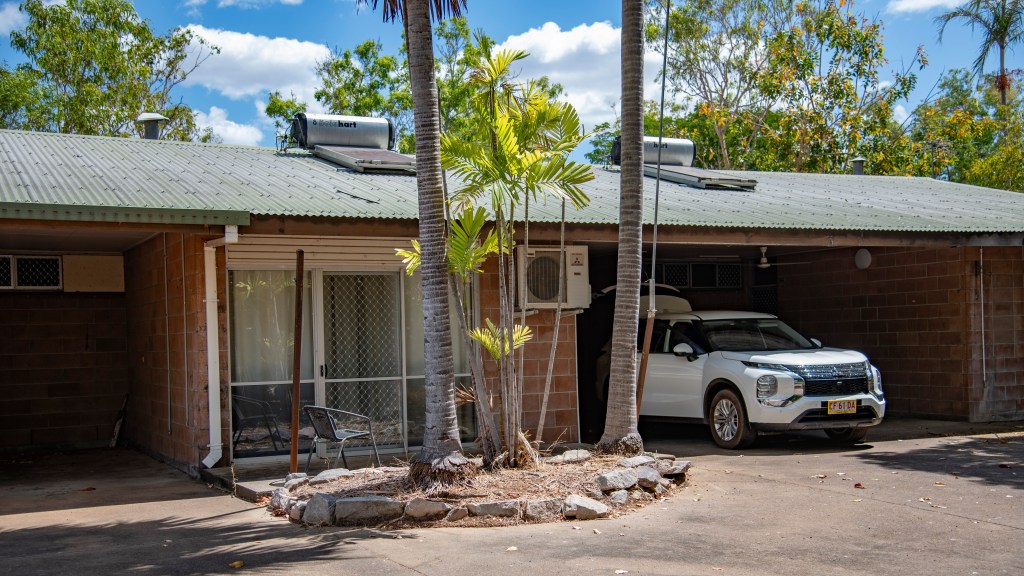
When I was a child in primary school I loved the comics of Jolliffe and his Outback Australia comic books. And it was in one of these books that I first heard of the Ord River Scheme in far north Western Australia and a love affair of this scheme developed (more of this later). So imagine my excitement when I discovered that I will be going to Kununurra, the town created by the scheme, for 4 weeks. Positioned not too far from the NT border and only 100km from the northern coast of WA Kununurra would easily be the remotest town I will have lived in up until now. Mind you, I had absolutely no idea what I would expect.
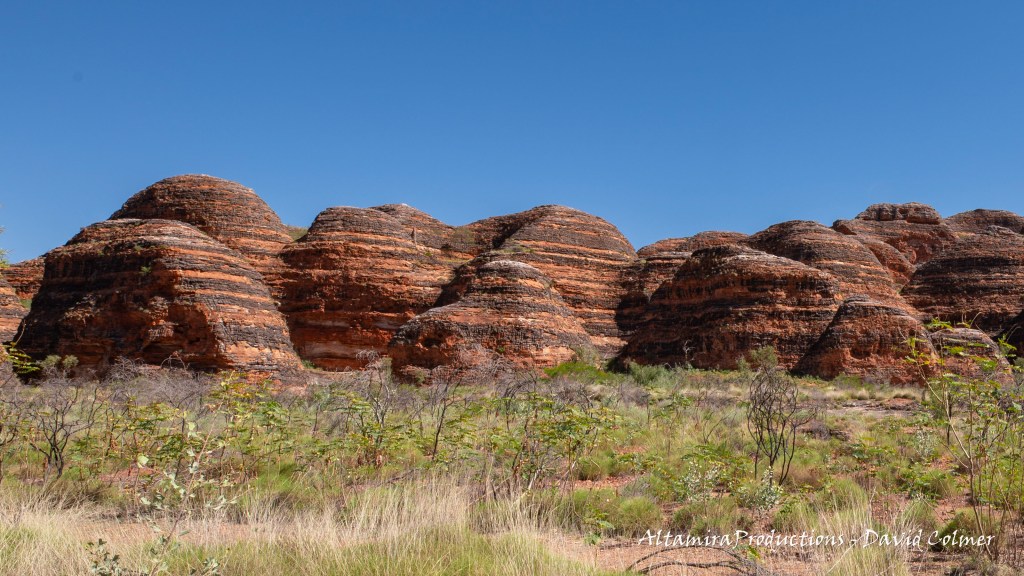
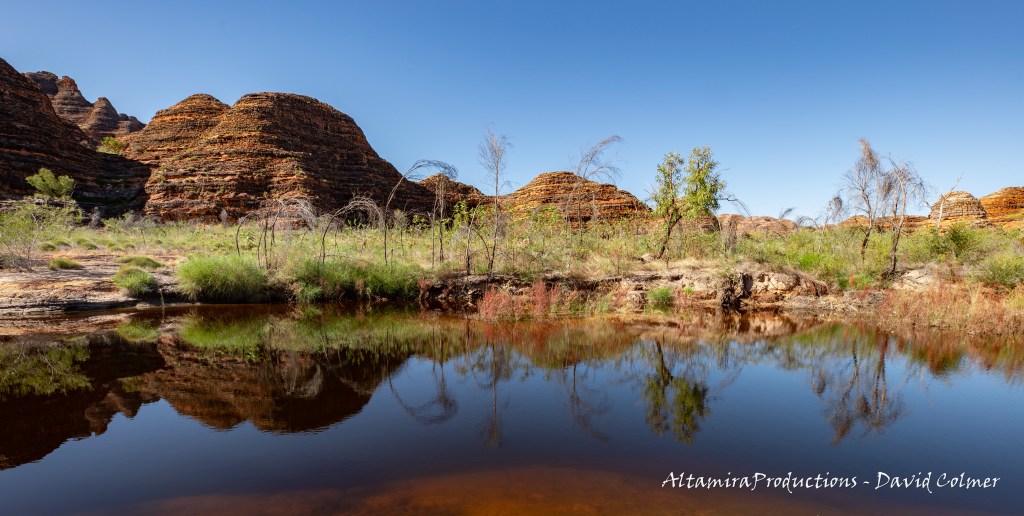
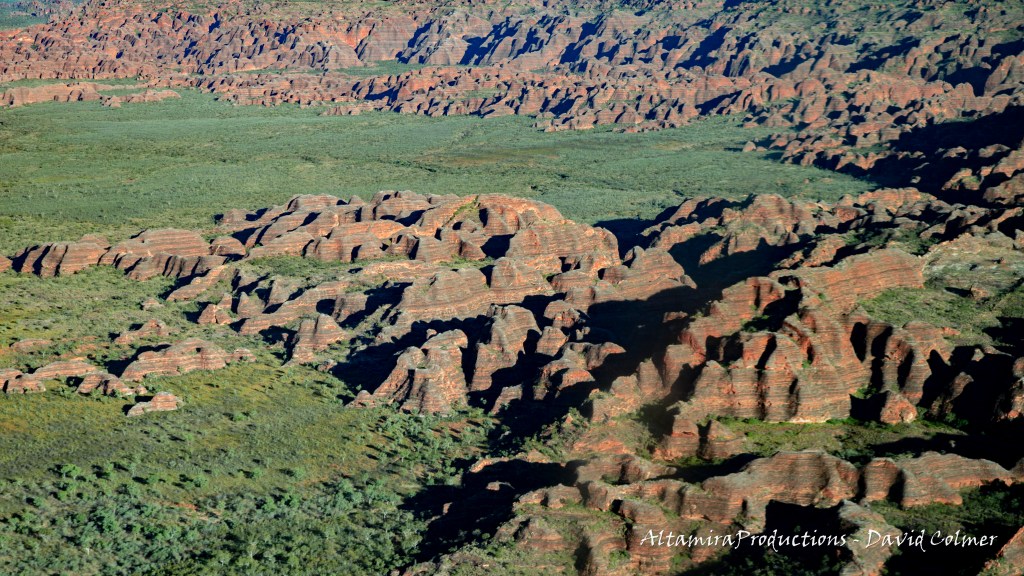
Apart from the Ord, the other exciting prospect was visiting the famous Bungle Bungles or, the more ancient name, Purnululu. The landscape here is very unique and extremely ancient. Billions of years ago there was a mountain range taller than the Himalayas which over time eroded and some of that sediment went into building the range that is now the Bungle Bungles.
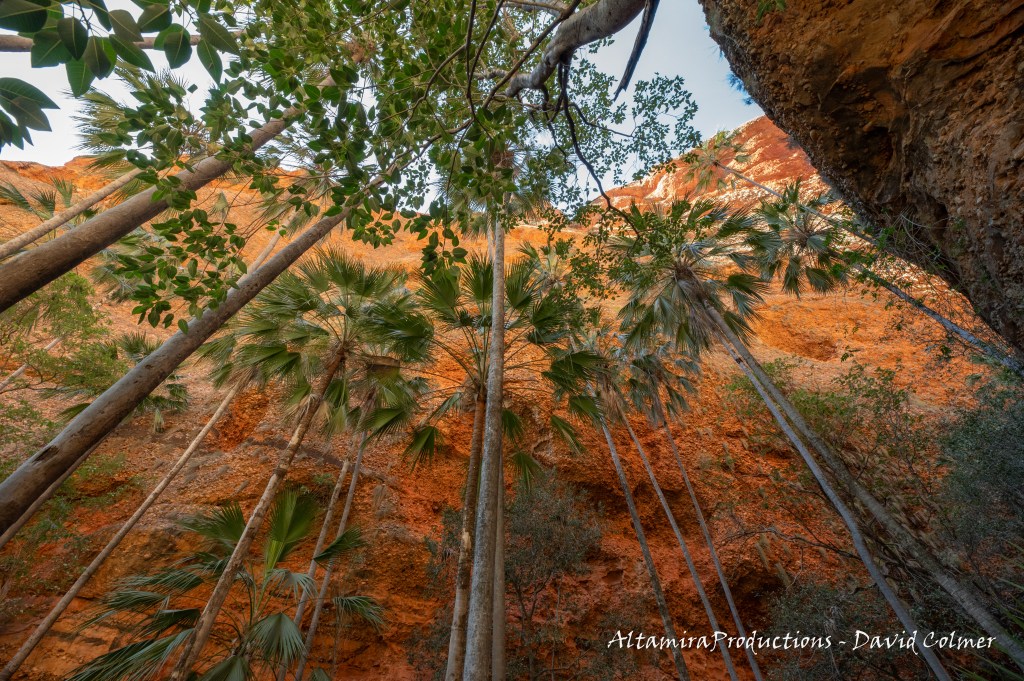
They are rounded domes of layered rock alternating between red caused by oxidisation and black created by ancient bacteria. And in between these mounds are chasms and gorges, impassable in the wet season but clear to walk up in the dry. And as you walk up them you come across 20 story high walls of rock with a waterhole at its base. No wonder the Gija and Jaru people consider these places very sacred indeed and I felt privileged to be able to walk through this land.
Whilst being on the ground seeing these natural structures was simply amazing flying over them gives over to a different kind of amazing. The vastness and maze like structure become apparent and the beauty is breathtaking. A small fortune was spent flying down there and taking a look around but it is one of those times when you just have to say “sod it, I’m only here once”.
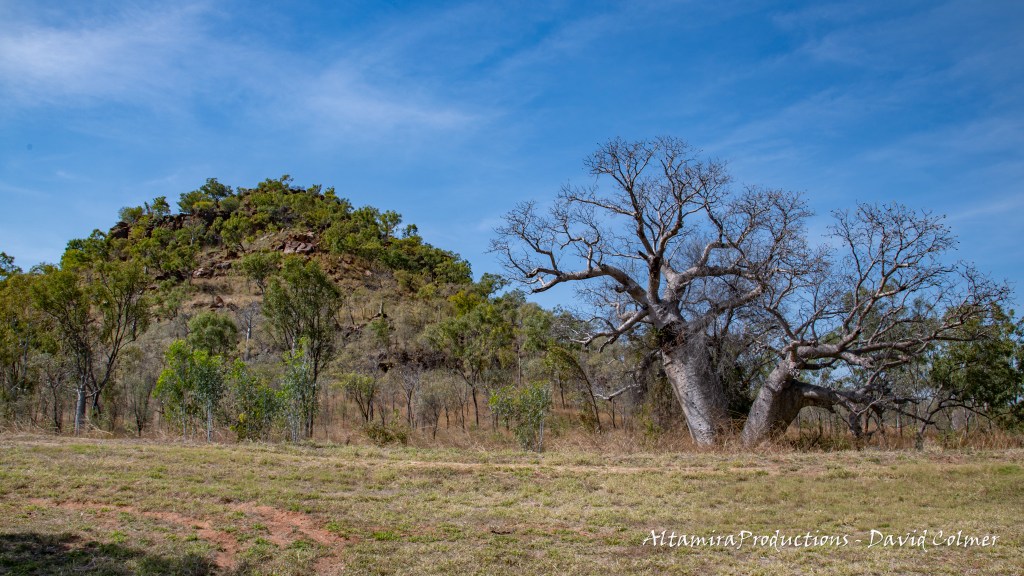
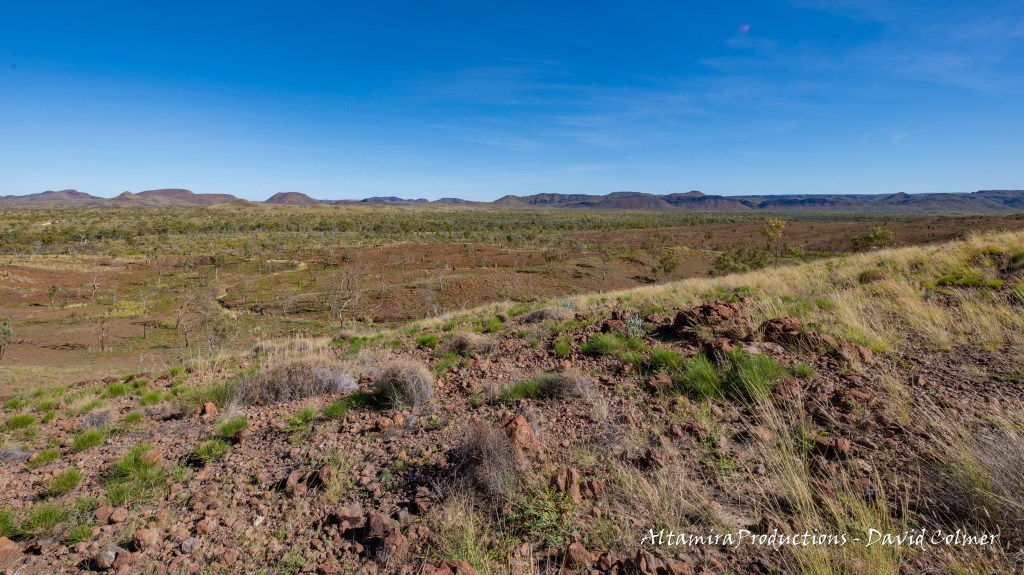
The land in the valley and on the other range is very stony, dry, hot and harsh. But amazingly, the spinifex grows a bright green and the trees hold on to enough moisture to remain alive during the dry season. Any leaf matter left on the ground during the dry basically gets washed away during the wet resulting in no opportunity to build up organic material to allow for more vegetation. What remains is this very harsh landscape but, at least at this time of year, very green foliage all under an absolutely stunning blue sky. The red, green and blue become the hallmark colours of this area.
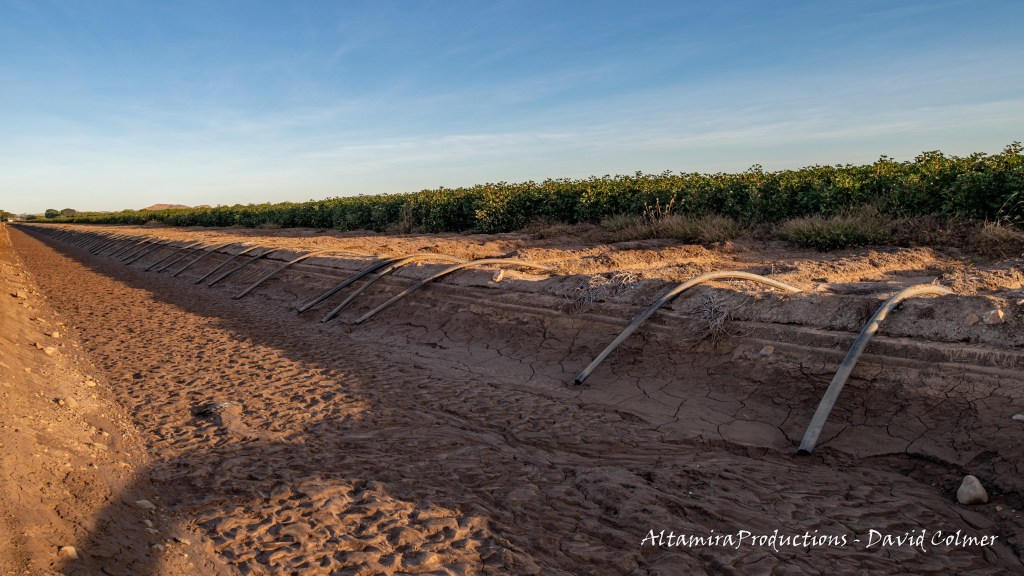
But the Ord River Scheme was an obsession for me. This scheme, to catch the tropical monsoonal rain and irrigate the coastal plains, was to provide a food bowl for Australia, Asia and the rest of the world. Problem was the magpie geese ate all the rice and other food crops while pests destroyed the primary crop of cotton. To say it was successful is a massive overstatement. Only 10-20% of the land that was to be under crop is, however, with agricultural advancements that is growing. All sorts of melons are grown there as are mangoes. And a pest resistant cotton has been planted with a cotton gin planned to be built in the town to separate the cotton from the seed. So, there is some hope.
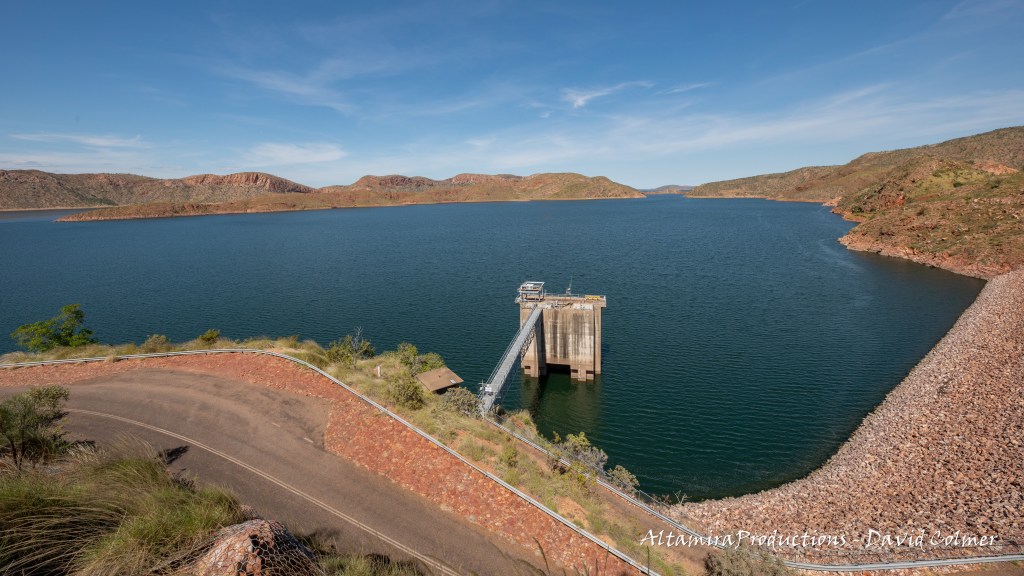
As I looked out over the expanse of water 20 times the size of the Sydney Harbour I did rue the waste of such a resource. Could you imagine this regular, guaranteed water supply running through central west Queensland and NSW and then into South Australia. Our inland towns could flourish with more stable agriculture output, bird and fish life rejuvenated as could our flora. But instead, it sits up in the north west of Australia so underutilised. Made me very sad.
The Ord River Scheme wasn’t a 100% failure though, it did create a town. Kununurra was formed to support the scheme and still stands today as a gateway to the East Kimberley. Every dry season (April-October(ish)) the town explodes with the grey nomads (retirees who travel around Australia following the warm weather) and families with very young kids doing “a lap” before the get too old to do so. They come for the warmth, the landscapes, the Argyle Dam, the Bungle Bungles/Purnululu but most importantly to stock up and mentally prepare for the trip to Derby on the Gibb River Rd, a part gravel part bitumen road with several river crossings which make it impassable in the wet season. I think it is kind of a right of passage for caravaners doing the lap. You haven’t truly been around Oz if you haven’t done the Gibb River Rd.
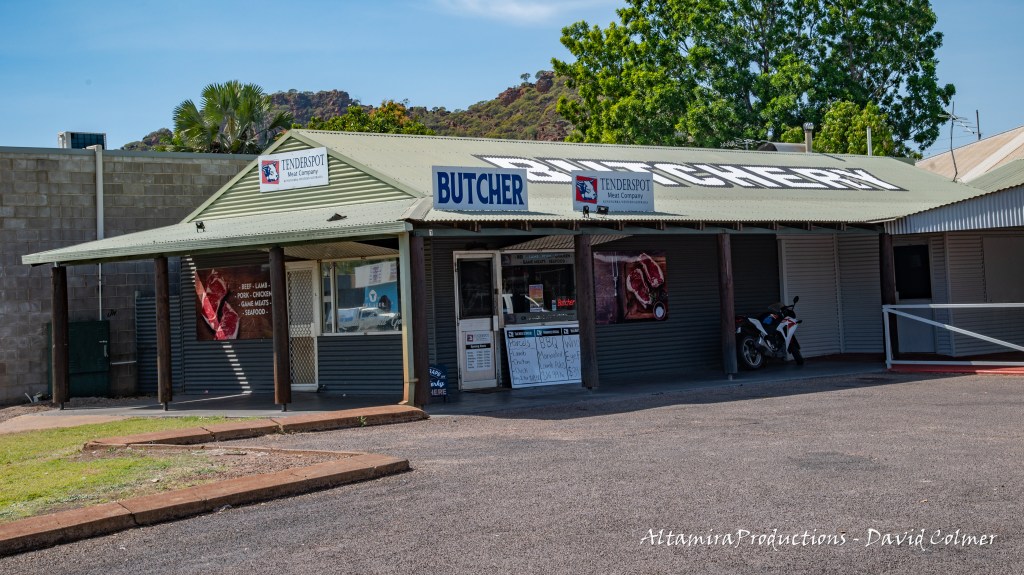
There’s a butchers shop in Kununurra which is simply amazing. Any kind of meat you want they have and the even have kinds of meat you don’t want. If you place your order in they will get it all prepared and they seal it in vacuum packs and freeze it to make sure you’re covered for the journey. And this is doubly important because there ain’t anywhere in between to buy food.
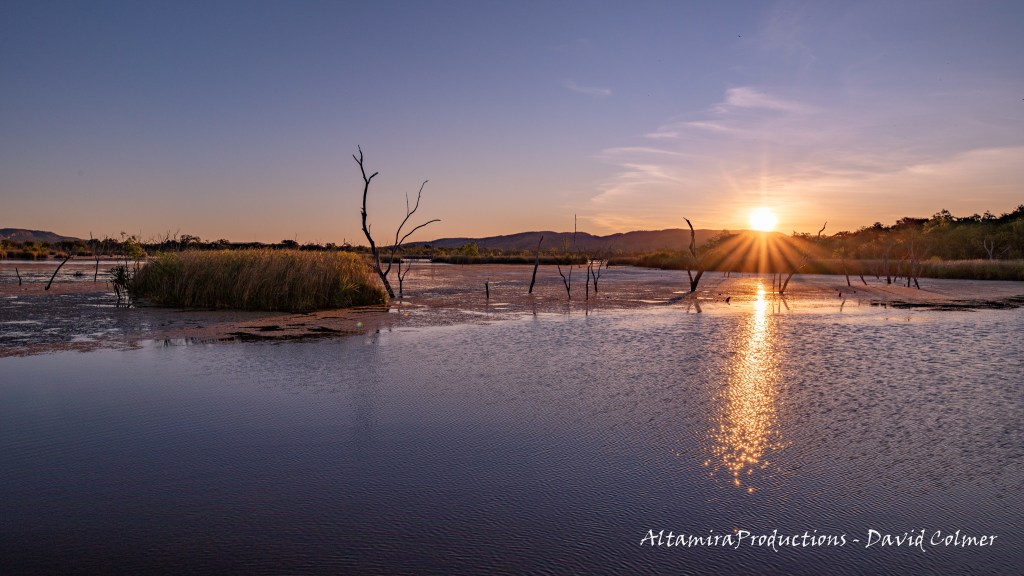
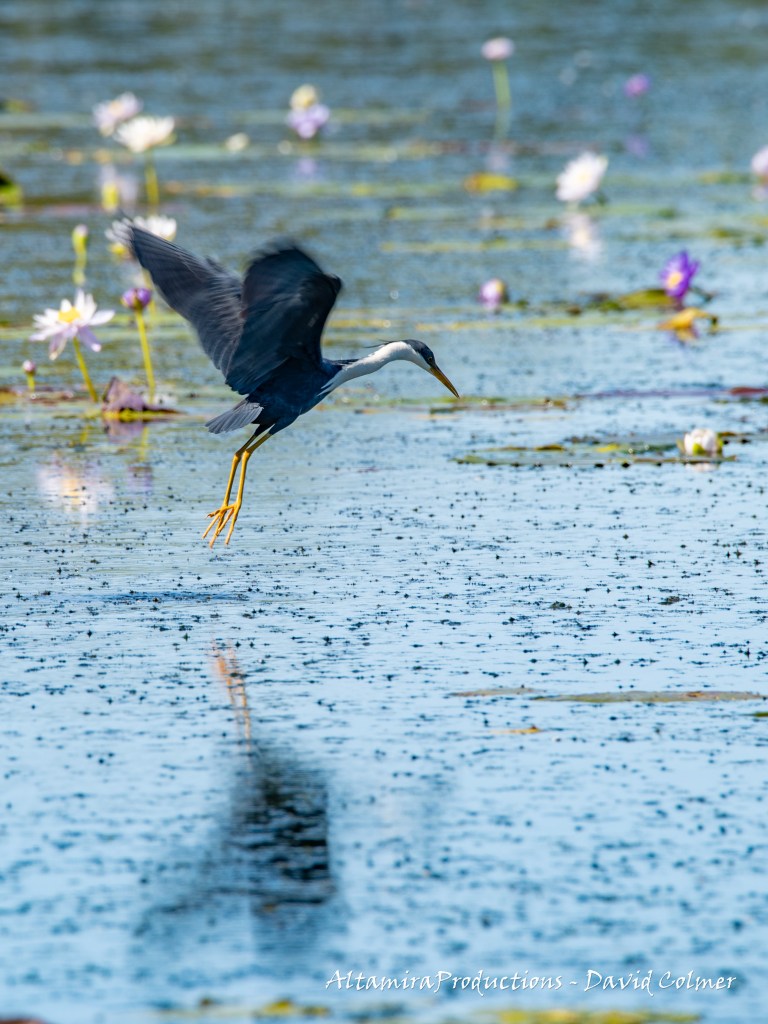
One of the first things that really grabbed me about Kununurra was the big lake it’s built on. Man made, which is obvious when you see the numerous dead trees poking up out the water, it is a haven for puttering around in a boat and for the wildlife that lives in and around it. And the bird life was the thing that got me very excited. Little finches of various kinds being very active at dawn and dusk, lots of waders, whistling kites and also elusive kingfishers including the Azure Kingfisher. My favourite was the Rainbow Bee Eater though, unbelievable colours, truly magical.
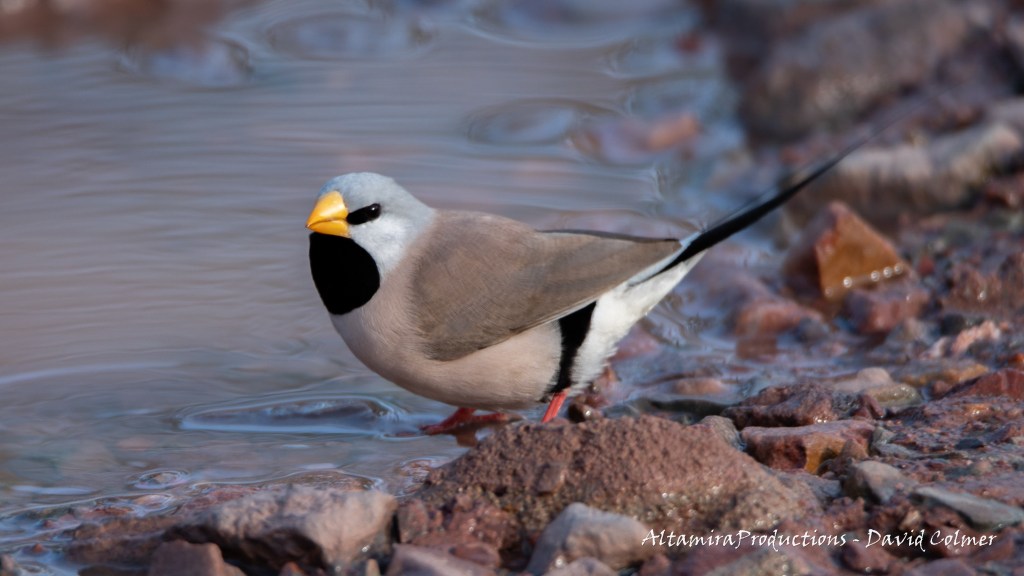
I managed to get on to a tour down towards Wyndham (where we had been just the weekend before) where we drove by this huge salt lake and then just a few km’s on we stopped at what can be best describes as a puddle on the road; seriously, that was all it was. However, here is where finches and other bird life gather for an early morning drink and swim and is especially known for the appearance of the Gouldian Finch, a rare but striking little fella very much sort after by birding enthusiasts.
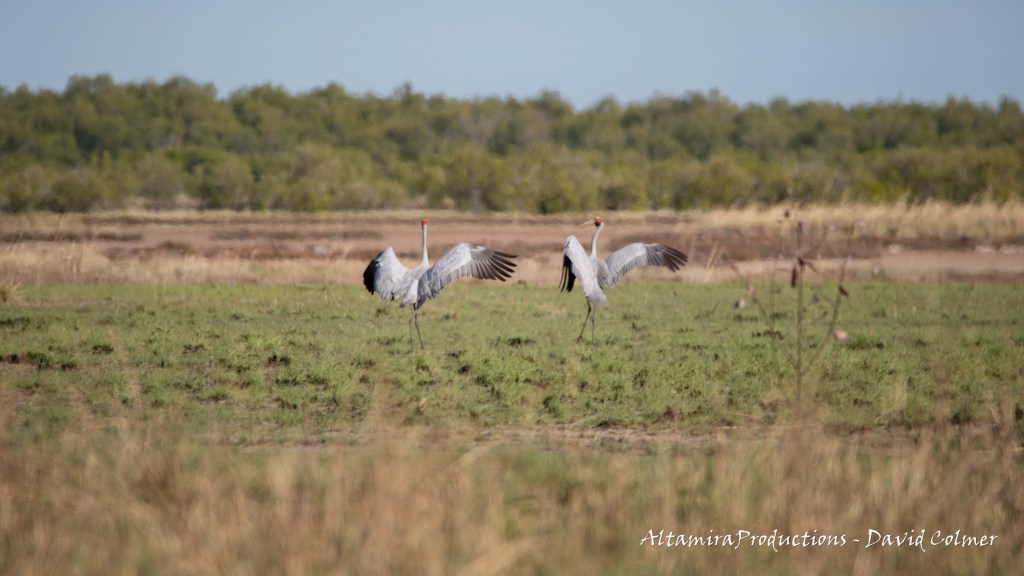
Alas this day the Gouldian stayed at home but I got to see some pretty amazing birds and in particular I witnessed one of the most exotic things in Australian bird life – the dance of the brolga. They do this to strengthen their pair bonds which is a lesson for us all, you have to keep the magic going in the relationship. This was pretty special to witness and I feel so lucky to have done so.
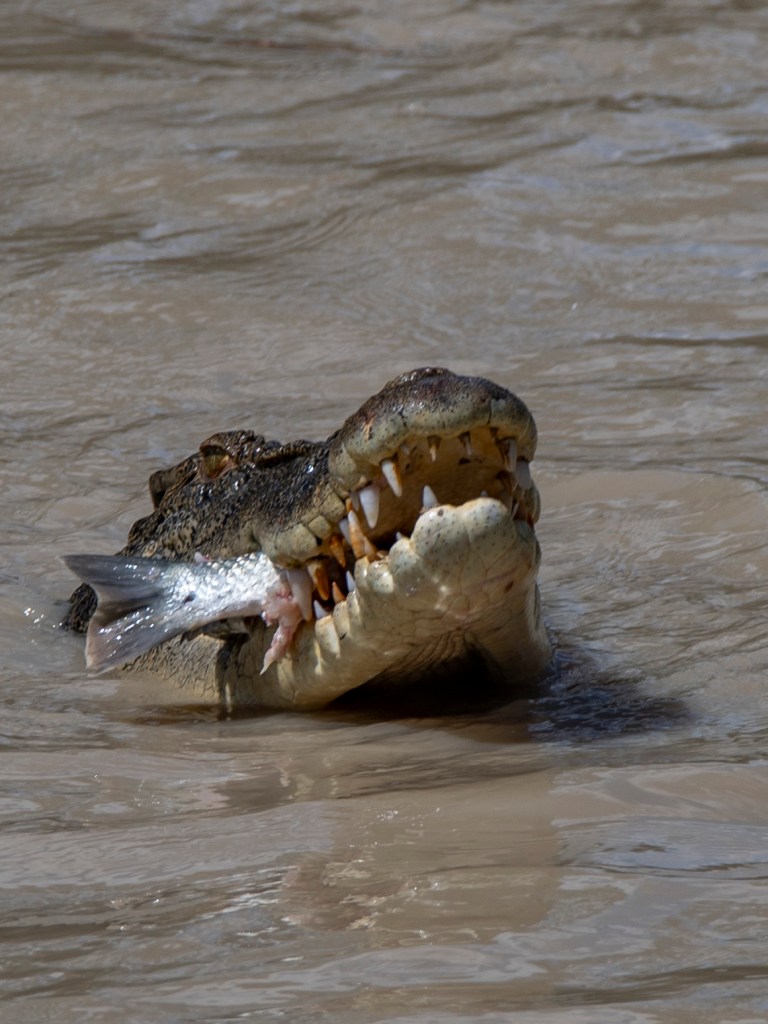
Not far from this spot was Parry’s Lagoon which was also teeming with bird life and one big monster of a croc who we saw catching dinner before sliding away and up the bank for a snooze. He was huge and has been the daddy of this region for several years now. One thing that was really weird there was a patch of the bank where there would have been 200 odd ducks all jammed in tight against each other just sitting there soaking up the sun.
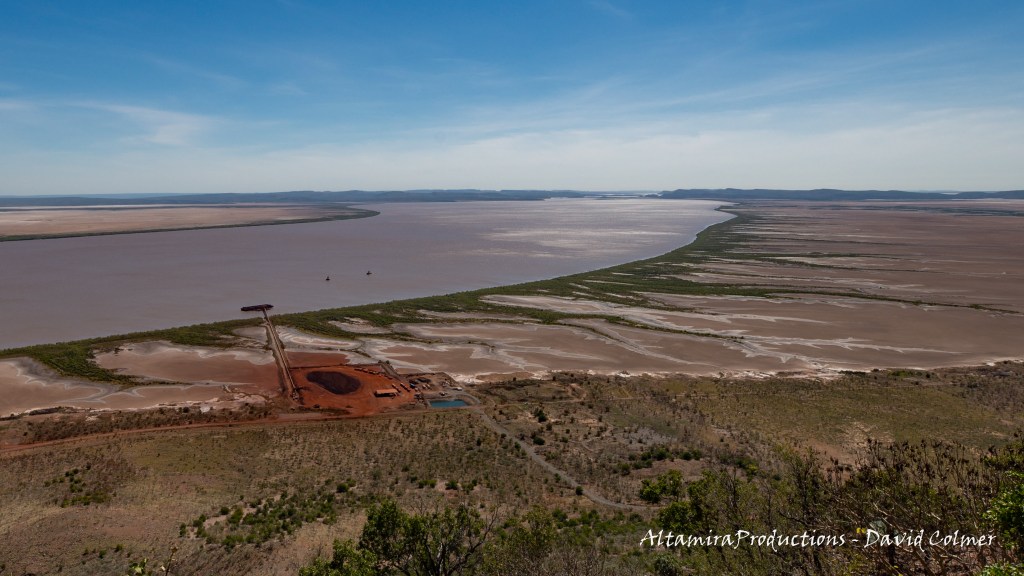
Just beyond Parry’s towards the coast is the town of Wyndham; a town that will never appear in the worlds prettiest town competition or even WA’s equivalent competition for that matter. It was an old port town that boomed and busted in a pretty quick timeframe in the late 1800’s where it serviced the Halls Creek gold rush. The aerodrome there was bombed by the Japanese in WW2. A very chequered history indeed. It is getting a bit of a boost with plans to increase the capacity of the port there to get iron ore out as well as some of the cotton due to come from the Ord River Scheme.
The landscape down there, at the mouth of the King and Ord River, is pretty incredible when seen from the lookout. But also from the lookout you can see that it is a struggling town in great need of some economic activity and some investment. Hopefully for the locals that will come with the expansion.
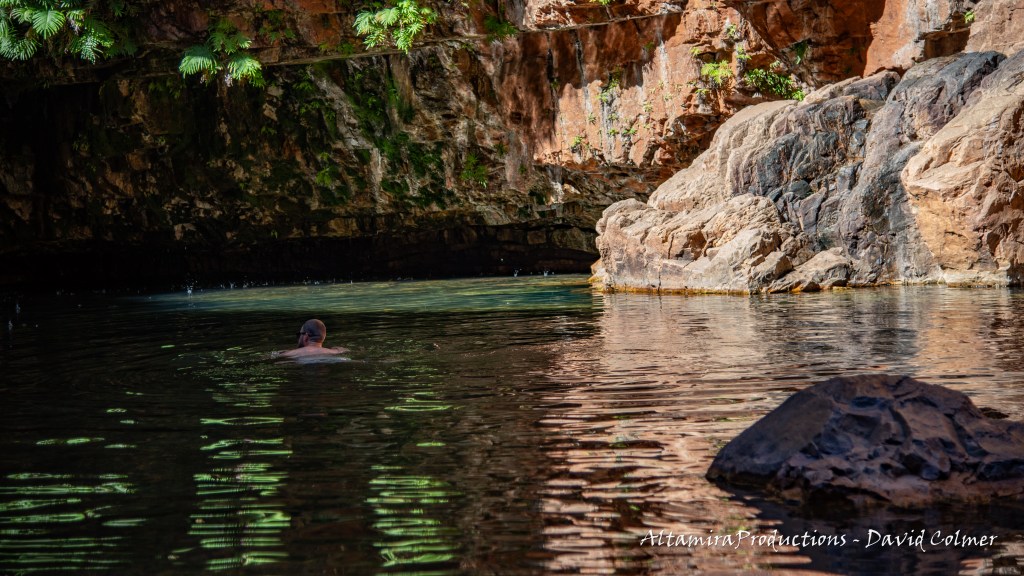
One of the other big attractions for the touring mob is El Questro, a privately owned hunk of land with hot springs, waterfalls and freshwater pools. It is a very, very popular spot but with reason. The hot springs were so nice especially when we found this nice little “bath” that we had to our own for a nice while. The walk up Emma Gorge is well rewarded with a very cool swim in the waterfall pool. There is a spring coming in as well so you can find warmer water if you’re prepared to take the plunge into the very cool water first.
One thing we did notice was the number of people who really over estimate their hiking ability. There were one or two that simply did not make it through and to be honest, were lucky to be not needing rescuing to be honest. It is a harsh environment up there and abilities need to be accurately estimated otherwise things could go horribly wrong.
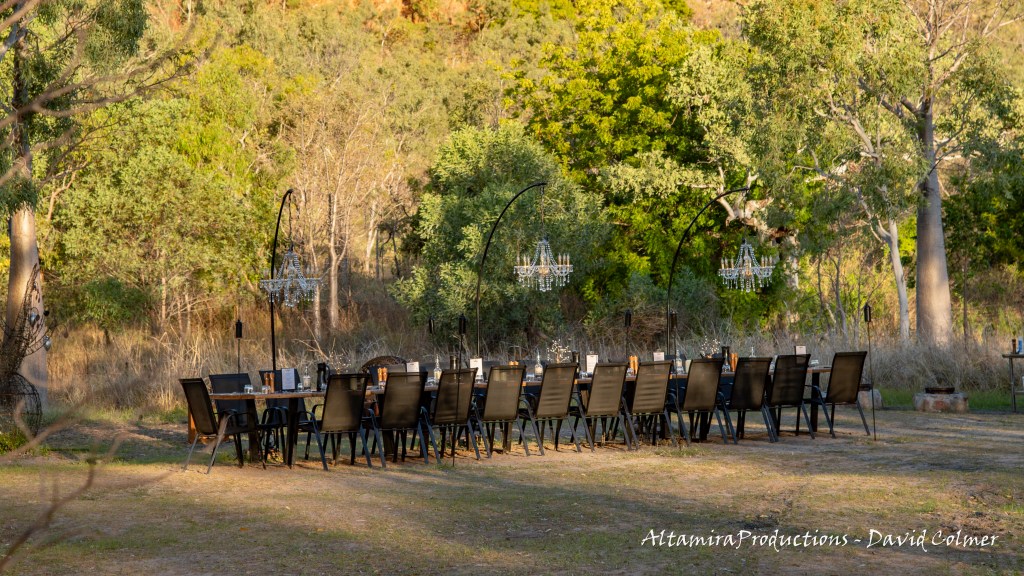
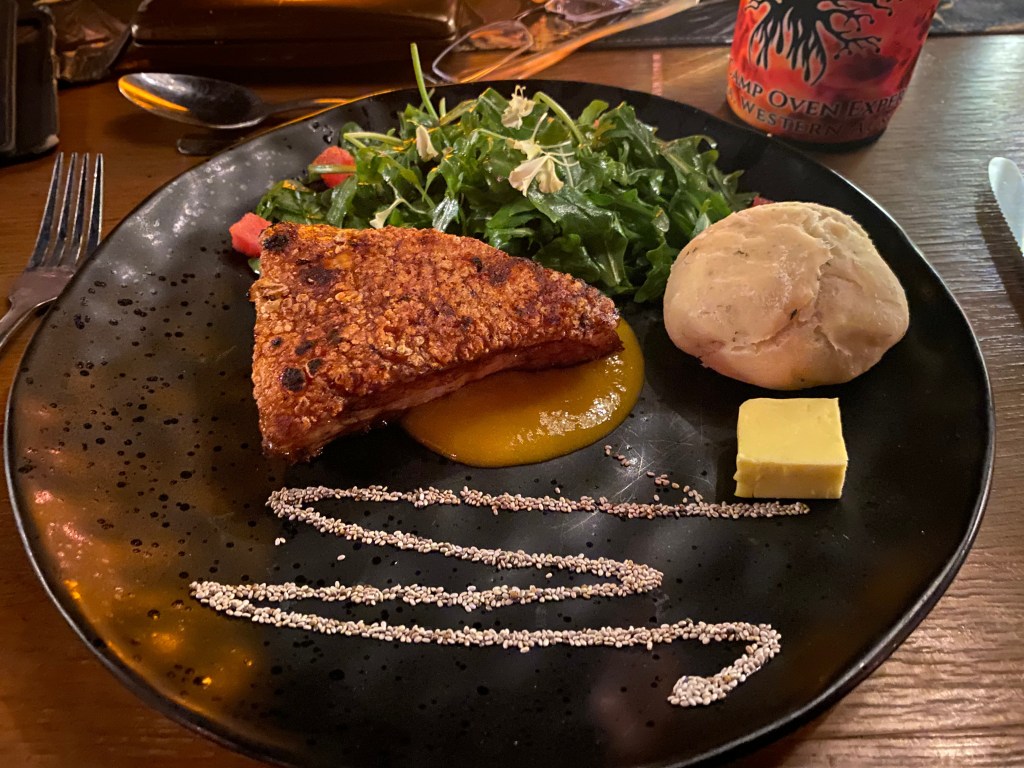
Despite the lack of complete success of agriculture in this region there is still plenty of locally grown standard and exotic food grown up here. And one industry that has sprung up at least in a small way is that of the fine dining experience. Maybe not fine dining as you would see in Sydney but dining that is pretty fancy, using interesting food and set in absolutely stunning locations.
I do like to eat in locations where not just my tastebuds are serviced but where other senses are too. In Kununurra the back drop of some magnificent red rocked ranges make it an ideal setting to tickle your taste buds and your sight senses as you dine on some very nice camp oven cooked food. It’s not a date night kind of thing as you are pretty much forced to interact with the other diners but you do get the opportunity to meet some pretty interesting people ranging from tourists, short stay workers and the odd local.
I think, however, one of the hardest things for me to take in up here was seeing how the indigenous community lived. Our residence was in amongst a lot of housing that was occupied by aboriginals and what I witnessed was a lot of sitting around, kids not at school, gatherings of large groups just listening to loud music and inevitably it descended into screaming and abuse as the day went on. BUT…drawing conclusions about something by what you witness today will inevitably draw you to an incorrect conclusion. In this case, you need to scan back 200 plus years to truly understand why this is happening today.
The Miriwoong people have lived on the land for thousands of years prior to the white pastoralists moving in and then the subsequent Ord River Scheme. Like so many places in Australia the indigenous no longer practiced traditional ways of living and were funneled into the towns, Kununurra being one of them. As I have mentioned before, work is not what gives these people meaning and in fact it appears that any meaning they may have had has simply left them. They have no motivation anymore and a lot of this comes from a lack of trust of authority and the white fella.
I never felt afraid in the town even though I walked past large groups of locals who had been drinking. The kids would wave and say gidday if I said hi to them as did some of the older folk. They were tentative but polite if you were. But to see them just sitting around not doing anything made me sad and frustrated.
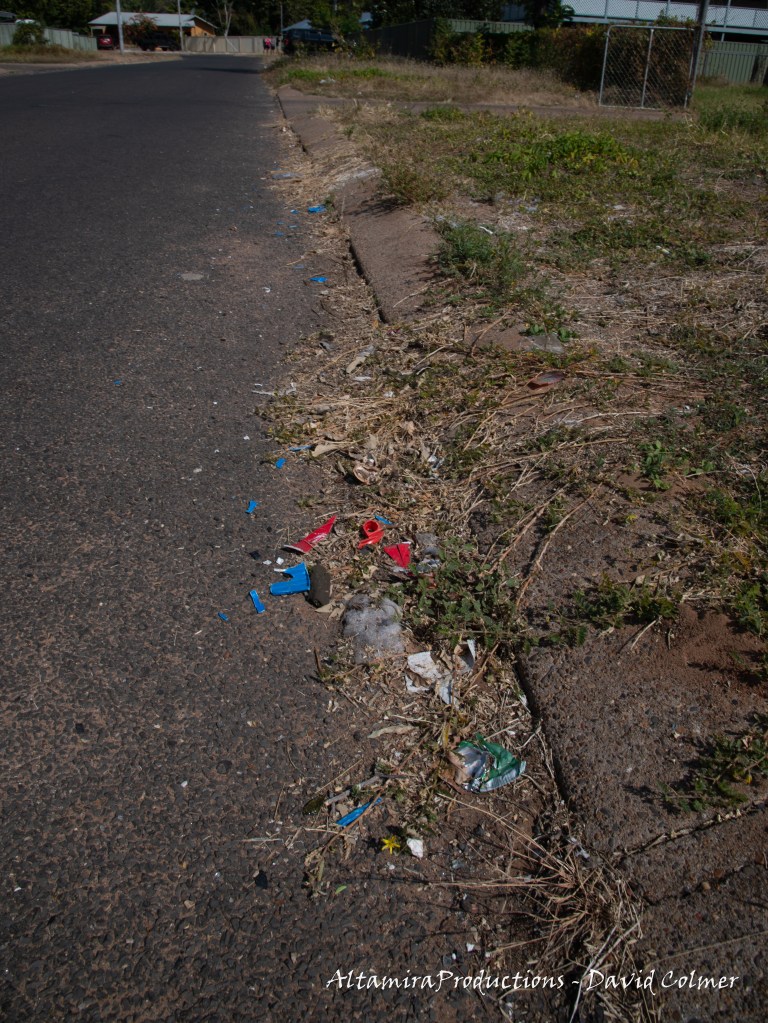
But I think the thing that really summed up the sadness for me was the amount of rubbish that was littered all around the houses and on the streets. The indigenous people are very much at one with the land, respectful of the land, even worshipers of the land. For 60,000 years they did all they could to protect the land because they knew that the land gave them life kept them alive. But here I saw the abuse of the land and I just couldn’t reconcile it.
The only conclusion or theory we could pose was that they simply no longer gave a shit. They have lost all meaning in life and maybe in some way were losing that beautiful connection they had for the land. Was it that they could not care less to protect the land for a society and group of people who have no respect for them? If this is true then how sad is this that a proud people have been reduced to this. And if this is true then can you blame them? I certainly can’t.
Understanding what is happening today cannot be explained by what happened yesterday, you need to go way back and as I mentioned, in this case it’s 200 odd years. There cannot be any denial that European settlers were the first to inflict damage to the local people. To deny that is just lunacy. Over time with the deep lack of respect from the non-indigenous, the original owners of this land grew more and more disillusioned with and untrusting of the people that stole their land, their livelihood, their children and ultimately their very being and meaning. When you start adding up all that went on and continues to go on you can’t help but understand why the simply no longer give a shit. I know I certainly wouldn’t.
Leaving the East Kimberley was interesting because for the first time we left a place saying that we could have easily filled another 2 weekends with exploring and witnessing this beautiful part of Australia. I know why the grey nomads come up here in their droves. I now know why the Miriwoong people flourished here for so many thousands of years. I just wish that both groups could flourish here on equal footing with equal respect and equal appreciation of how amazing this land is.
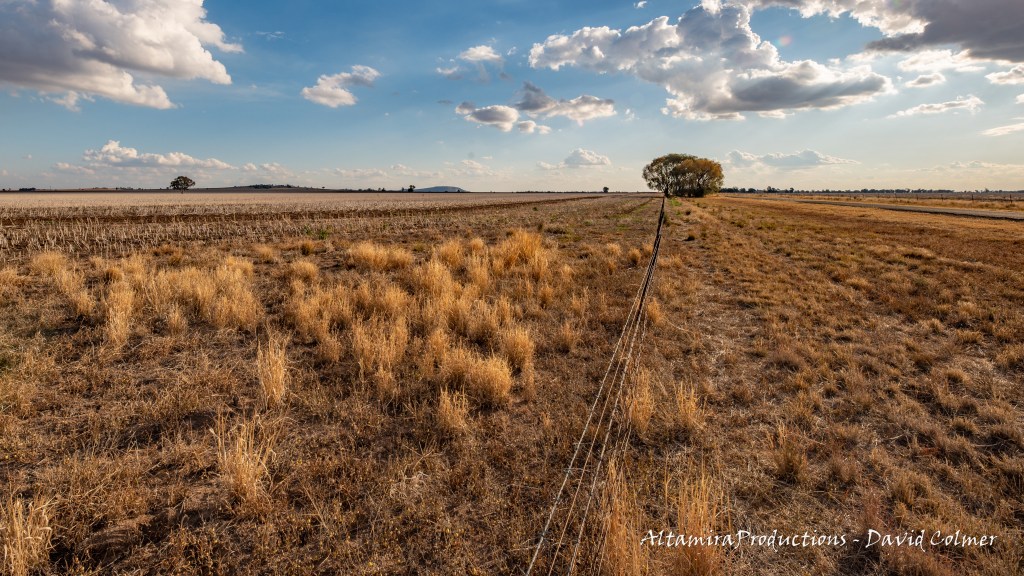
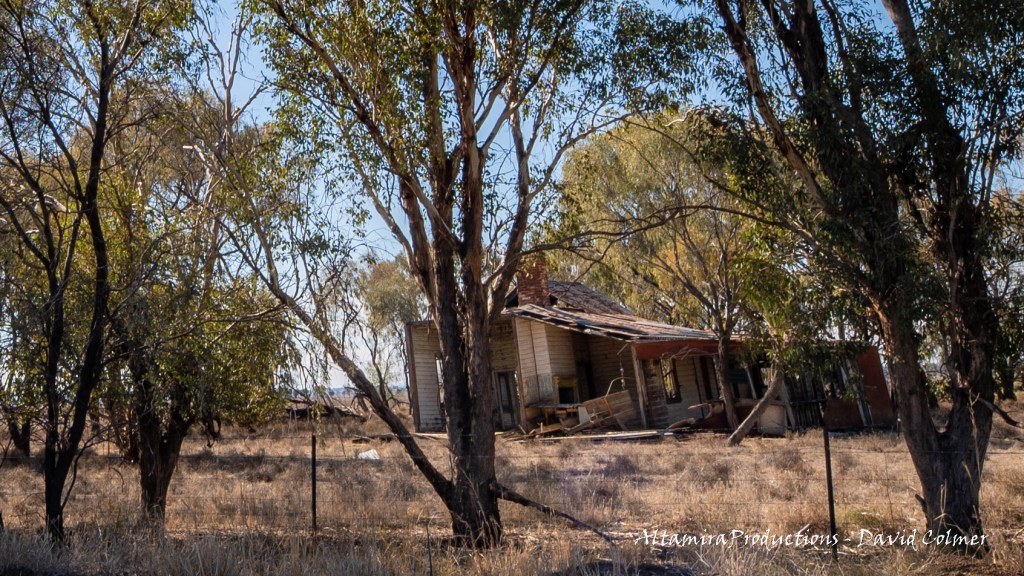
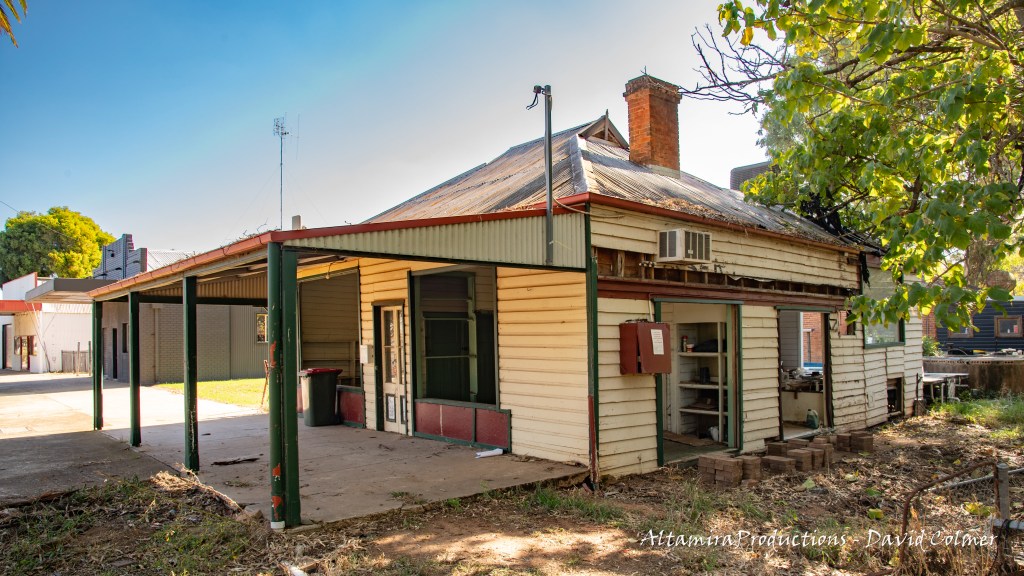
I have finally had the chance to live west of the divide if only for 3 weeks. I must admit that I was really looking forward to this stay. I have always had a fascination and love with rural Australia but the furthest west in NSW that I have been is Dubbo pretty much. So, staying a few steps further west meant that Forbes (and eventually Condobolin) was now as far west as I’ve been and it was such a beautiful experience for me. There was some seriously flat expanses, there was the dryness, the livestock, the magnificent old buildings, the over friendliness of the people except for when they are leaving the Woolworths carpark, the simplicity of life in some parts but the extreme complexity of life in other parts. I say that if it were closer to the beach I could live there but I guess it wouldn’t be what it is if it were closer to the beach. And to be honest, one criticism that would actually put me off living there is that there is no nice place to eat – first world problem and a half hey.
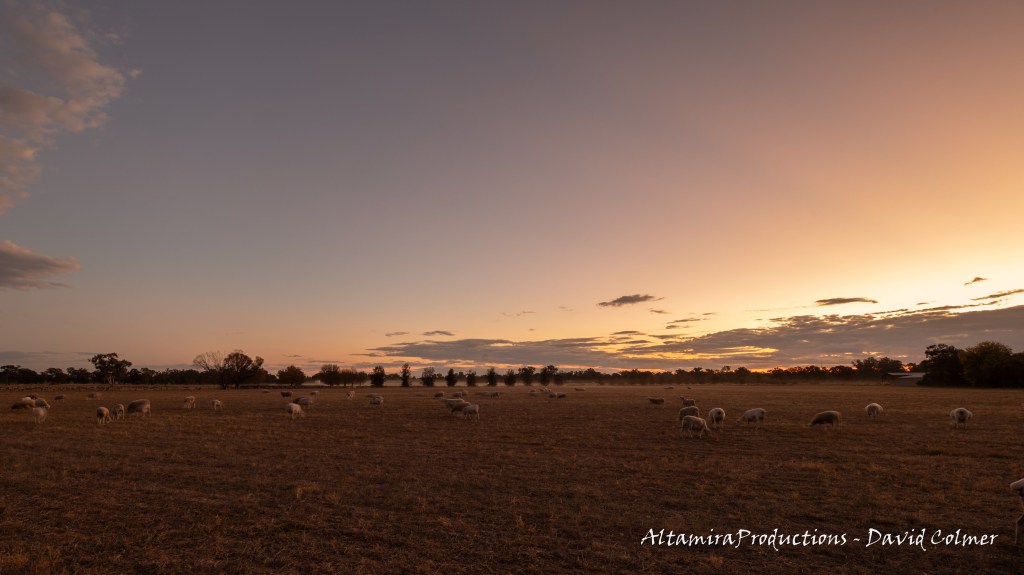
When we were there the farmers were facing the dilemma of having to plant seed but there had not been enough rain. Paddocks were pretty dry and dusty, rivers were very low to not flowing at all. To be aware of drought is one thing but to see it first hand is another. The irony is that just north of here was recently flooded and well west of here had the Queensland floodwaters running down and into Lake Ayer. It’s such a fickle country.
Fortunately, this drought hadn’t been going for too long and the livestock still looked ok and plentiful though supplemental feeding was taking place. But what I was seeing is the other side of Australia, the 15% that do not live <50km from the coast. The 15% of the population that provide us with the food we eat but have to pay so much more for services, get doctors on 3 or 4 week rotation, have to drive vast distances for sport, health specialists and specialty shops. And in order to get the food to our table they have to battle the environment, geopolitical issues and the blatant thuggery of Coles and Woolworths as they place more and more burdens on farmers whilst paying them less and less. We, in the city, simply have no awareness of the farmers plight and we complain about the price of things and the supposed lack of facilities. But when you compare what someone in the country needs to do to see a specialist, buy clothes, pay for essential services to the relative ease that we do in the city then you will realise that we don’t really have much to whinge about. The fact they keep feeding us despite all of this is why I have the utmost respect for the farming community.
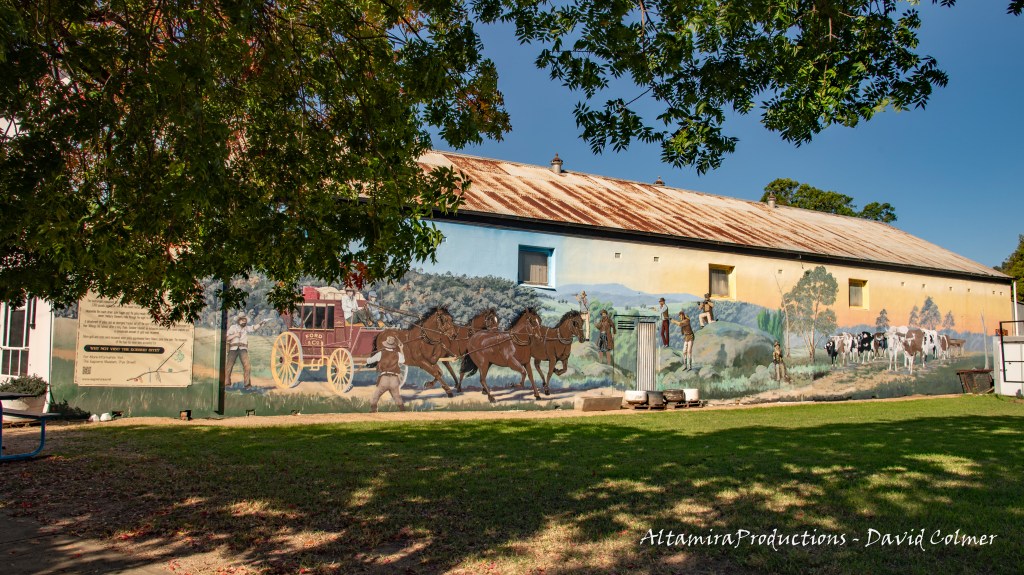
Eugowra (Wiradjuri country) is a little town between Forbes and Canowindra on the Mandagery Creek which then flows into the Lachlan River. It’s a tiny little creek, usually running a good 3-4 metres below its bank. So, when one shop owner showed me that the water reached 2 metres up the inside of her shop in the 2022 flood I was dumbstruck as to where all of the water came from and how far it must have spread over a very flat landscape. There are still small demountable buildings being used as accommodation while they wait to get their houses repaired or to get enough money to do so. The town has been smashed. But it’s a beautiful little place with some great murals on the walls, some gorgeous buildings and some cute art. I was so glad I could walk around this town and have a coffee and chat with a few locals. It is when you speak with locals that you learn about life in an area that you really are unaware of.
Forbes is famous for being the town that bushranger Ben Hall was shot (well a little north of Forbes). The town seem to love him. There are places named after him, there is a statue and they even performed a community play the first weekend we were there. The small museum in town has quite an extensive display on Ben Hall and luckily enough I got to spend some time chatting with the volunteer at the front desk and another local who was there for the hell of it. I was able to hear from them some insights about the bushranger and why he is a hero.
But I will be honest I was not convinced. He did not kill anyone which makes him not as bad as a few other famous felons (though some of his party did kill). He treated “hostages” kindly when he bailed up a pub in Canowindra on three occasions no less. The constabulary and other officials of the time were pretty crooked and he was just trying to work against a corrupt authority. He was killed without being tried. BUT… he stole the equivalent to $47 million and often from ordinary people. If there was a crook going around today and had stolen $47 million then I do not think we would be building a statue of them. We would want them to be caught and dealt with. I am just not a big fan of statues being erected and admired for those who were hardened criminals. The fact that statues of bushrangers outnumber the statues of women is very wrong. Should we really be glorifying these criminals ahead of some amazing trail blazing women of Australia.
Orange and, to a lesser extent, Mudgee have set themselves as the foodie capital of the Central Tablelands. Orange is a really nice country town and the foodie element has made it even more attractive. Along with a bunch of first class restaurants and cafes they have beautiful old buildings and houses, some gorgeous parks and gardens, plenty of tree lined streets and not being built on a river means that it never gets flooded.
We visited Orange on the Show weekend so I thought we just had to go out and take a look. It’s best described as a mini me of the Sydney Easter Show in that it had livestock judging, rides, horrible show food, produce and output judging and even a small show bag alley, all on a much smaller scale than it’s Sydney grand daddy. But being in the country made it a little more special. You would see visitors to the show saying gidday to each other because, let’s face it, they knew each other. Kids could watch their school mates competing in equestrian events or looking after livestock there for showing. It’s a lot more homely.
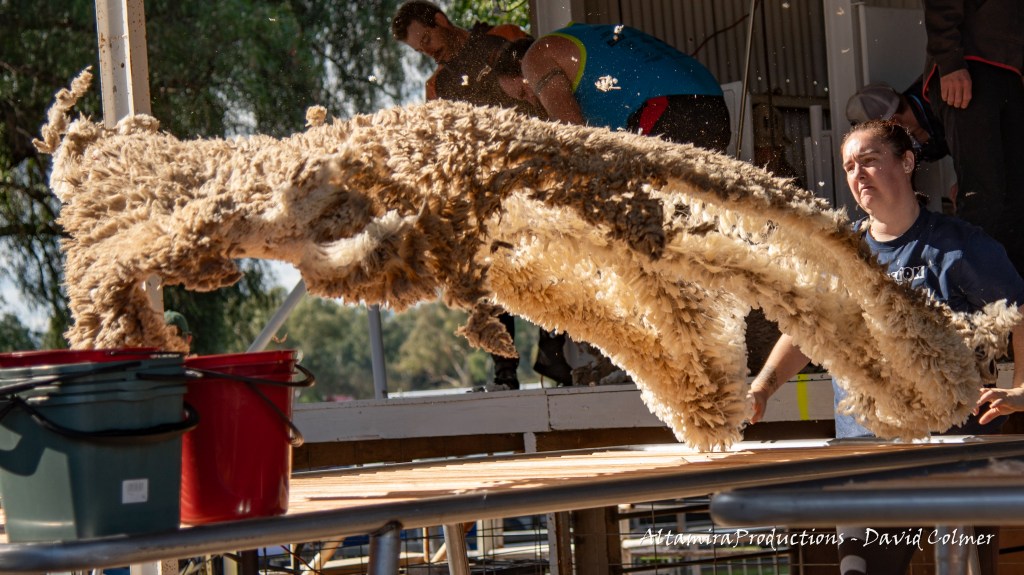
On the way back to Sydney we went via Wellington where we visited another show and this time managed to observe a bit of the shearing competition. It’s a serious thing out there, that I know first hand as one of my clients was competing. She was not there to make up the numbers that’s for sure. The Welli show was even more agricultural (in both ways) than the Orange one but was a lot of fun. I laughed at the cherry tomato and the olive judging. Presentation was not a high priority. They were basically popped into a small paper bowl and judged accordingly. Nothing fancy just the tomato or olive which is exactly how it should be. That’s the important bit.
In Morocco there is a town called Chefchauan which was struggling to attract the tourists visiting. The council came up with a crazy scheme whereby they encouraged people to paint their houses blue. Today, it is one of the most amazing cities, just a sea of blue nestled on the hillside and the tourists, now with a reason to go, have flocked there in their thousands. Now to say there’s not a lot in Condobolin is an understatement. I don’t believe that I am being unfair when I say that there really isn’t a reason to visit there and really, apart from the fact that I worked with a guy from there, I had no desire to visit.
However, the local council out that way did two things:
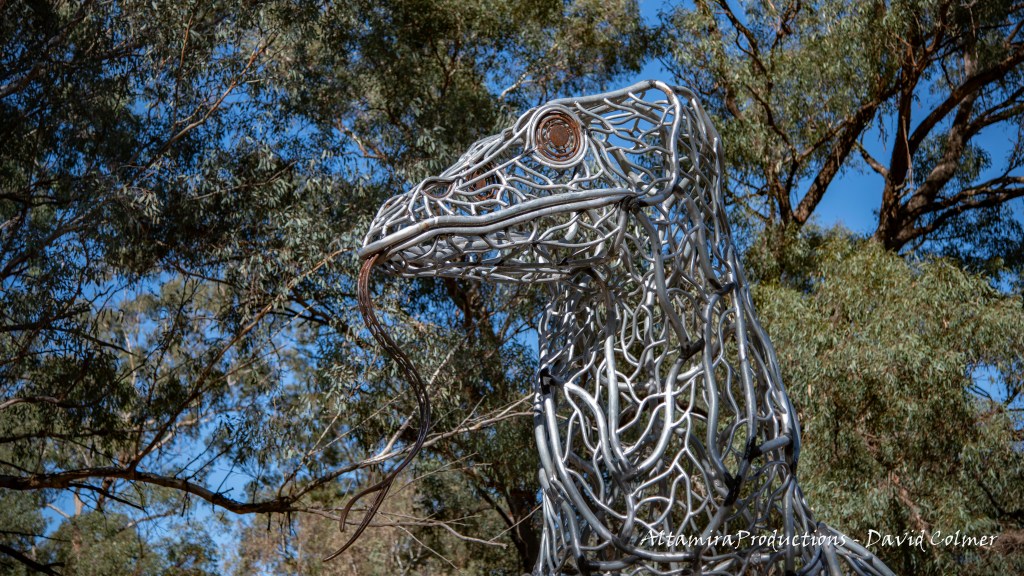
Established a sculpture trail from Forbes to Condo along the Lachlan River where 13 sculptures were dotted along that road; and
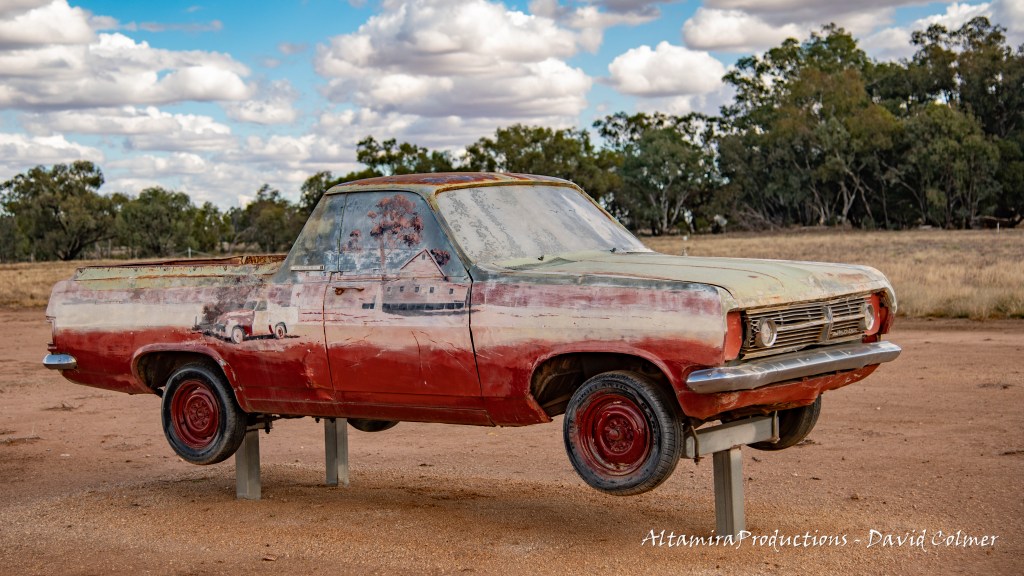
Sunk money into developing a wonderful tourist information centre with café and amazing displays of art all centred around the great Australian Ute.
All of a sudden there was a reason to head out from Forbes and go to Condobolin. It made the trip worthwhile and it was definitely the only reason I got to see this sleepy little town in NSW’s central west. There’s still not a lot in the town and I won’t take a special trip out there to visit. But it does show that if the right thing is done then people will visit – build it and they will come.
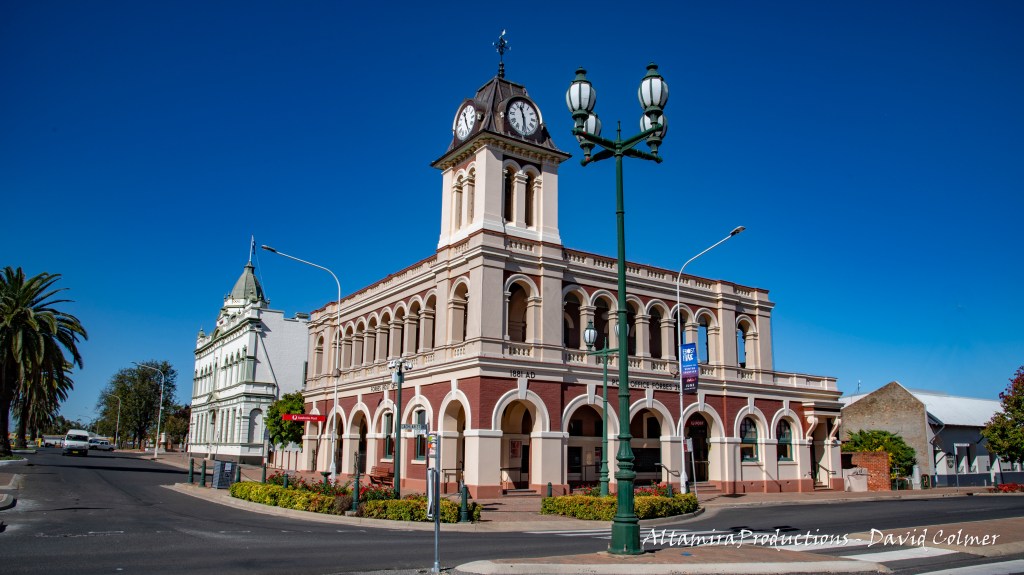
Forbes, settled in on the Lachlan River in Wiradjuri country, is a town like many others in rural NSW – a shell of it’s former self. It once housed 30,000 people (due mainly to the discovery of gold) and now it is barely 6,000. As you walk through the town you can see what I once would have been with beautiful, grand old pubs, a stunning Town Hall, a Post Office of the finest architecture, a beautiful town park with bandstand and fountain and the big wide roads, a tell-tale sign of NSW country towns.
These lovely buildings and parks still exist and provide for a beautiful town It also now has what they call a lake but does look more like a river going through the town and they have done an amazing job in making accessible and available to the public with a great pathway all the way around which is lit up at night with hundreds of solar lights.
I liked the town a lot. It appealed to my low speed kind of life-style. People were all up for a chat which was always good. But I will say one thing though. Their driving can be pretty aggressive, especially the people in their big utes and 4WD, ie 90% of the town. If you don’t get out of your road they are not happy. And try getting out of Woolworths carpark easily. There is no courtesy given to anyone backing out of a spot. It did surprise me a bit.
If I had to I could live in Forbes but I would be travelling to Orange reasonably frequently. It’s only so often you can have the pub food out there and the Chinese restaurants are pretty ordinary to say the least. But the town is nice, the people are pleasant and they at least have a decent coffee.
Three weeks in Sale was my next stop. Set in the Gippsland of Victoria I knew very little about it before I got there and have a lot more to learn. But what I did learn was that the area is beautiful. The landscape is incredible – vast, vast stretches of water in lakes, long, long beaches in the north and smaller headland bounded beaches in the south, a stones throw away from the gateway to the alpine region and lush farm land on the plains. Everywhere you drive there is something special and life is as relaxed as the landscapes demand it to be.
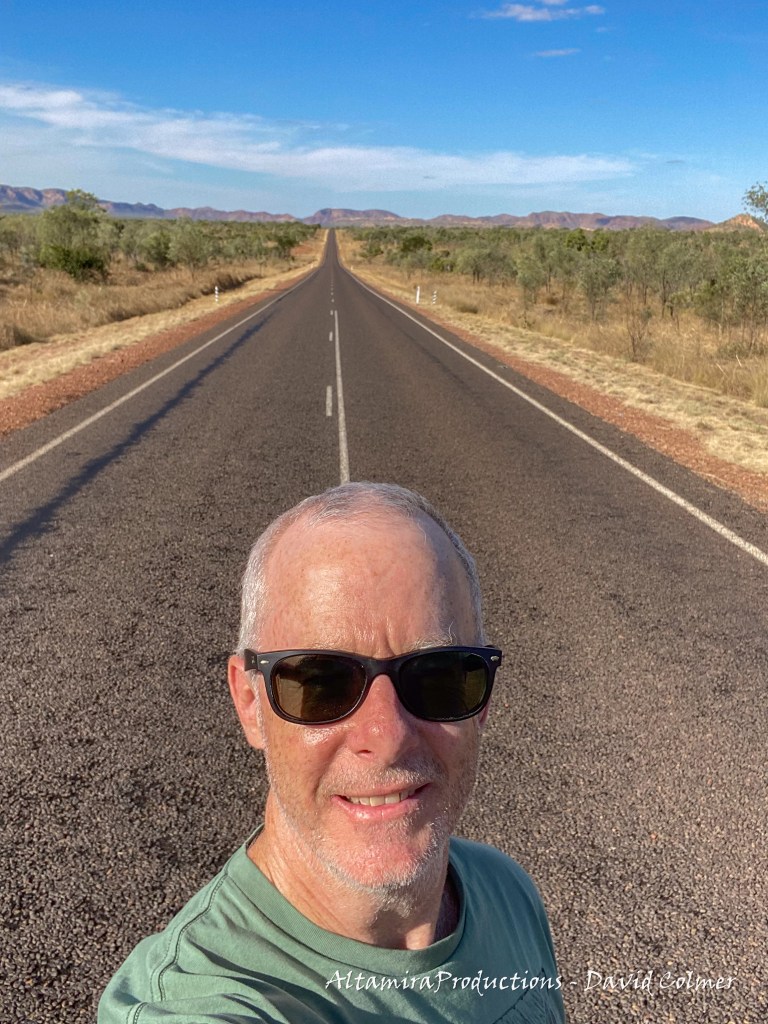
Whenever I travel to a new place things that I don’t normally see really jump out at me. And whilst in the Gippsland it was not different. And oddly enough the thing that first jumped out to me was very long, very straight stretches of road. I know it’s a little odd but it was really new for me. Made driving very easy I must admit but did become a little boring. It did get me to thinking why it was the case though. Several thoughts went through my head, the predominant one being that it was the result of the dividing up and giving of farmland to returned vets from world war 1. If I thought about it for much longer I would have realised that the land would have been split up a bit further back than 1918. In the end I found out it was because of the flat land, the easier moving of timber and dairy from farms to ports and also, they clearly got their brief from those in Melbourne where, as we know, you could easily play a game of chess on the streets of Melbourne such is the chequered layout of that city. Anyway, it’s a little thing, but it really grabbed my attention. Luckily enough there were enough twists and turns and hills to make the trip a little less tedious.
Mind you, the little towns you pass through definitely made the trip less tedious. These little places – Maffra, Bairnsdale, Stratford (and ironically it is on the Avon River) – are so nice. They have big wide area down the middle of the town with a lane each way for traffic but these broad, long, grassed and tree lined median strips and most with the most exquisite bandstands. These functional features of a time long gone have been preserved and restored to be a striking feature of these towns allowing us to partially linger a little longer in that time. I’m sure they are not used as they used to be but who knows, they may serve a practical purpose today. But for me, the aesthetic purpose is just as, if not more, valuable than any practical purpose. These towns have deliberately held on to these beautiful elements of the past. They have also kept a lot of the old buildings too. And it made me wonder. Melbourne has probably held on to it’s heritage buildings better than Sydney, so I wonder, is this another thing to add to the chequered streets that has been exported to the regions from Melbourne.
But the thing that really blew my mind was the water. To briefly explain the topography. If we start up at the Lakes Entrance there is literally the narrowest of channels coming in from the sea into an enormous lake system. How big? Well, the beach from Lakes Entrance south is the 90 mile beach so I’m going to suggest that that’s how long it is (for the record it is closer to 94 miles but let’s not haggle), and what you need to realise is that for a good portion of that the ocean is separated from the lake by the thinnest of strips of land. And the lakes go inland a good fair chunk as well. There is water everywhere. When you wind down to the town of Lakes Entrance there is a lookout where you can see a portion of this lake system and it is a must see. It’s a myriad of islands and channels and lakes and rivers – just incredible. Any number of rivers run into this lake system and whilst it is tidal it pretty much all runs in and out of that small channel at Lakes Entrance. How it doesn’t flood more often is beyond me. What has been created there now is east Victorias holiday aquatic based playground. And who would have guessed that water appeared as a highlight of a trip to Victoria. And yes, you might even suggest that the wet and rainy Melbourne has exported a third item to it’s regions.
Gippsland is beautiful, let’s not beat about the bush and let’s not allow my NSW bias to cloud my judgement. Lush country side filled with beef, dairy and sheep. Endless waterways. Towns from a bygone era. A national park to well and truly rival Kur-Ring-Gai and the Royal in Sydney. I would love to go back there some time and do a big photography holiday as there would be easily 10 topics I could choose from to photograph.
After returning from Jabiru I had the good fortune to pick up a full time client who wanted me to attend the office. While this was great for my newly formed business it did mean that I could not join Al up in the North of Queensland and Northern Territory. As it turned out it would have been pretty tough for me up there so I think things worked out for the better. And with Christmas and the New Year period upon us I stayed in Sydney over that time but it did take the opportunity to spend a week in Dee Why right near the beach. It was a great time down there and would easily do that again.
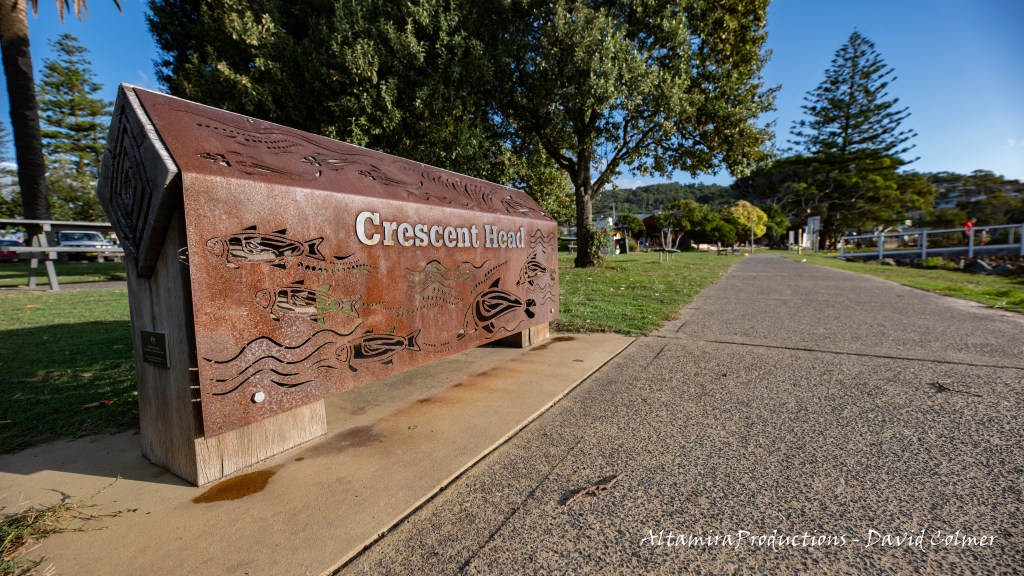
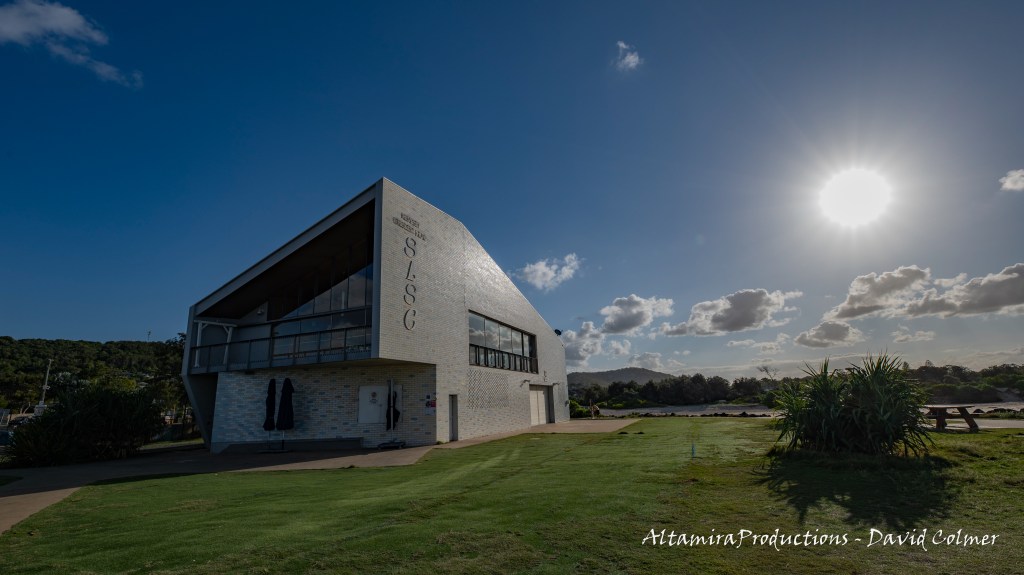
The next “adventure” so to speak was going to be Crescent Head (Al worked in Kempsey). And to say that it was tough is a sarcastic over statement. The place we stayed in was simple but very nice. It was only an easy few minutes walk to the town and to the beach. In town there was a Bakery that always had a massive line outside, a cool café run by young ladies, a supermarket, a pub and a club, a bottle shop that doubles as a pizza joint and a few other shops. Typical mid-north NSW town.
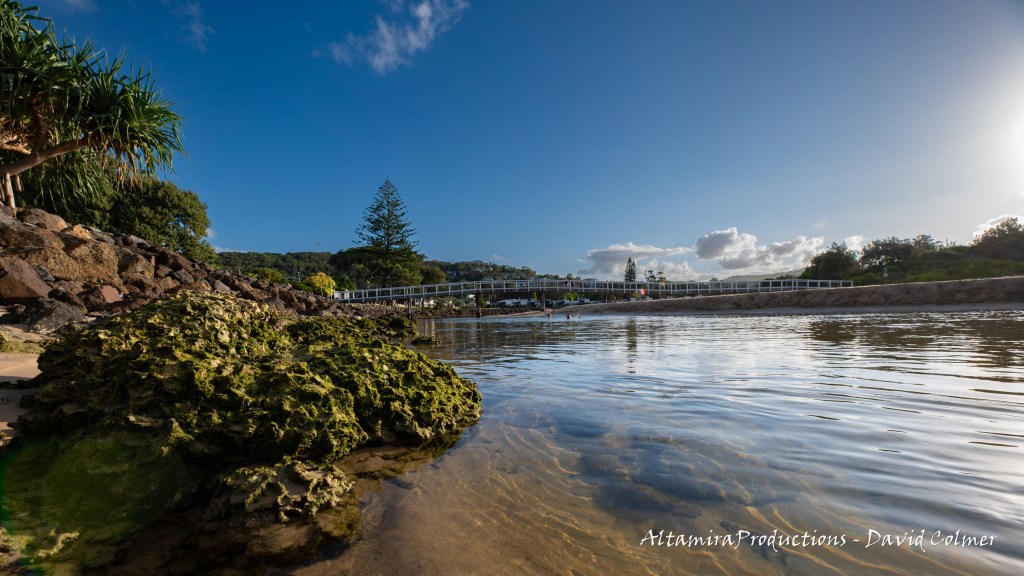
I’m pretty confident in saying that the Bakery is a significant landmark and business in the town but I would like to suggest that the creek leading to the beach is the real artery of Crescent Head. The creek I speak of is Killick Creek which starts it’s life not too far up the coast just in land from Killick Beach. It heads south and just north west of Crescent Head it splits, chucking a left to head to the coast and the other branch continues on south to hook up with Maria River and eventually into the Hastings and out to sea at Port Macquarie. Why I mentioned all of that is to say that it is not a huge creek or river and there is not a huge amount of water running down it making it a beautiful size of creek to spend hours lolling, floating, swimming, drinking beers and chatting with friends and family. And it’s size makes it perfect for the kiddies as well. Everyday there are meet ups and catch ups both regular and occasional. It’s also the place that people bump into someone that they haven’t seen for ages and they get up to date with what is happening. It’s not quite the Town Hall but it could be seen as the Town Hall steps, the place where kids born up to the eighties organised to meet to catch up. Of course, if it wasn’t the creek then it’d be the Bakery or the Supermarket or the café but it wouldn’t be as nice though, don’t you think. It wouldn’t make the locals who they are today. There’s a serenity to it. There’s a calmness. There’s a slowness to it, they all want to be there and they’re not going anywhere fast. They have unencumbered time on their hands making for a perfect opportunity to build relationships and stay in touch.
One thing I was a little bit surprised about was the “type” of person lives in Crescent. There are, of course, many types of people but I was interested to see that the beige wearing group of the Northern Beaches were not there. Instead it was a bohemian, second hand clothing wearing mob that were very cool and very much into a simpler, quieter lifestyle on the amazing mid-north coast. For a long time I felt that I would like to live on one of these small coastal towns, felt like I would fit in, be relaxed and enjoy the life up there. But now I am not so sure. I never thought of myself as one of these people. I am not saying that is a bad thing, it is just that I thought we are too different. I thought I knew who my mob was but after being in Crescent Head I am not entirely sure now. I liked these people though really it was only through observation more than anything else. But am I really one of them? And I like the beige wearing Mona Vale people but am I really one of them. I think I might need to stay in more towns around the country to see if I can find my tribe.
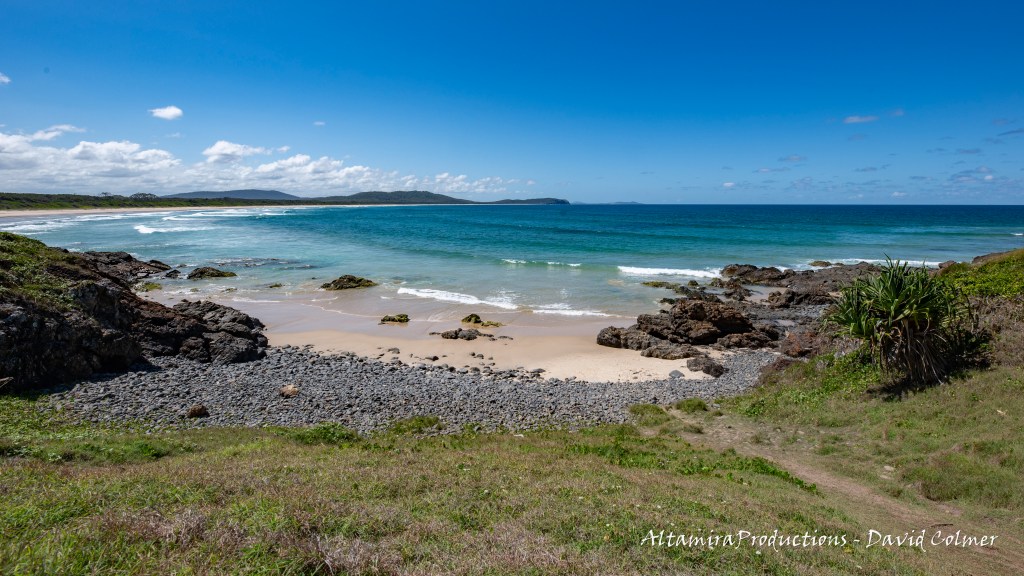
In saying that Crescent Head is not a place I could permanently live in. I do realise that a small town is not for me. But the thing that I did discover that if a town is not for you, just drive up and down the coast and even out to the west a bit and you will find any number of towns that might just suit you. If you come to Bellbrook it may not be for you so then go back, chuck a left and get to Taylors Arms and that may be the place for you. If Kempsey is not for you then head north and check out Macksville. And on the coast if Scotts Head is not your spot then try Stuarts Point, South West Rocks, Hat Head or even Port Macquarie. This coast, this part of the world is absolutely amazing. Every corner you turn around there is another marvel of God’s wonder. I’m sure there are many stretches of the world that are like this but I am very glad that I live so close to this one.
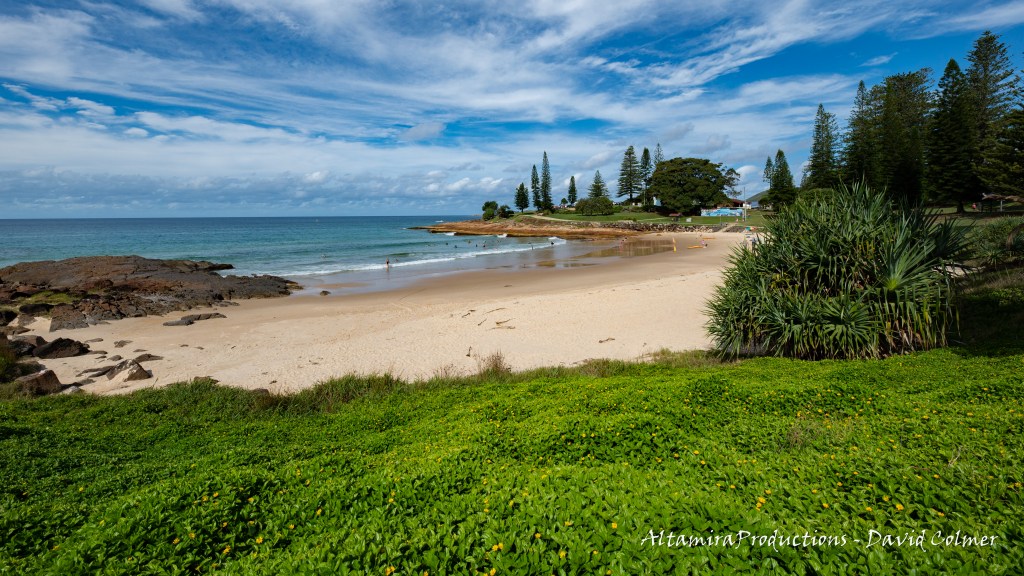
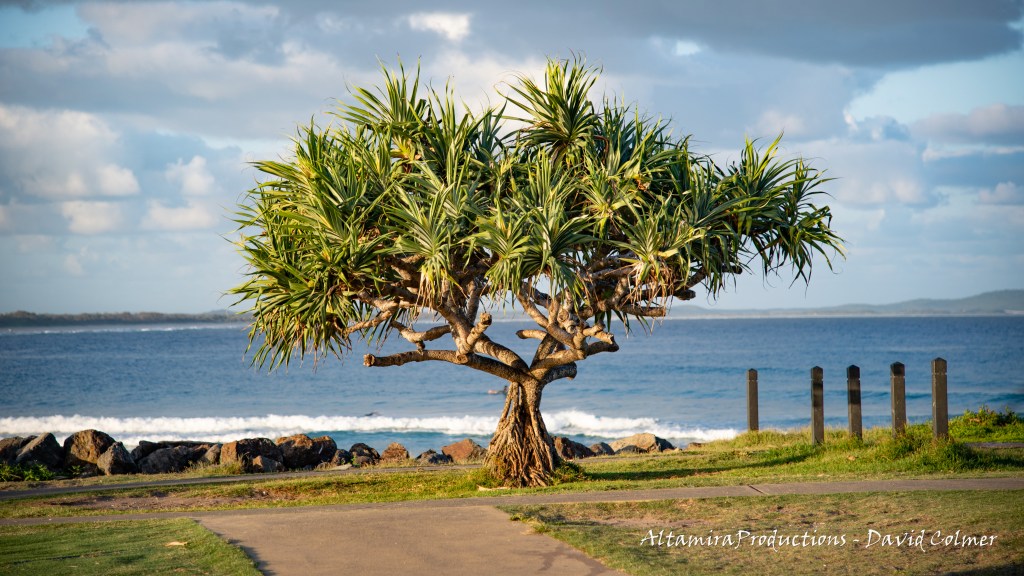
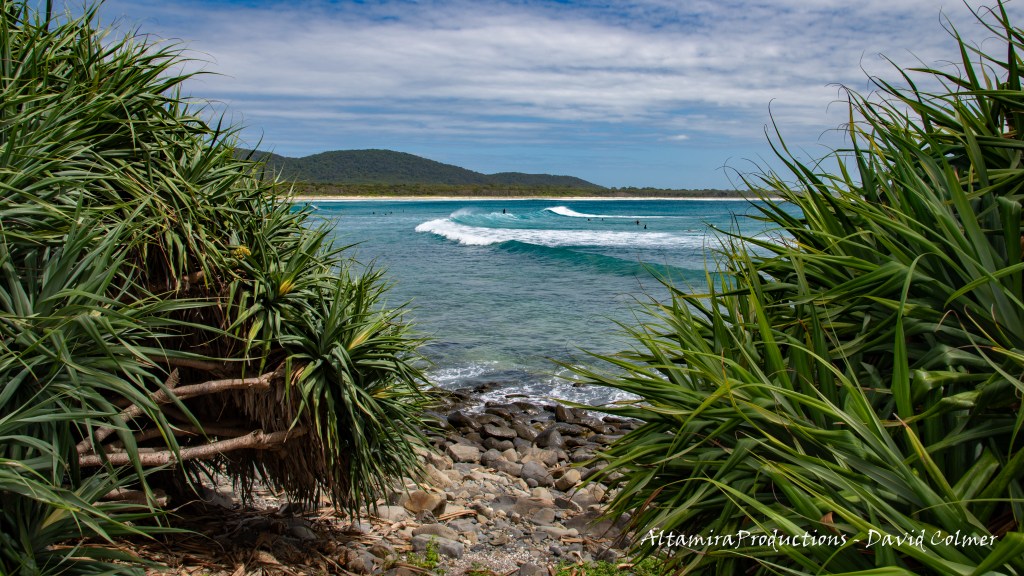
The Pandanus is a small tree which can reach 5-6 metres in height with leaves that are linear to about 1 metre in length. They emerge from the branches in a screw-like arrangement which gives rise to the common name. The plants are supported at the base by prop roots which help to anchor the plant in sandy soil. They produce large pineapple-like fruits comprised, when ripe, of yellow, red or orange segments containing the individual seeds.
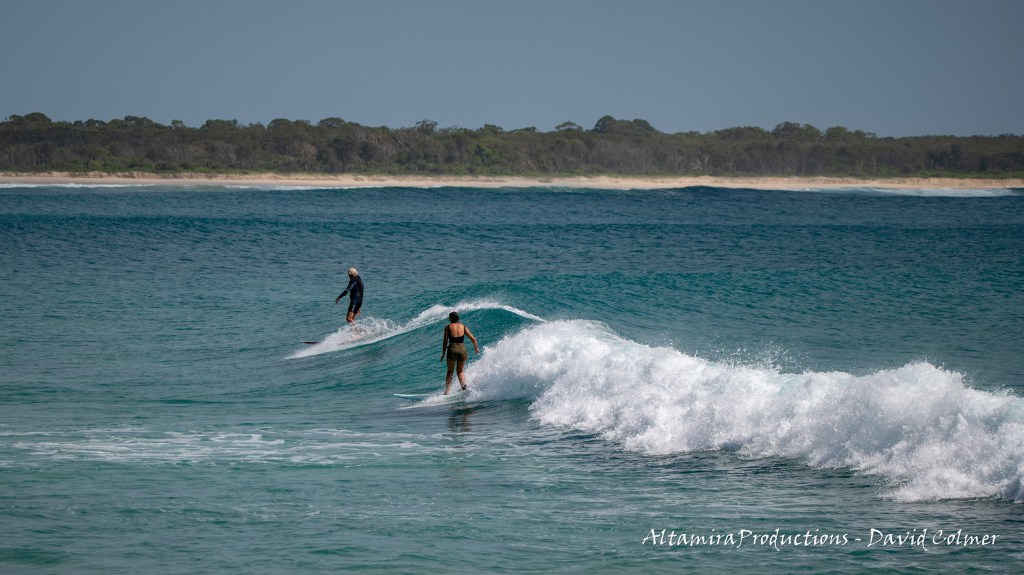
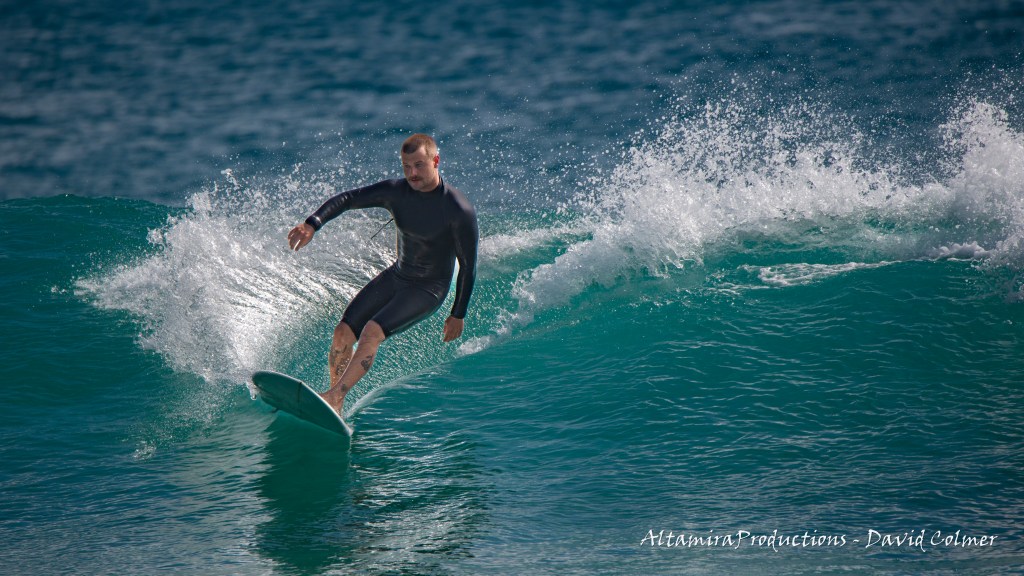
When you ask ChatGPT why the waves at Crescent Head are so smooth and symmetrical they point out that it is a classic right hand point break, the seabed slopes gradually helping waves maintain their shape and speed, the refraction of the waves as they hit the headline and a few other reasons. What all of that means is when you’re standing there in the morning having your coffee from the surf club and you look out to the ocean you see these beautiful linear, symmetrical lines of waves rolling in most with a surfer on them riding these perfect sets endlessly.
So why do I mention the Pandanus tree and the linear waves? Because when you put those two things together I think you get one of the most quintessential beach scenes ever and every morning I had this view while drinking my morning coffee. You really feel that you’re in an AI scene. It’s just perfect. There is something very relaxing and mesmerising about watching those lines roll in and the longboarders floating in hanging 5 and 10. Pure beauty. It is a perfect start to the day, one which I could get very used to.
Not long after I returned from Europe I was packing again for a 3 week stint in the Northern Territory. Al had gone up a week earlier to start working in Jabiru and this was the start of the Australian leg of the New Phase Tour.
The idea was that we would go to a town where Al would work for a month and then have a month off when we would head off exploring until we get to the next town to work. Initially we will be fly in fly out but eventually it will be more camping and exploring the region. My thoughts would be that I could get a few clients and work remotely and try and get Fretless Financial Management Services to become a viable means of income.
So first stop was Darwin and back to the warmth. It was great to be in the tropics again. But here’s a tip – don’t leave your physical credit card at home if you’re planning to hire a car. The backward rental companies do not accept the CC on your phone. Anyway, emergency diverted courtesy of forward thinking and progressive East Coast Car Rentals. I’ll be using them whenever I can from now on.
Got on the road from Darwin late as I had to buy a protective case for my cameras so that I can check it in in the future (way to heavy to carry on) and also had to do some grocery shopping. This meant I left late and would drive most of the way in the dark. Not normally a problem but the animals in the NT are notorious road crossers and it wasn’t long before I hit my first mammal in a car. I’m not proud, in fact it gutted me. The two saving graces were that it was a small one and therefore the damage to the car was minimal and second, I was probably doing 110kmh so the little fella was dead on impact and would not have struggled. I still feel sick just thinking about it.
The fact I knew I had damage on the car was courtesy of a police officer who pointed it out. They were stopping cars for some reason and I noticed they had some indigenous people off the road and they were talking with them. No idea what was going on but it didn’t have a good vibe about it.
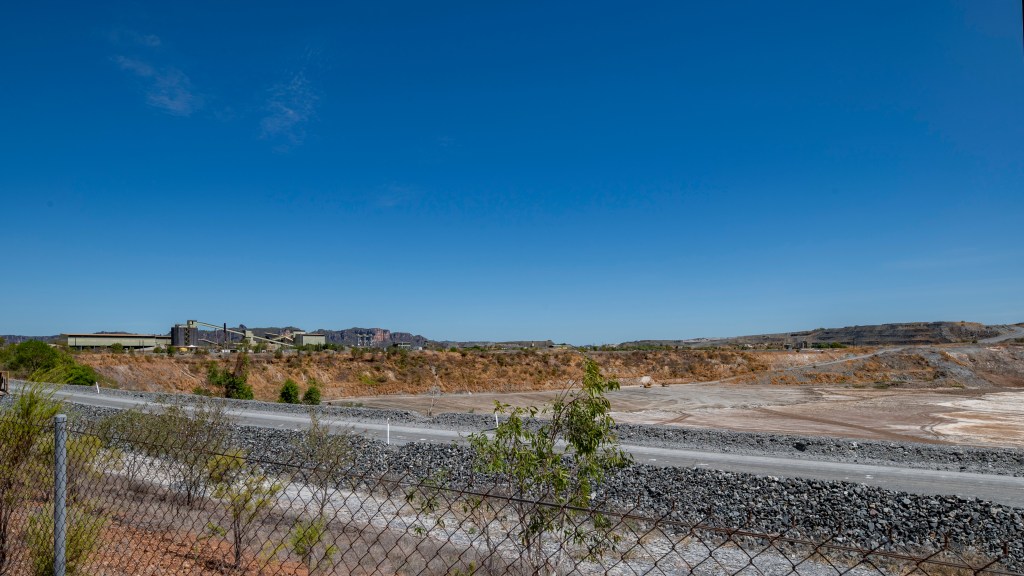
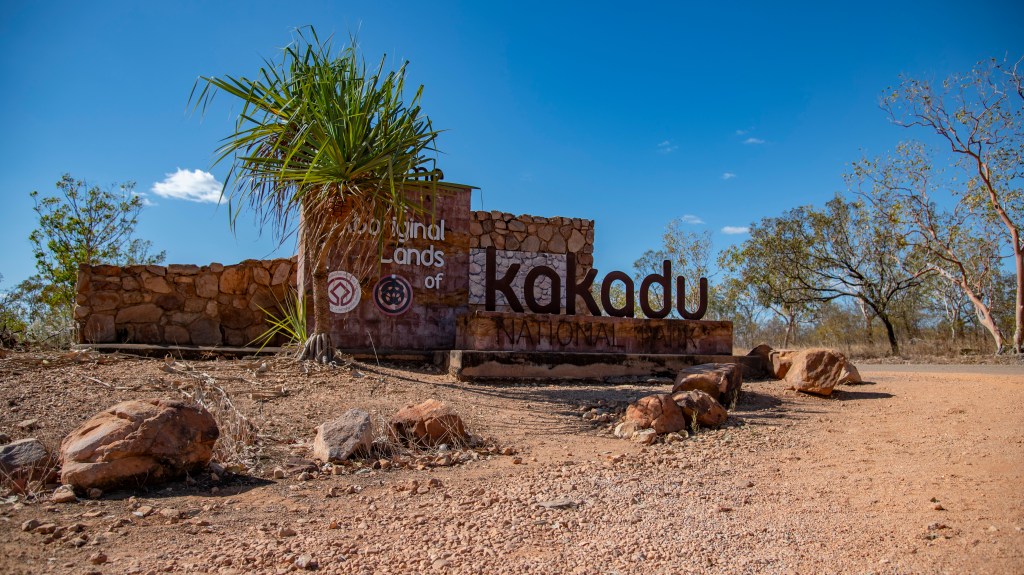
Got to Jabiru with no more collisions with animals (well, except for the 3,267 bugs splattered across the front of my car). In the morning I got my first proper look at this town built to house workers from the nearby uranium mine. The mine has shut down down and now the workers are there to clean it up. The town is clearly on the decline but it is the gateway to the Kakadu National Park, probably Australias most famous remote national park after she starred in Crocodile Dundee.
But the town had a coffee shop and it was bloody good coffee which was a huge relief after the rubbish we had in Europe and the UK. It doubled as the Art and Cultural Centre and we went to the indigenous painting lesson. I let John, the in-house artist, know that his job was safe and after one very brief look at my piece of “art” he basically agreed.
In Jabiru there is a supermarket, the Art & Cultural Centre, a golf club, caravan park, resort, swimming pool and a servo. That’s pretty much it. Backpackers can be seen serving groceries during the day and the same guy served you at the golf club. I wondered why the locals weren’t working instead. I do not have the answers but one theory is that the local nation get revenue through the landrights and this is enough for them all to live a basic life. They don’t seem to get satisfaction from working like the west do. But this problem is ours, not there’s. They don’t seem to think anything is wrong.
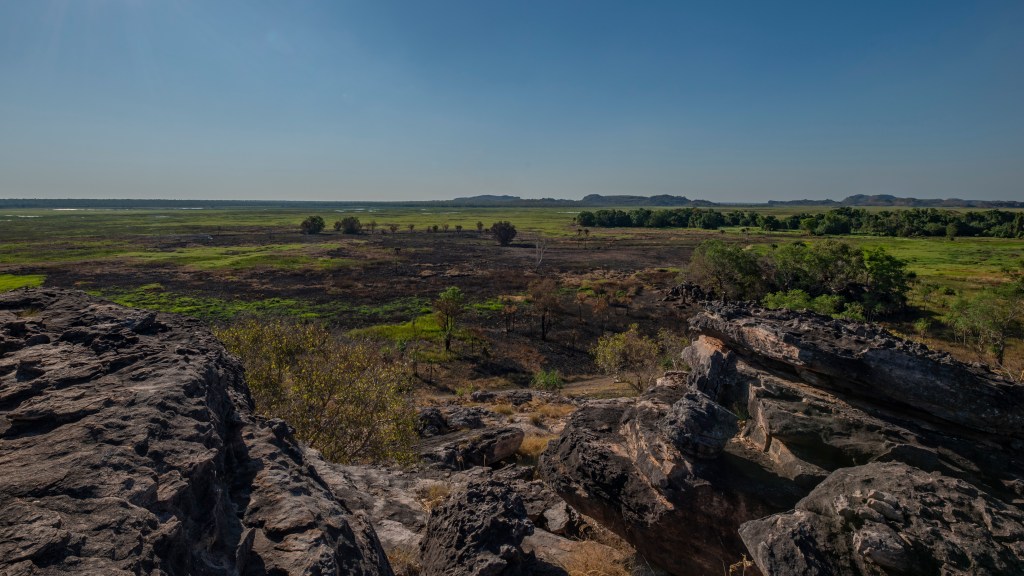
So the first weekend we went to the art centre and then headed out to Cahills crossing, Bardedjiliji and finishing off at the famous Ubirr (made famous in Crocodile Dundee). Let’s be clear, it is an incredible country up there. The custodians of this land are, were and always will be the Bininj and Mungguy. For thousands of years they enjoyed this land, feasting off the huge number of animals and plants and probably marvelled in awe at the beauty as we do today. But I imagine it would have been different with a great deal more wildlife there. I often wonder if they would want to return to such a life or not. I have the fear that these and other indigenous nations will just disappear into time because as a nation we have simply have no drive or passion to help maintain and save them. As a collective, or the man on the Bondi Tram, we just don’t have any interest in understanding our countries custodians, no urge to learn about them, about what was done to them of course but also what their psyche is, what makes them tick, what gives them purpose or meaning. Only they can tell us this, not any appointed guardian. But equally if not more importantly we need to want to listen.
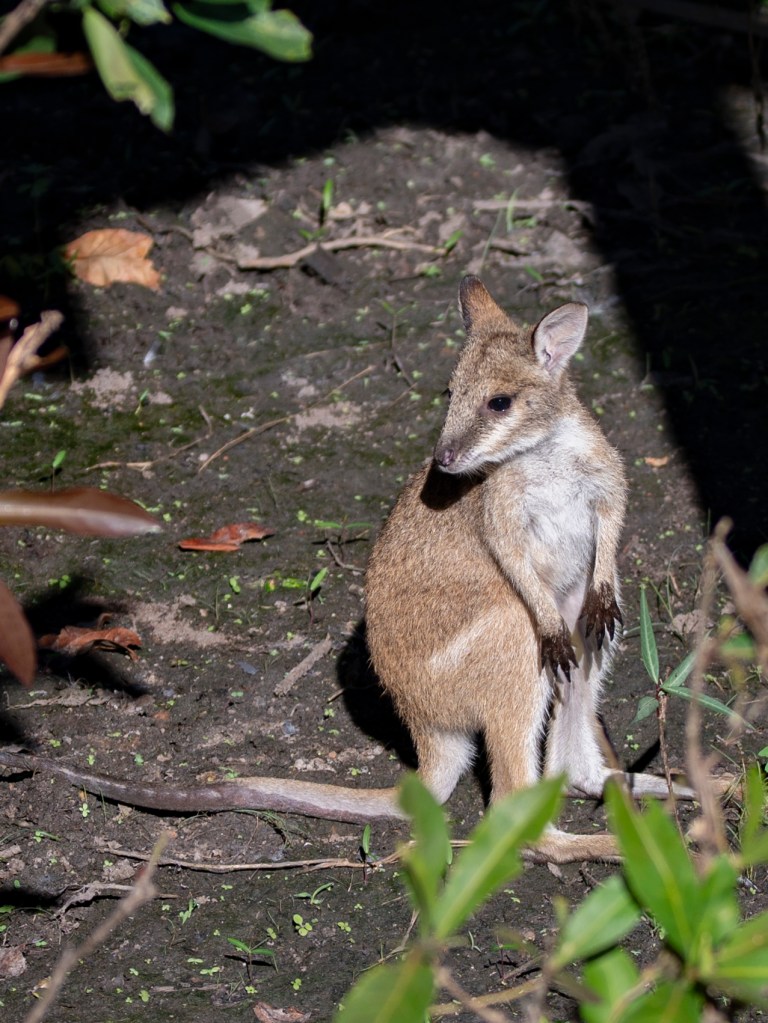
I sat in a bird hide for a couple of hours one morning to prove that I was getting old. Mind you as I left a much younger person arrived so I didn’t feel so bad. There was a family of wallabies there and I did wonder if they were mourning the loss of one of their young ones.
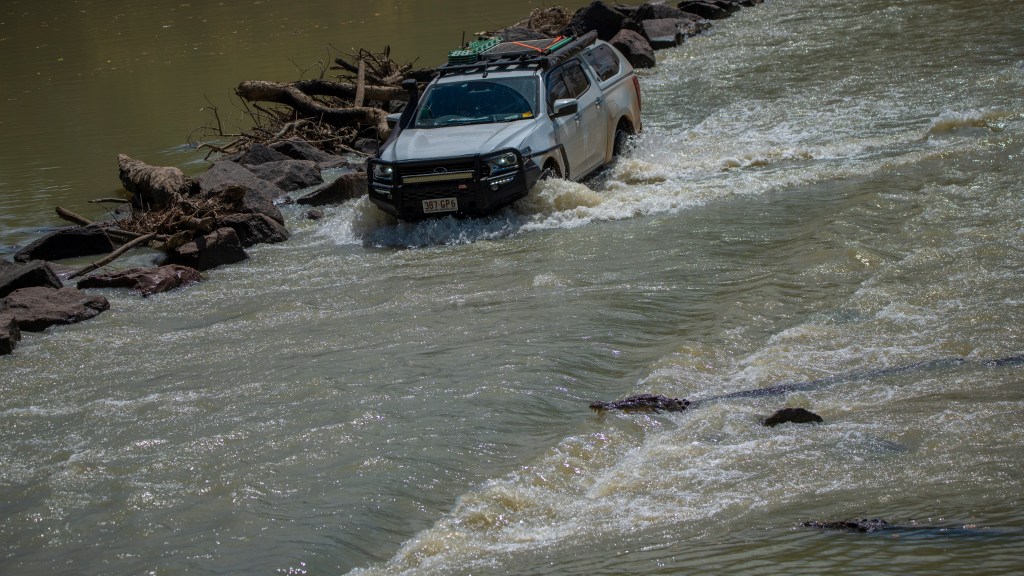
Cahills Crossing is pretty amazing and unique. It’s what is written on the box, ie a river crossing but it does go under water at high tide and it’s at this time that barramundi can get from one side of the road to the other. But it also at this spot that the crocs realise they can get an easy feed. At one stage I counted 20 man eating hungry crocs in a single view and who knows how many were under water. You fall in there and you’re gone for sure.
Of course no trip to the Kakadu is complete without a sunset or sunrise cruise on the Yellow Waters Billabong. The wildlife is incredible. So many crocodiles that to be honest spotting them was a bit ho hum. It is popular but it is popular for a reason and that is because it is beautiful. The water level is low at the moment as we were coming to the end of the dry season. The guide pointed out where the water will be in a couple of months and it was really beyond belief.
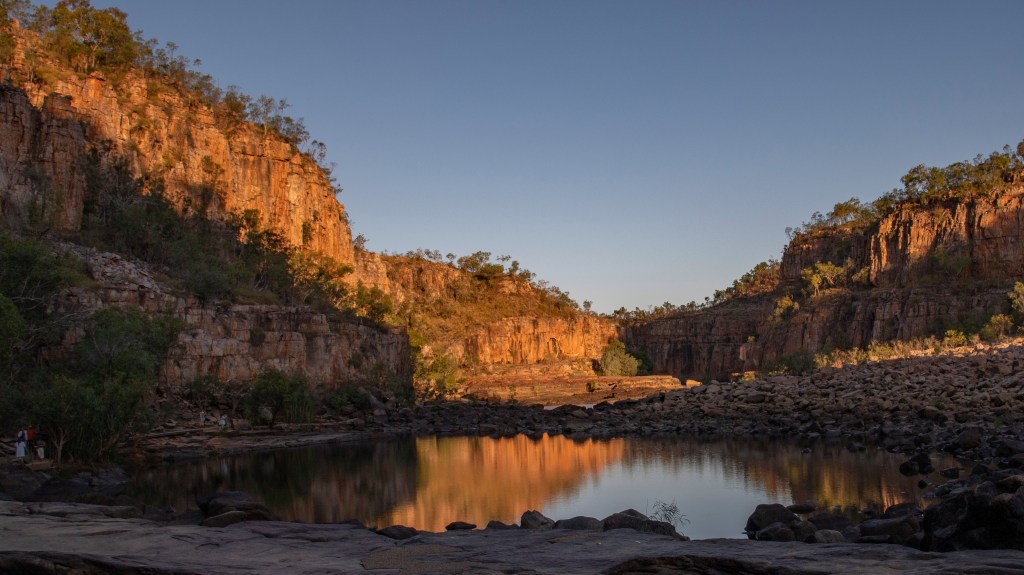
Another cruise we took was along Katherine Gorge which was one of the places we stopped on our slow trek back to Darwin. The landscape is breathtaking and the colours magnificent. The river zig zags through this canyon carved over many years. Freshwater crocodiles lay eggs on the sandy beaches dotted along the river. The cruise included dinner at sunset which was as impressive as it sounds. One thing that took me by surprise was on the walk back to the car park there were cane toads everywhere. Those pesky little South American bastards introduced in Queensland to eradicate a cane beetle had made it all the way to this beautiful area. They were so cocky and sure that they had no predator that I was easily able to boot them off the path. They did not care less. So sad.
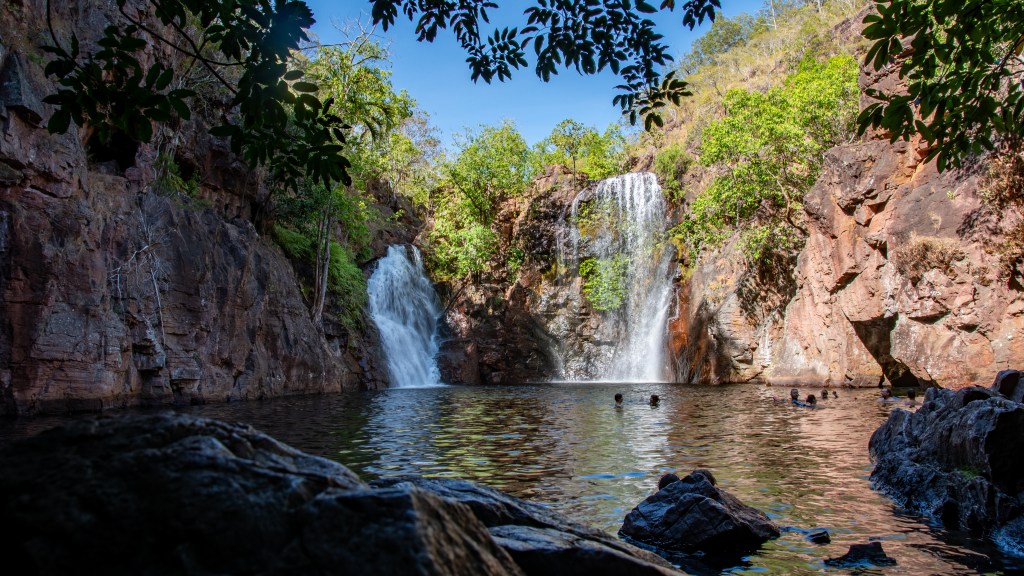
Then we checked out the waterholes basically. This part of our island continent is full of them from hot springs to pools at the top and bottom of the waterfalls. Initially I was freaked out by the possibility of crocs but that fear slowly subsided. One fear that I do have is of deep water and what lurks below. That did continue to freak me out I must admit. But the swimming was pretty cool and we saw some big barra and other fish. In summary we swam in Maguk, Katherine hot springs, Mataranka, Florence Falls, Buley Rockhole and cascades, Edith Falls, Wangi and I am sure that I have missed a few. They were pretty good I must admit.
We spent a day in Darwin which was interesting. They’ve got a pretty nice bay precinct showing outdoor movies, lots of nice restaurants of varied cuisine, safe swimming sections and all pretty easy to get around in. They have some pretty funky street art as well. We took a drive out to the WW2 museum and read up about the bombing of this area. The first raid was horrific with so much loss of life. Luckily this was the only significant deadly raid but it would have been a nightmare for the residents of the time.
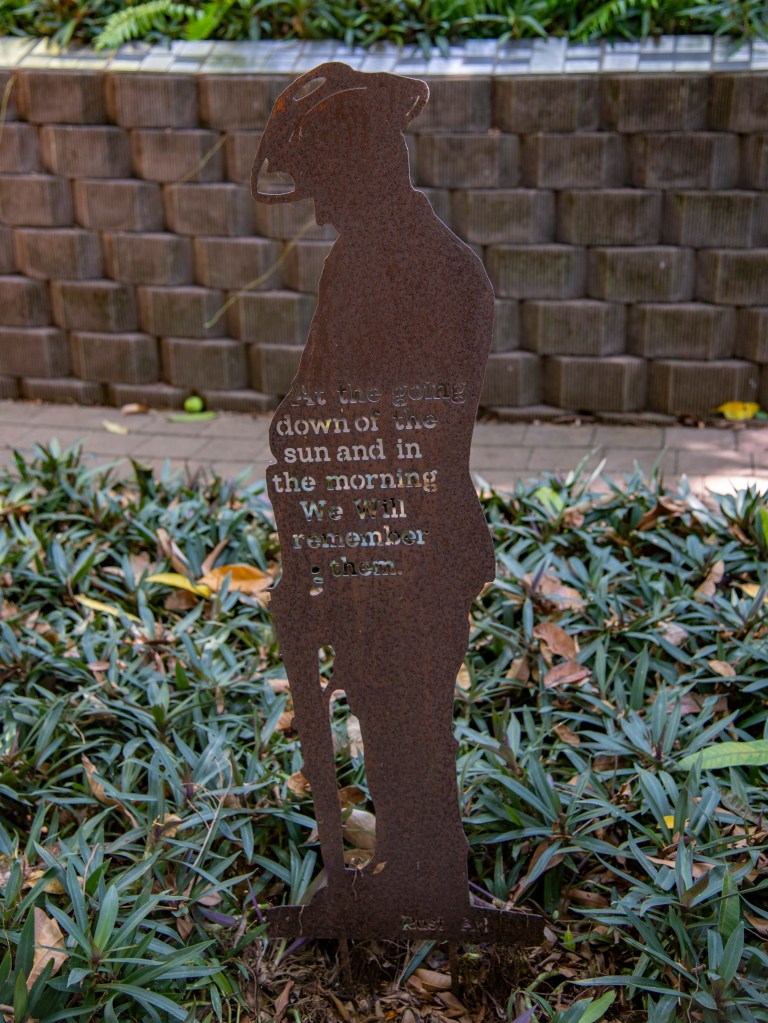
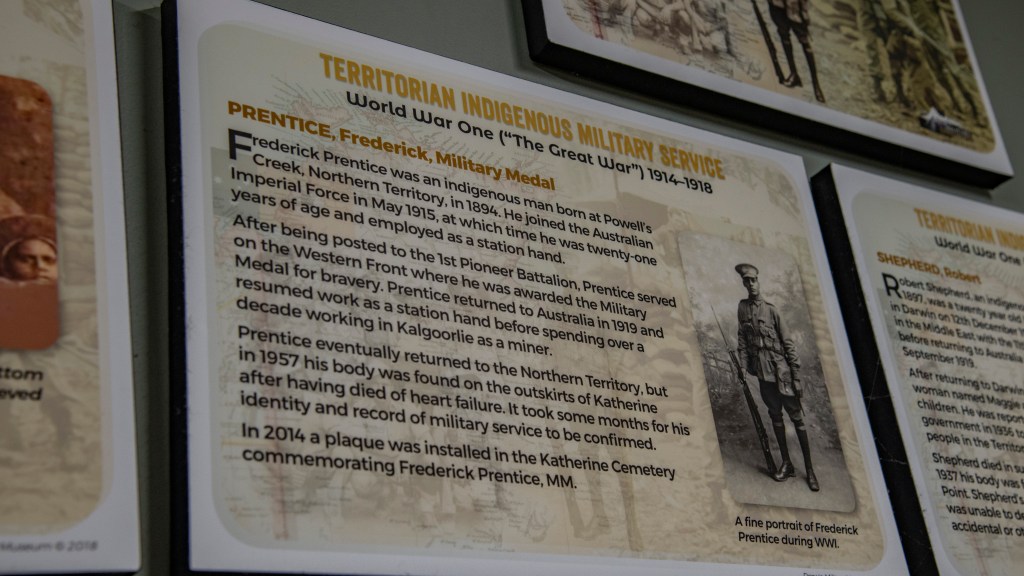
The real eye opener I read about was the section on indigenous soldiers from the Territory. First thing that got me was that these guys signed up to fight for a country that at the time did not even recognise them as people let alone citizens who could vote. And secondly, when the first world war vets returned they received pensions and blocks of land they could make a living on (called a “selection”). But not the aborigines. Thanks for fighting guys but now get back in your hole. As a nation that is basically what we told them. Leaves a pretty bad taste in your mouth hey.
Getting out of Darwin to Sydney in the dry season you either have a cluster of flights around midday or another cluster of flights around midnight. In the wet they drop the midday flights and it’s only the red-eye available. We caught that one home and it is truly a horrible time to fly. The Territory is so different to NSW. The people, the landscape. They don’t have BCF in Katherine but instead they have Rod and Rifle. Pretty much sums things up for you right there. When you enter Rod and Rifle the first thing you are greeted by is a baby pet croc in a fish tank. And then when you make your way to the back you are greeted by a wall full of guns and ammo. You have a policeman outside bottle shops checking licenses to ensure that you do not live in or are not taking the grog back to a try settlement. It’s a different world. I am sure we will get back there one day and I hope I can learn even more about this amazing part of Australia and its people.
So that’s the end of my 3 months of travel to England, Europe and Africa (oh, and Singapore). And needless to say I had a ball. There were moments it was a bit hard and not so good but I think when you sum up an event like this you not so much forget the bad things but you put them into perspective and perhaps reflect on them with the benefit of hindsight. I can’t be easy to travel with and I can’t expect people I travel with to be easy either. We all have the bits that we want to do and see and our attitudes will differ. But being close to groups of people makes you adapt your style accordingly.
I have come to the travel thing late in life due to my excessive fear of flying. On this trip it was something like 13 takeoffs that I did (and landings thankfully). Not saying that it was fear free but it was just something I had to plough through. But of course it was all worth it and that is why I was able to plough through. Without flying I would not have had my eyes opened to the differences of countries and the people that crossed my path. I would not have had my pre-misconceptions quashed and defined. I would not have witnessed the beauty first hand.
Everyone has been asking me “what was the highlight”. I now reply to this by saying “How can I have a highlight when it was as diverse as seeing the sunset over the sandunes of the Sahara Desert and passed over snow capped mountains in Norway.” It is just too hard. So what I have tried to do as a challenge is to pick one photo from each country as a highlight or as the thing that defined the country (from what I saw of it at least) or summed up how I felt about a country. So here goes.
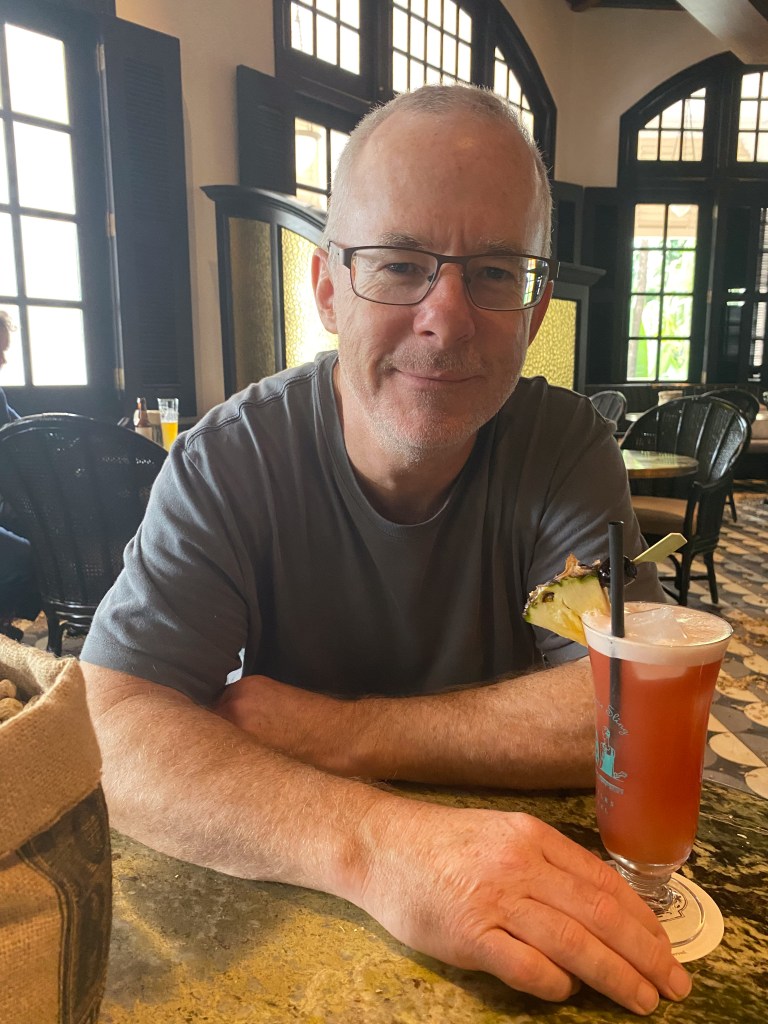
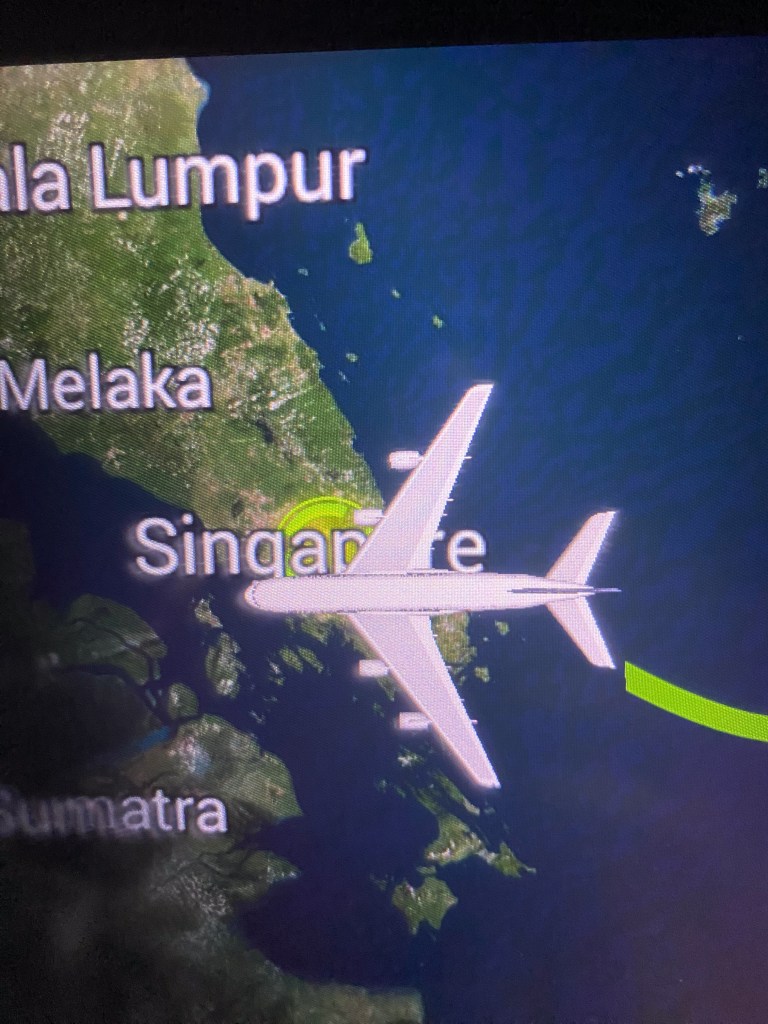
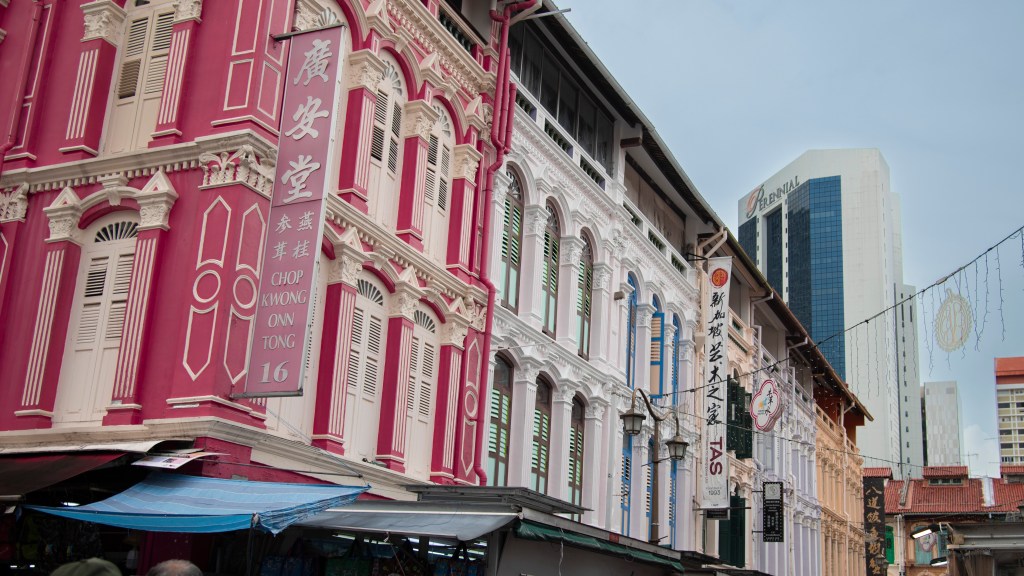
Singapore – It is such a unique country. It has no natural resources apart from its location in relation to past trade routes, its political stability and its frugal investment of past income. It’s Asian, it’s British, it’s Malay, it’s Chinese, it’s Indian and it’s capitalist West all mashed into one tiny island. But what I took away from this trip (and this was about the 5th trip there) is that it has not shied away from any of those elements. Yes, it is dominated by the Chinese population but the colonial buildings are still there as new buildings go up around them. The Malay element is still there as is the Indian. It makes for a bright, vibrant and economically secure country if not a little too controlled by the police.
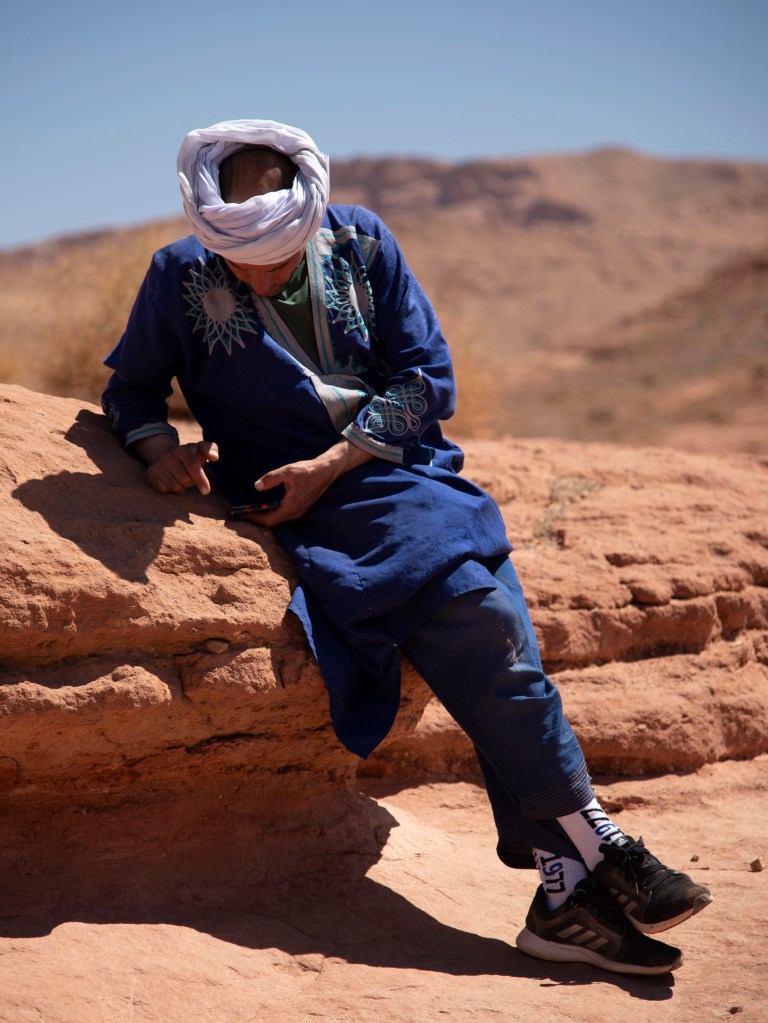
Morocco – It is built on a harsh landscape that has had a tough history. I really enjoyed Morocco but I do qualify that by saying that I am a male and I was on a guided tour. I know from accounts that it can be quite unpleasant a place for a woman on their own. They aren’t as fundamentalist as I thought but their Islam is probably more uncomfortable to accept for us in the west. They are trying to become a more economically viable country with a lot of support to re-green the place and capture solar energy which they have an abundance of. This photo shows the old and the new and the race for some towards that new.
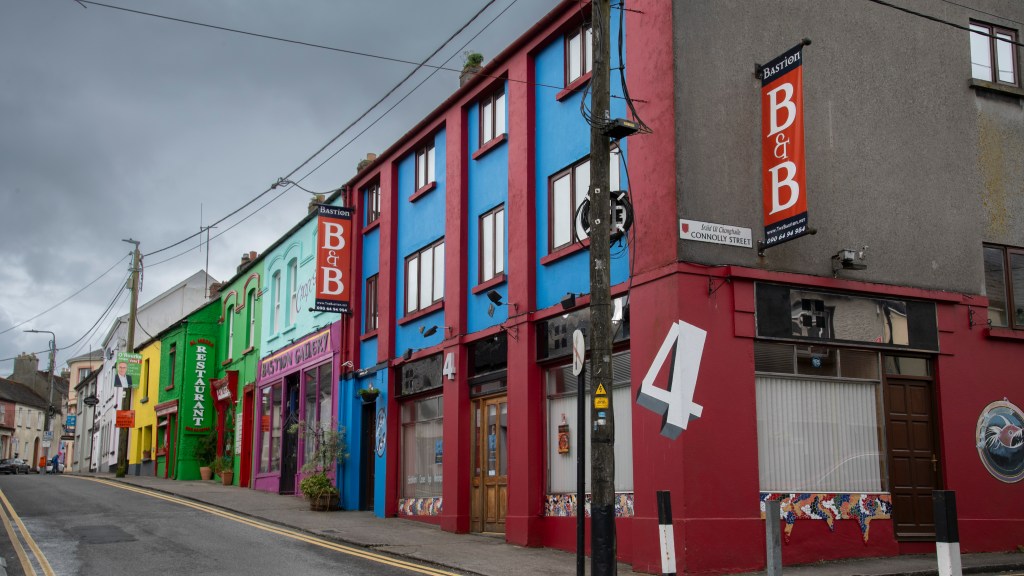
Ireland – Poor old Ireland. It was bloody cold and miserable the whole week. I could tell that it would be a spectacular place had the sun been out and the rain stopped coming in sideways but alas this was not happening for us. But, to compensate for the weather, the people were colourful. They, as a nation, punch above their weight with music, their accent is almost sung, they have a colourful use of the English language and a sense of humour that is wickedly hilarious. This row of buildings in Galway in the dull of a rainy day sums this up perfectly.
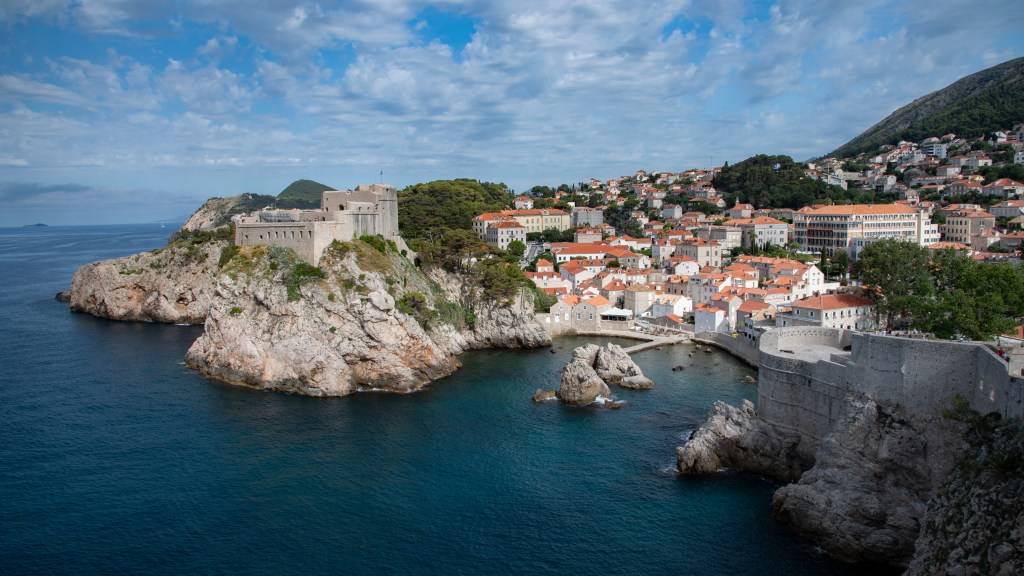
Croatia – To me it was a tough nation in a soft setting. The coastline was so beautiful. The interior was rich and breath taking. But they had been the centre of bad attention for all of their modern history and it has created a tough group of people. Don’t get me wrong, they’re beautiful and friendly but just don’t cross them. Everything needs to be fortified and protected and it can create this juxta positioning of beautiful aqua water lapping onto serene coastlines with a thumping great fort or walled city. Also, Dubrovnik is one of those European oddities. It is not connected to the rest of Croatia due to a deal it did with Bosnia giving them a bit north and south to protect it from the Austrians and it remains as such to this day.
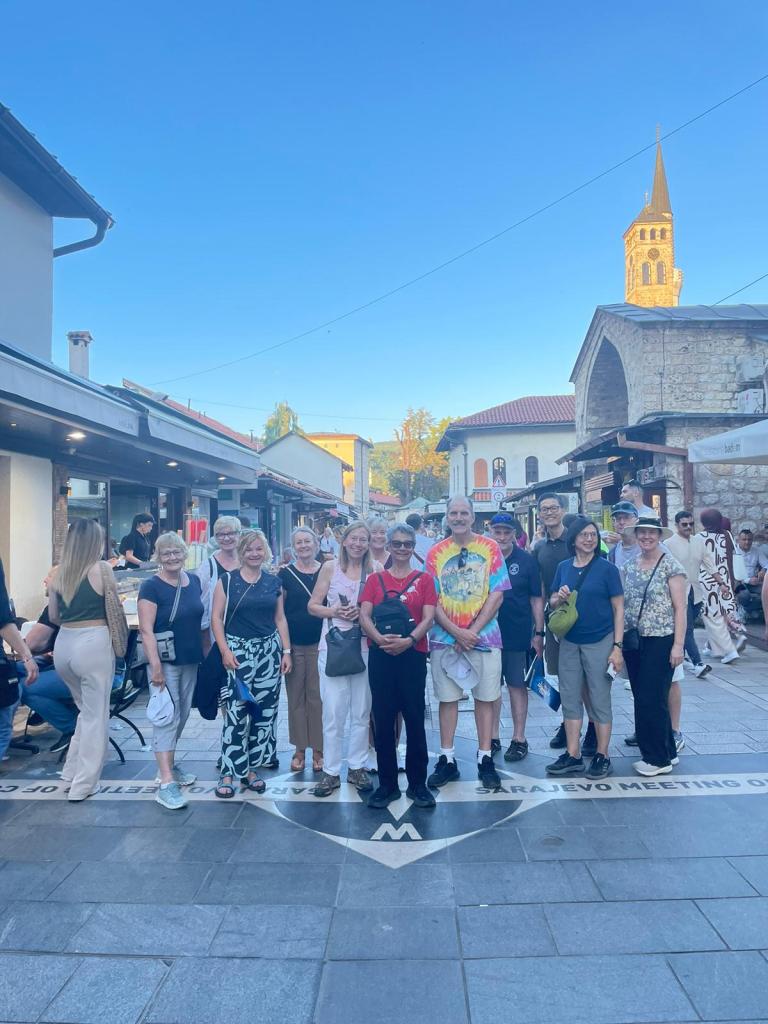
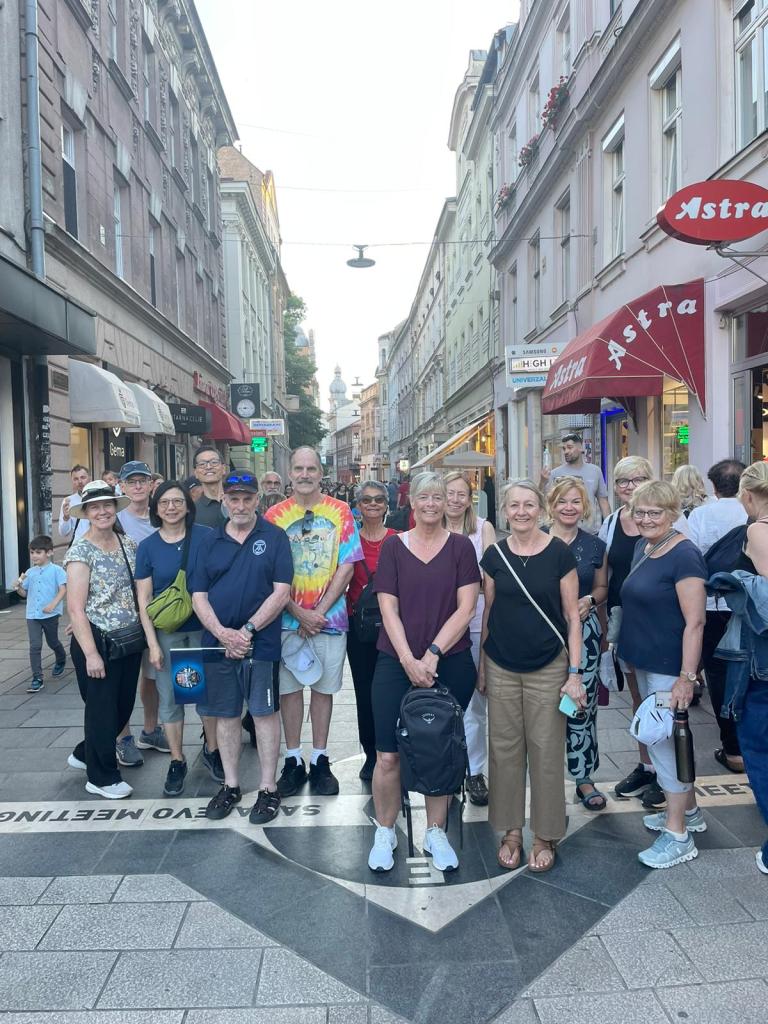
Bosnia and Herzegovina – Was very tough but so enthralling to visit. The kick-off to WW1, conquerors after conquerors occupying them, the horrific siege. Then there’s the great coffee drinking culture, the winter Olympics ruins and the impressive height of their people. So much to take in I had to go with two pictures. There is a point in the old tow where you look one way and it is Ottoman architecture and you look the other way and it is Austrian. Sums up what has influenced this country until this day.
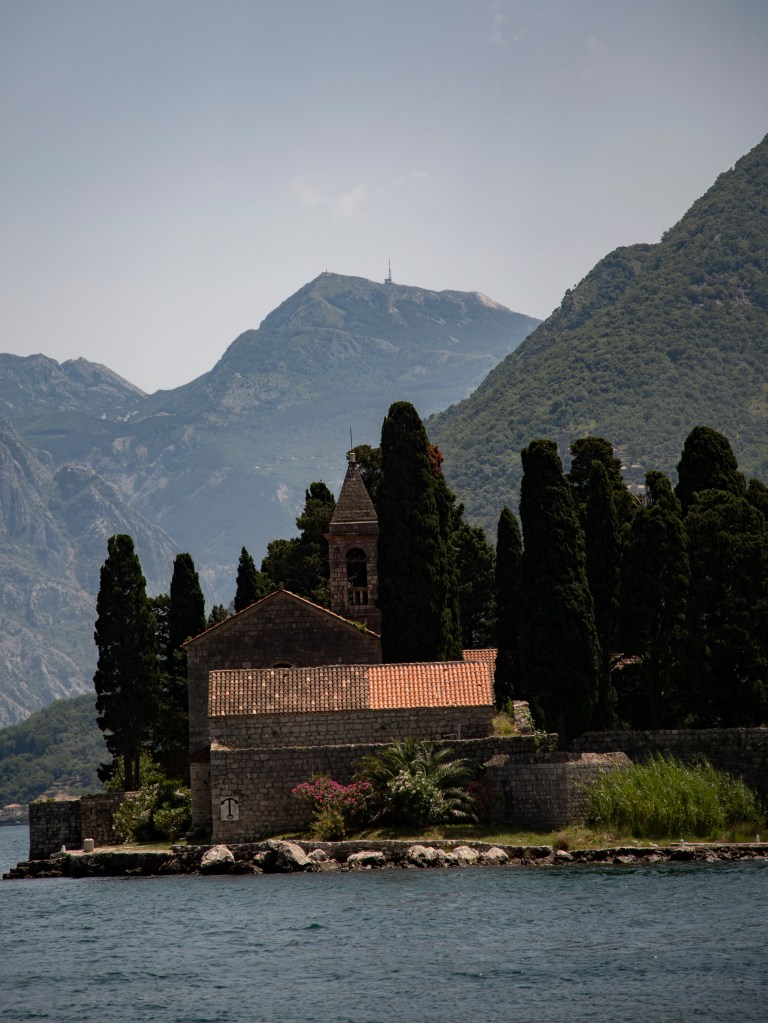
Montenegro – Churches, cats and cash. Churches everywhere and quite often half way up a steep cliff or on an island in the middle of the fjord. Cats rule inside the walls. They are protected and are taking over. And cash, in the form of bribes, is stopping this country from being the Monaco of the Balkans. So much bribery nothing can develop sensitivity.
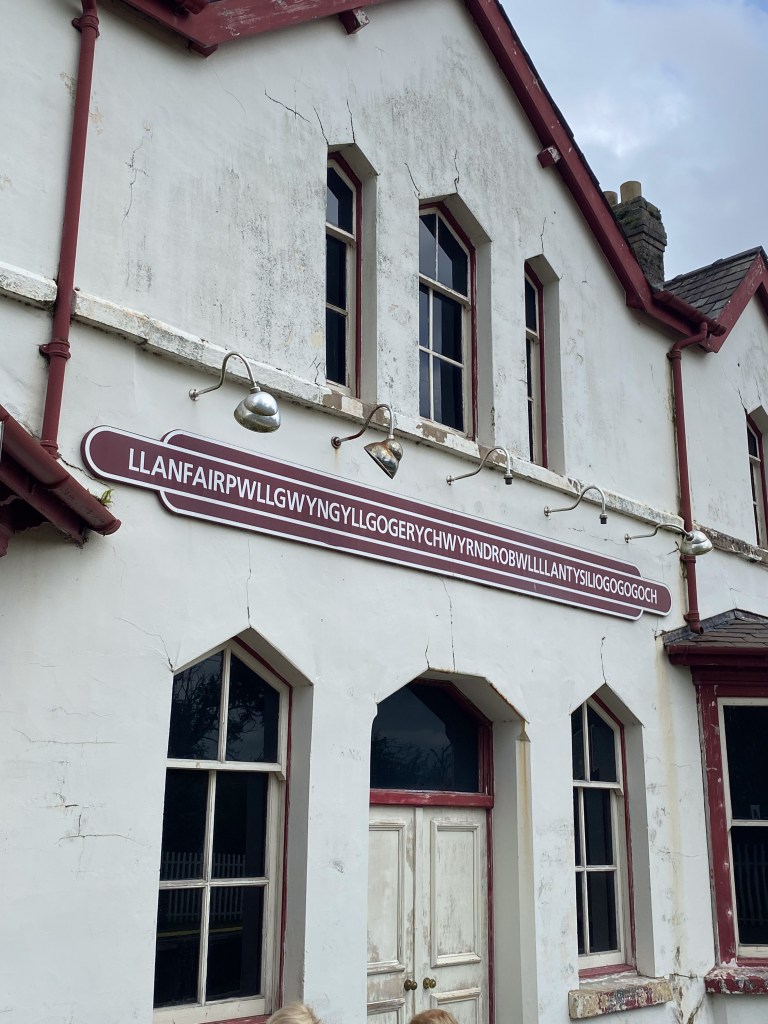
Wales – The first thing I noticed as we drove to north Wales was the dual language road signs and I thought yes, it can be done. My conclusion with Wales was they stuck it up the Brits for a while and then said ok come in but let us continue to be Welsh. Let us continue to sing, play rugby in the Welsh way, wave our flag and have a Welsh sense of humour. So the town where they extended the name for a joke and to increase tourism sums it up.
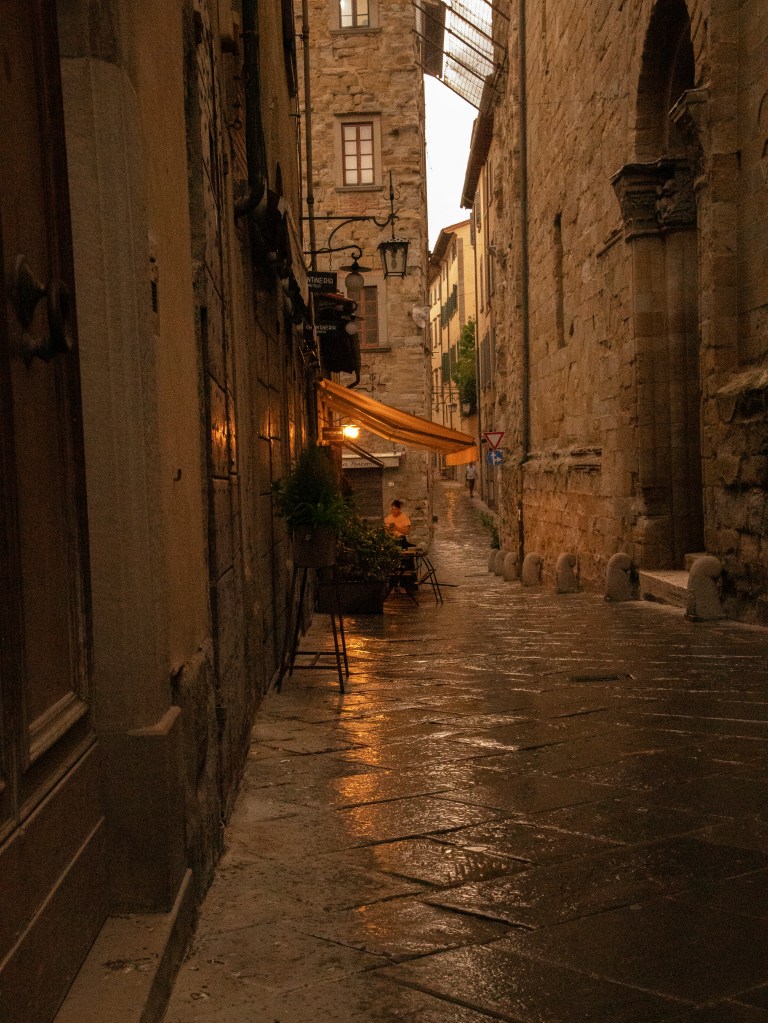
Italy (Tuscany) – It had to be the wine, the old towns, the huge piazzas, the stylishly dressed, beautiful women, the siesta, the food. So much to sum up in one photo. This cute, tiny little restaurant in an old cobble stoned street with a bit of rain probably does it best. Later in my trip this restaurant was the scene for my famous dinner with an ex-rugby playing Italian. Best night.
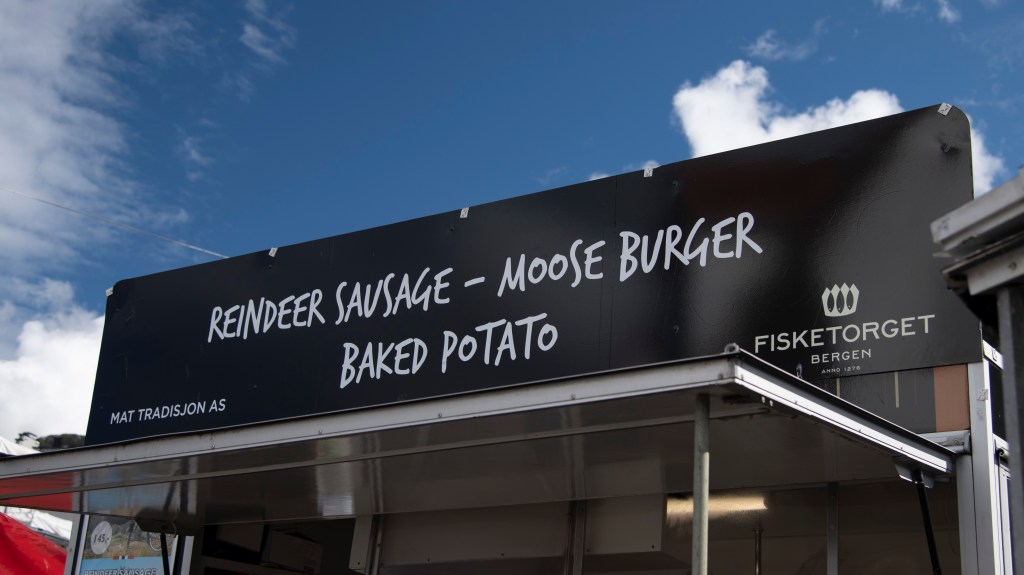
Norway – Wet, cold, sunny, wet again – but beautiful. Could never live there but easily visit again. The architecture was incredible, the landscapes on the train journey were simply magical as they transformed each bend you turned. But these are typical shots from there so I went with the uniquely Scandanvian highlight – Moose Burgers and Reindeer Sausages.
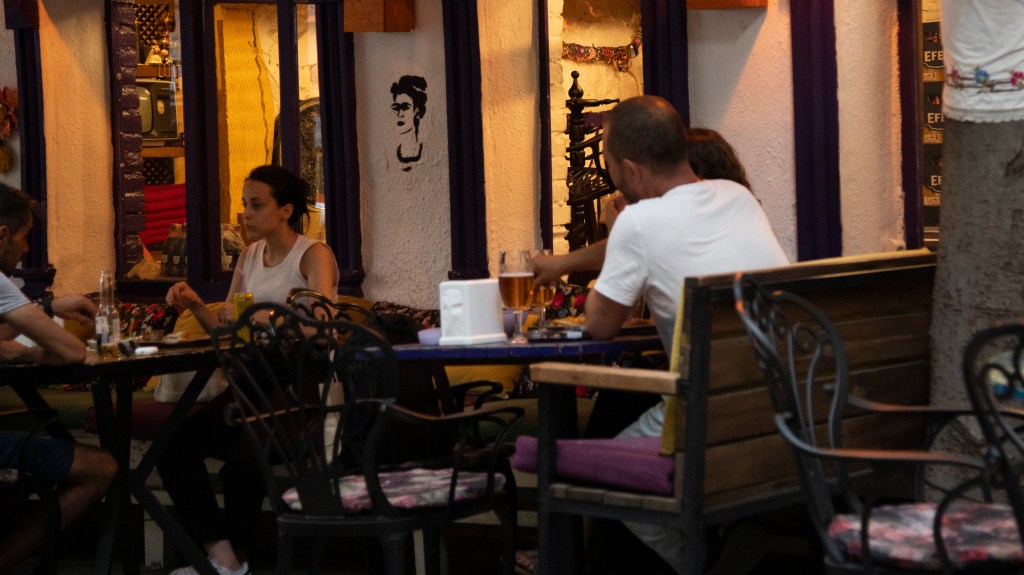
Turkey – Oh please, how do I pick a highlight or summary from Istanbul, Gallipoli, Troy, Pergamon, Ephesus and Izmir. All of it was incredible and moving. The pilgrimage to ANZAC Cove was powerful, Ephesus just took me back to the book of Acts, Istanbul was grand, Pergamon was breathtaking. But the one simple, unimpressive view across a Roman ruin to the Christian basilica to the Muslim fortress sums it up for me.
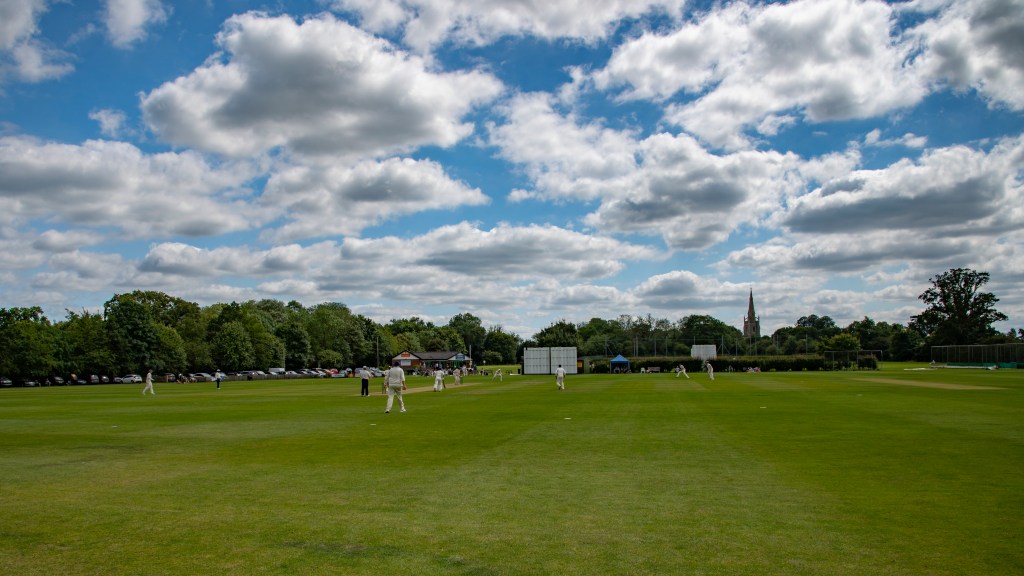
England – The reason I was even on this trip had it’s roots in English village cricket. In 2023 Thali and I visited Ethan and watched a couple of games. Playing bingo outside the club house until 9pm after watching the days play on a balmy evening had me hooked and I knew I wanted to come back for a whole lot more. The weather wasn’t great early but in July it was great. Everyone has their reasons to travel and mine was my son and cricket. But being antipodean we’ve learnt to make the most of the 24 hour flight and we packed as much in as we can and I hope I have done that this time and that you have enjoyed the journey with me.
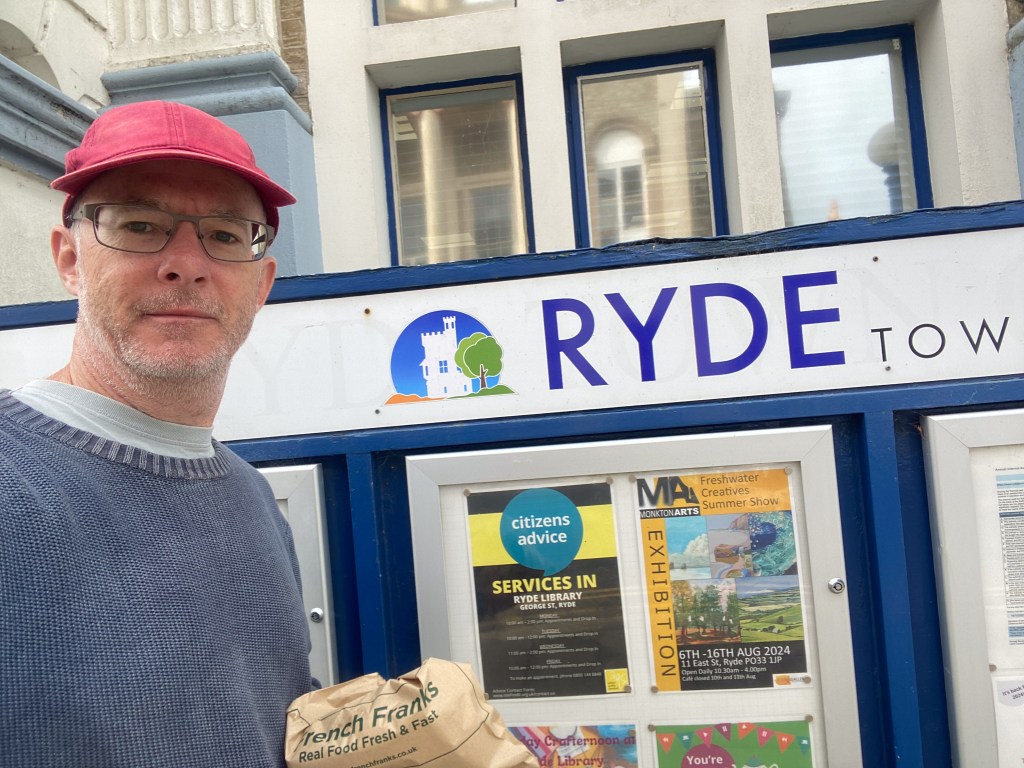
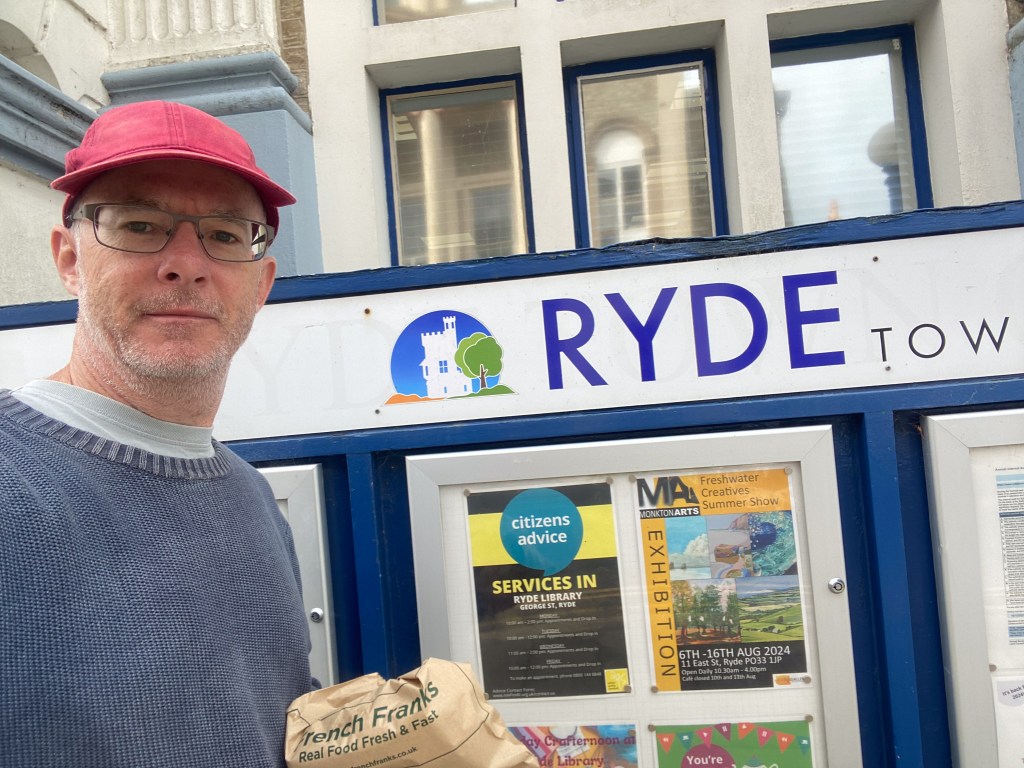
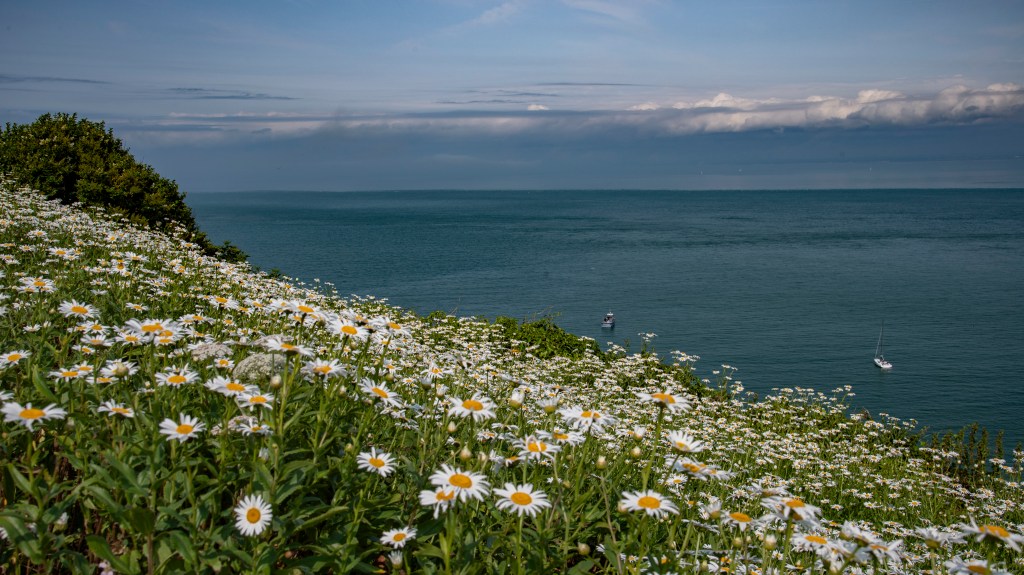
So that was the end of my mini European holiday but I had 1.5 weeks in England before heading home. In that time I did spend a few days on the Isle Of Wight which turned out to be quite interesting. It’s a bigger island than I originally thought and there is a lot to it from a cute little village with a cute model village, beaches of varying quality, plenty of old houses and gardens, the home and place of death of Queen Victoria, old steam trains, a falconry and a town called Ryde which went down well with the family.
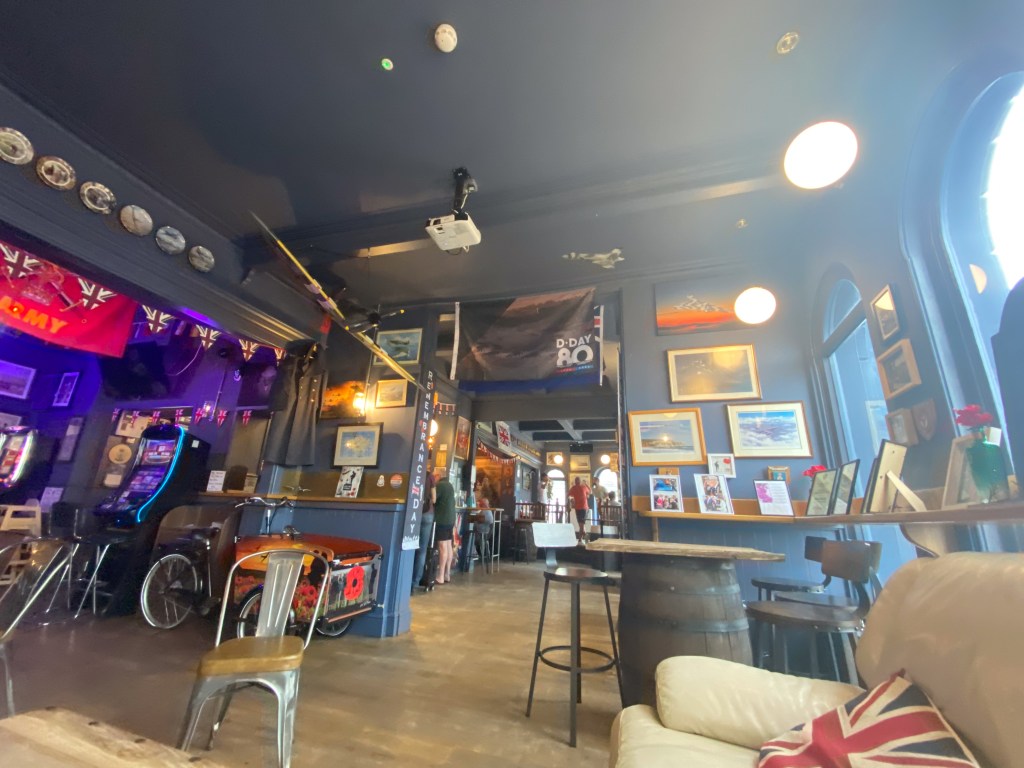
I stayed in a pub called the Veteran, a not-for-profit designed to help keep the returned vets off the streets with a safe place to live. They had an open mic night and I thought I would have a go and did I Was Only 19. Thought that was fitting.
The thing that took me by surprise was how close it was to the mainland. It was 45 minutes by ferry but most of that time was the go slow that the ferry does when leaving and arriving at the ports. Mind you, this short trip cost about $200 each way.
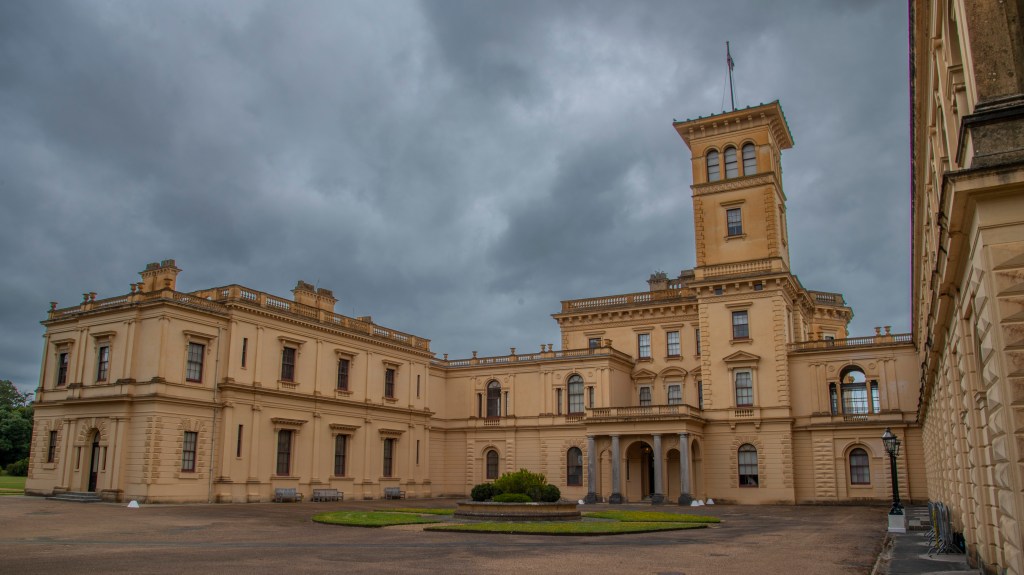
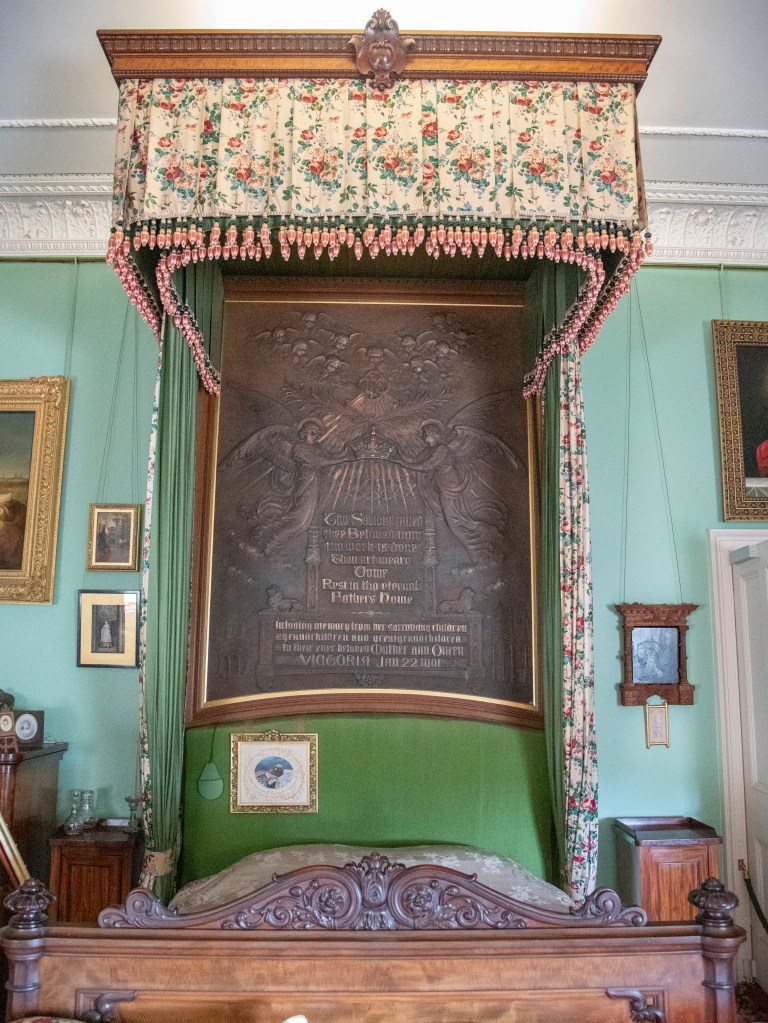
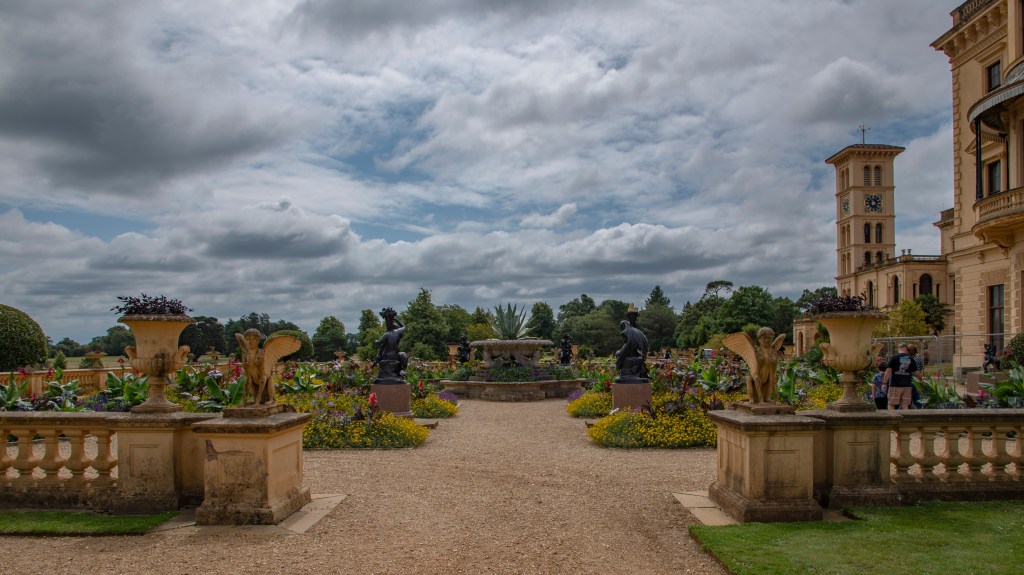
Whilst there I visited Osborne House which was at one stage a residence used by Queen Victoria and her family. It’s an amazing place right near the sea and was in fact where Victoria died. That was pretty freaky, standing in the room looking at the bed where she died.
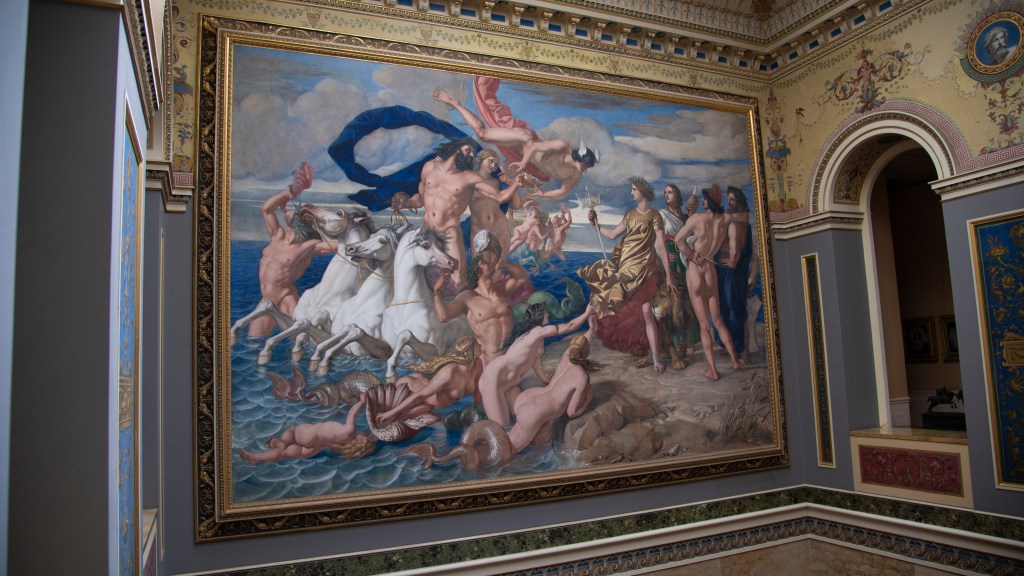
The house was chockers full of paintings and sculptures, a little over the top from my preferences. I did learn that it was pretty much the same today as it was when they lived there. Really not my kind of minimalist approach that is for sure.
It did say a lot about them I must say. A lot of nudity, a lot of buff dudes, a lot of embracing. I think that Vic and Albert were a pair of raunchy characters if I’d have to bet on it.
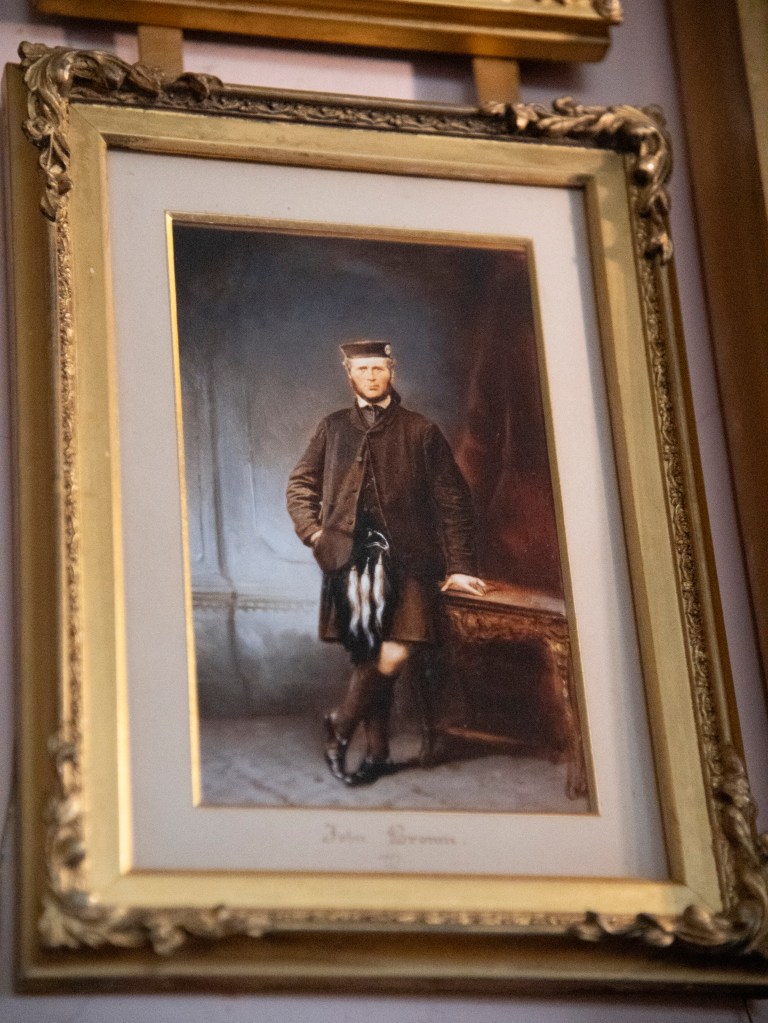
Then of course there were the special relationships old Vic had. There were a few young Indian chaps and of course the Scottish Mr Brown made famous and played brilliantly by Billy Connolly in the movie Mrs Brown. I do not want to speak evil of the dead but I am not sure that old Vic always played ay home.
In yet another example of “oh my God, she walked along here” I strolled along the path from the house to the sea, a path the family walked often so they could have a swim in the The Solent (the strip of water that divides IOW and England). Albert built a portable pool (hand in and out of the bed apparently) which was used to teach the kids how to swim. Then of course there was the converted train carriage that the women used to change into their swimmers (more like clothes they didn’t mind getting wet) and then it rolled into the water and the children would go out the back door for their swim and no-one would see their ankles heaven forbid. So it seems old Vic was a cracker in the bedroom but very much a prude in public from what it seems. Maybe she knew what her three friends and Albert were like and wanted to keep the boys away from her girls.
And on the point of kids, I saw some stuff that explained why there is a element that really do detest the royals. Firstly, there was a whole play area on the estate including a very much oversized toy house. One of the girls locked her carer in there and refused to let her out until she barked like a dog. You can make anyone do anything when there’s the threat of the royal family hanging over you. Lovely kids hey.
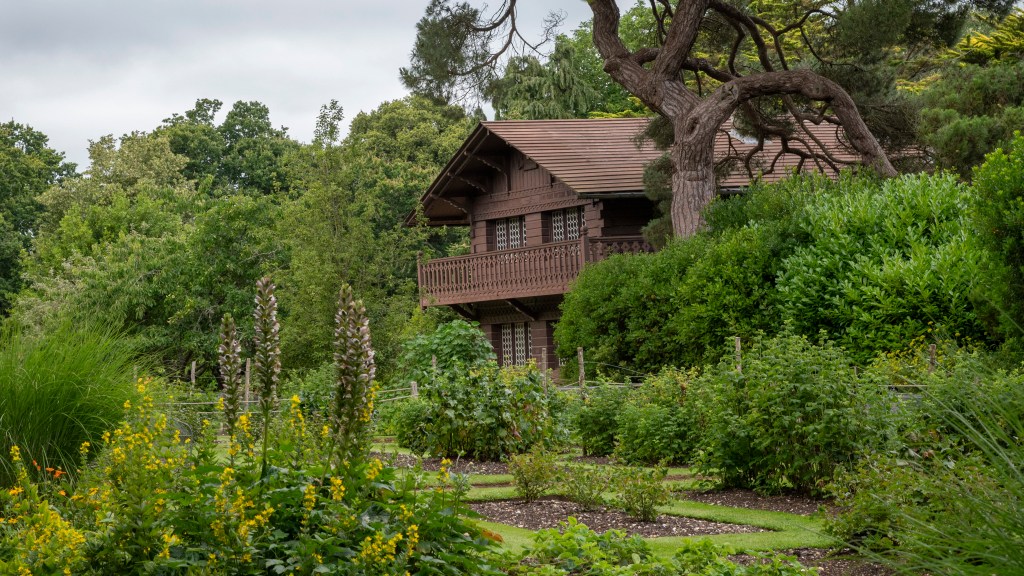
Secondly, the kids had an Austrian styled tree house play house (including fireplaces with chimneys) that would fetch easily $1.5M in most suburbs of Sydney. It was huge. Again, when you have enough lackies anything is possible if so desired. Never could they go without anything they wanted. They had personalised kiddie wheelbarrows so never the need to learn to share.
And thirdly, and this shook me the most, there was a battle area complete with trenches, a mini life like canon and a fortification. Apparently the boys would enact battles where they would send their imaginary soldiers over the top and raid the enemy. Sound familiar? How easy was it then for Victoria’s grandsons and grandson in-law to allow the mowing down of their countries young and fit all for the so called King and Country. It did shake me up a bit I must admit.
Glad I came to the Isle Of Wight. Not a place many would visit but it did seem popular with the English families and I can see why. It’s pretty chilled and lots to do with the kiddies but also somewhere you could easily relax without them.
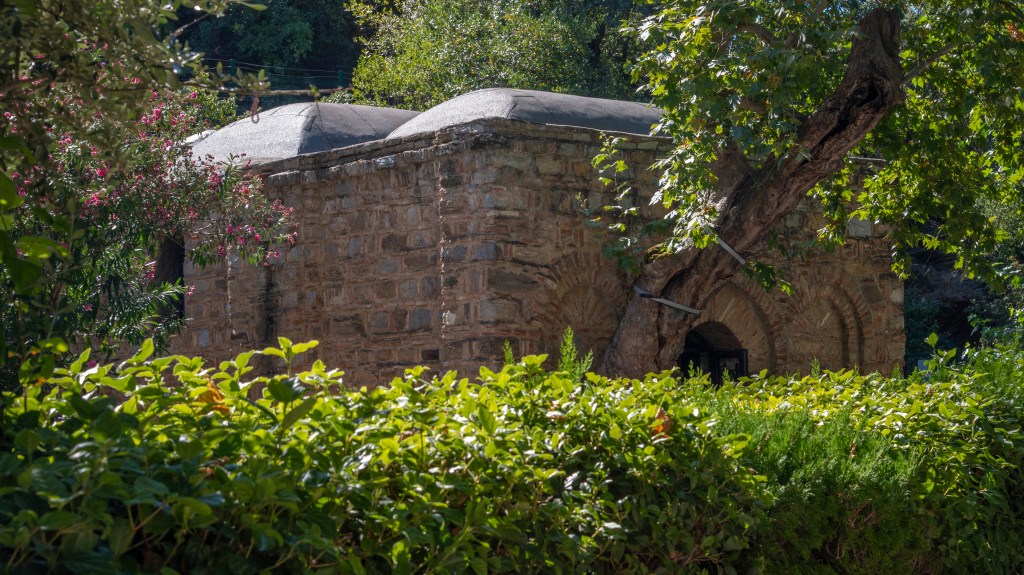
The final leg of the tour was highlighted by a walk through the ruins of Ephesus but also included a visit to the house and place of death of the Virgin Mary, mother of Jesus. Needless to say it was wall to wall South American, Philipines, Eastern European catholics there to pay homage to their beloved Mother Mary. After the resurrection Jesus charged John to take care of Mary and when things got a bit heavy he brought her to the forest surrounding Ephesus to be safe. Nice story especially when you hear that the whereabouts of the house was revealed by a nun after she had a vision in a dream on her death bed. It was an interesting visit.
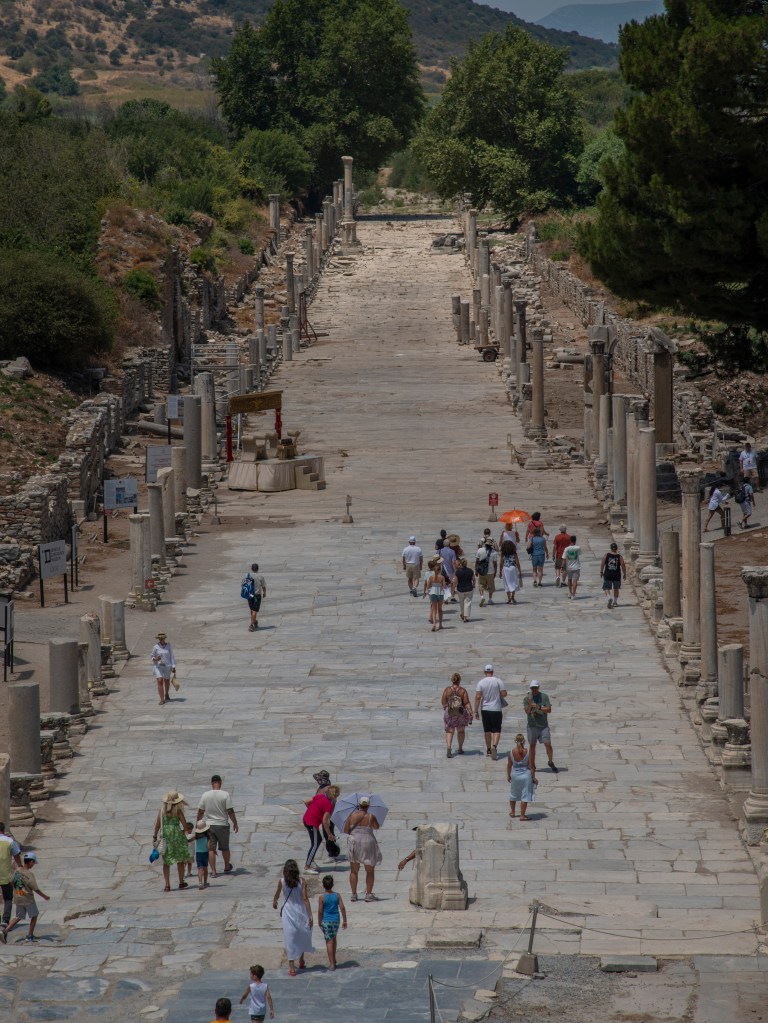
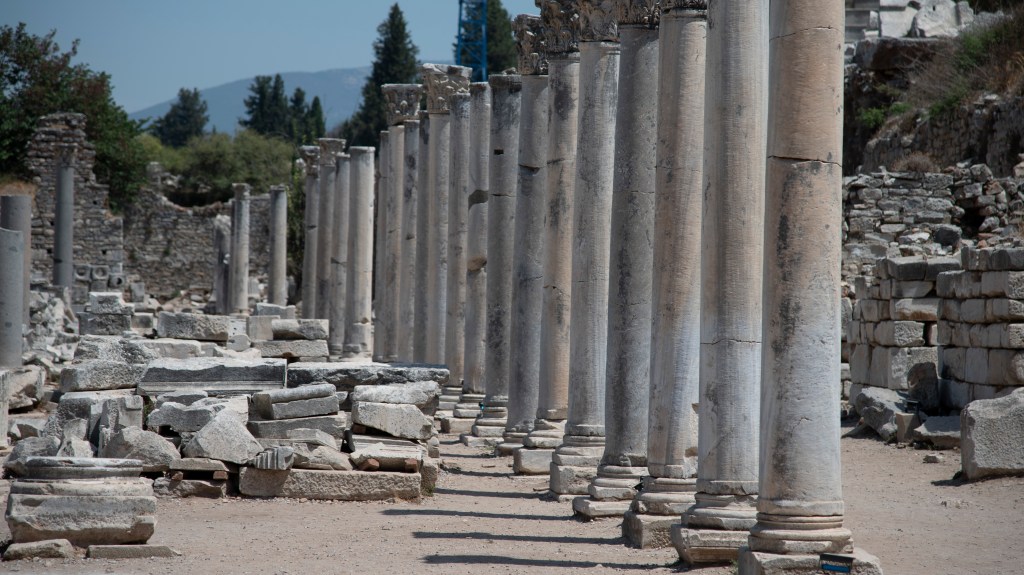
But next was Ephesus and this was extremely impressive. Here is where you could look down the main road, lined with remnants of the shops that would have been there in ancient times, towards the port. This is the road that every visitor to Ephesus would have walked up. I immediately got to thinking, Paul, John, Mary would all have walked up that road. I wasn’t there to pay homage but it was a bit of a buzz to think that these people of the bible were here and the fact that the road is still there and the structures have been rebuilt from actual remains meant that it wasn’t difficult to imagine it at all.
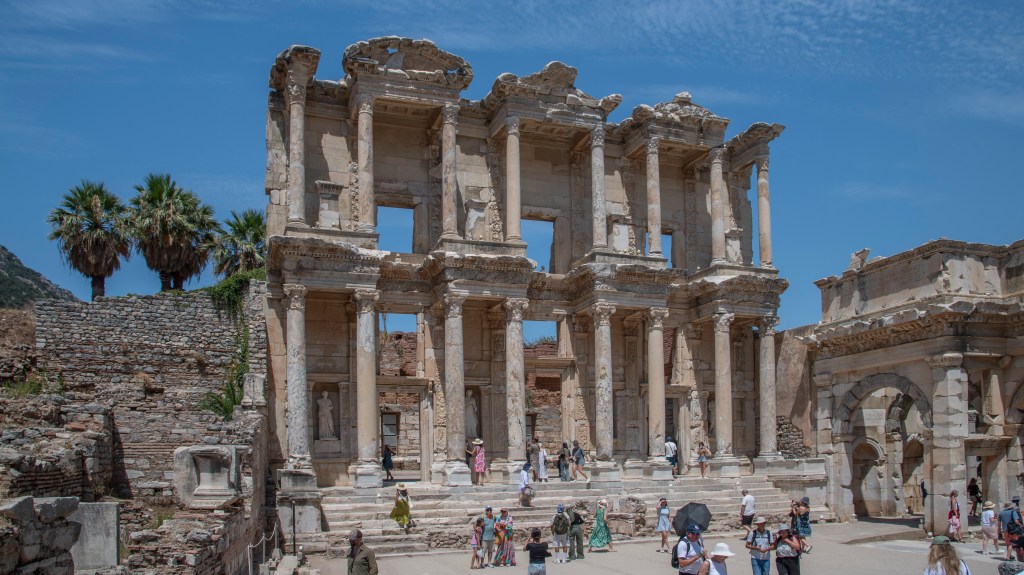
One cool bit was the library, the 3rd largest of the ancient world. It had been partially rebuilt and really did look impressive. But the funniest thing was that there existed a tunnel connecting the library to the brothel which allowed men to tell their wives that they were going to the library and discreetly pop over to the brothel. It reminds of the pub in Sydney named the office. Even funnier still were the coded messages in the footpath describing how to get to this tunnel for the non-locals.
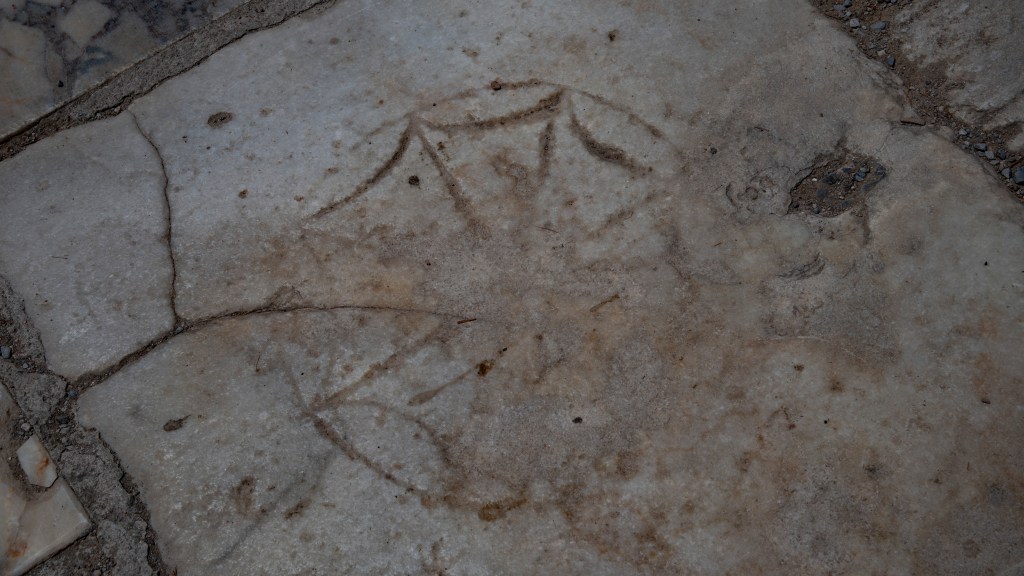
But that was not the only secret sign. The sign of the Fish and Games was used by the early persecuted Christians as the Greek letters referring to Christ are hidden within this sign. There were still a few dotted around the ruins on the footpaths and it was quite freaky to imagine an early Christian, under threat of death, scratching this into a pavement to let another brother know that they were there. Pieces of a puzzle that up until now was theoretical or written only but now I see it with my own eyes.
The ancient sites were mind blowing. Seeing marble columns still looking amazing, engineering feats that seemed unbelievable for ancient people to have developed and the dedication of the few that spend years delicately sifting through the ruins to allow people like me to learn more about the past but also to stare at those sites and imagine all that went on there and the historical events that took place.
In Ephesus was a pretty impressive theatre that had been restored partially using original materials and partially using new materials. It was massive and the home of some pretty nasty displays of so called sport in the past. Today, it continues to be used as a venue where the likes of Pavarotti, Sting, Elton John and others performed. It would be quite unique to watch a gig there I must admit. It seats about 25,000 but I would hasten to suggest that bringing a cushion would be well advised.
After Ephesus we were taken to a leather goods outlet in another attempt to squeeze more money out of the tourist which is fair I guess. But their approach was pretty rare and out there. We (there was only 3 of us at this stage) were treated to models striding down the catwalk in leather jackets trying to entice us to buy them. But the icing on the cake, at least for the others, was that I was dragged up, dressed in a leather jacket (over the top of a t-shirt, track shorts, sandshoes and a hat – great look) and made to do a few laps. Oh well, the others got a laugh. I was nearly tempted to buy a jacket as they were very nice but $700 was a little bit too much.
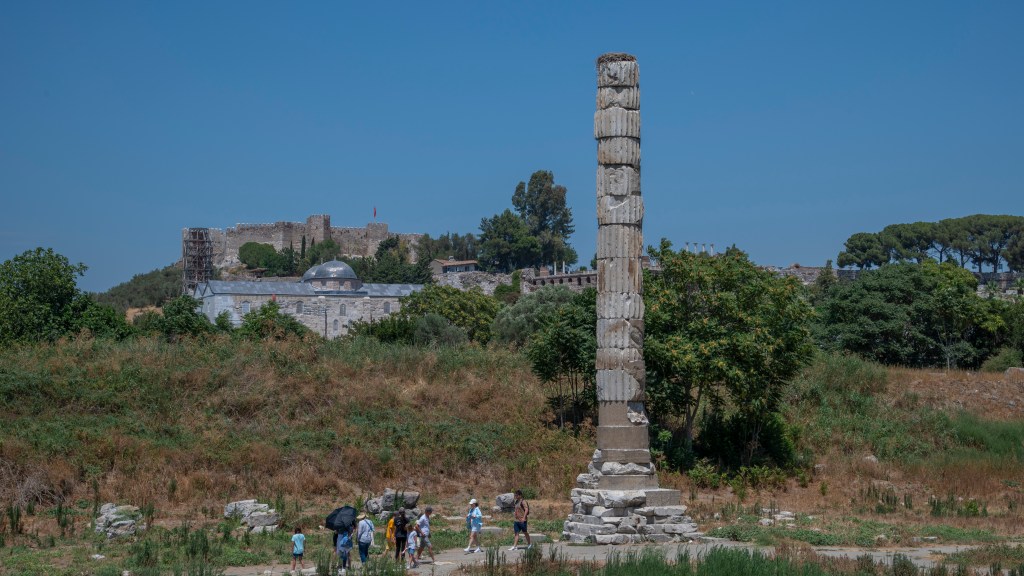
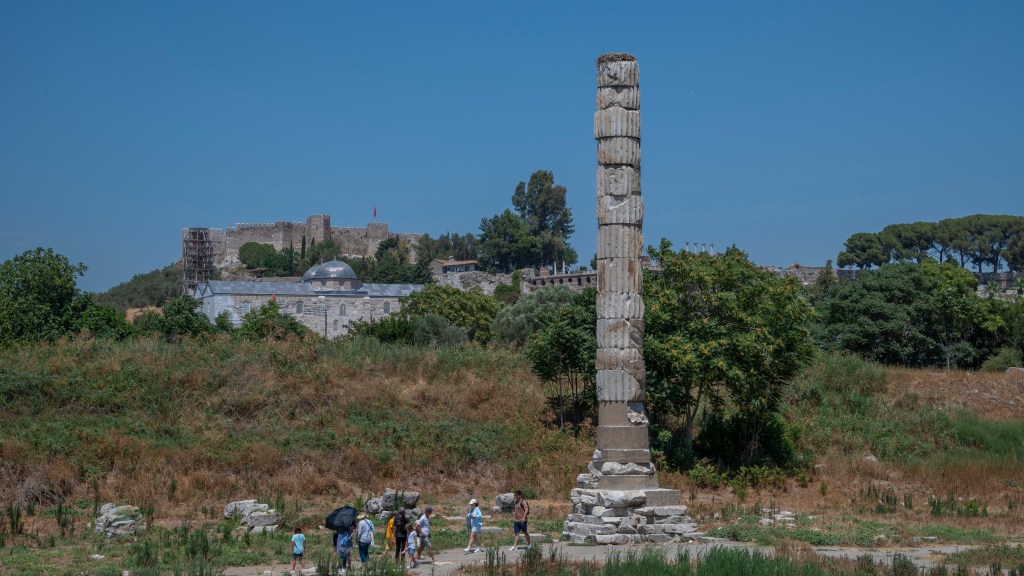
The ruins of the Temple of Artemis was extremely underwhelming until our guide pointed out that in one view you could see a pagan temple, a mosque and a Christian church (Basilica of St John). Pretty impressive really and more so when you learn that materials from the temple were used on the Basilica and then used in the Mosque.
Two things can be taken from all of this. One, magnificent example of re-use. Secondly, although it is suggested that Türkiye is an open religious country, any faith comes a distant second to Islam.
IZMIR
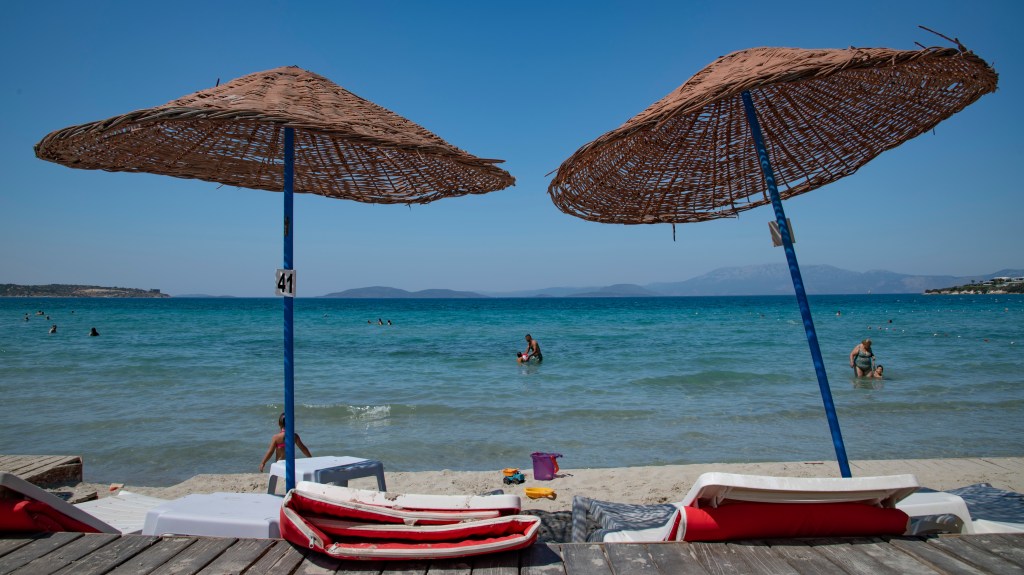
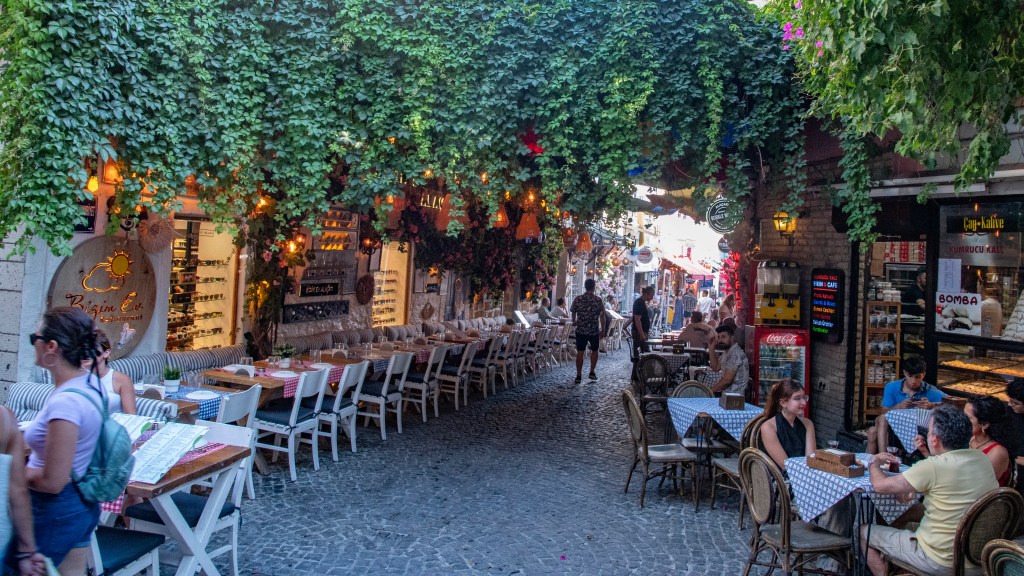
My last 2 days in Türkiye were in Izmir. I visited Cesme first visiting the castle, finally finding a beach with deck chairs and umbrellas available and lastly the absolutely gorgeous streets of Alacati. It was a steaming hot and the swim was well needed and it meant that I can now add the Aegean Sea to the places I have swum.
Alacati is stunning but also very touristy. It is very “Instagram” and the shop owners do everything to make their shop front or restaurant worthy of a photograph. There is a swing there which, to be honest, is way out of place but gets lines of people waiting to take the same photo thousands of others have taken. It did make me rethink some of the photos I take I must say.
The next day was even hotter and I hid for most of the day inside. Came out to visit a Roman ruin in the heart of the city. It was still very much an active archaeology site and I reckon in a few years when they rebuild bits of it it will look pretty impressive.
All up Türkiye was an experience I enjoyed a lot. My preconceptions were nearly all quashed. It has its dodgy elements but so does everywhere. They have a strong take on honour which I guess stems from their history particularly their imperial history. The speech of Ataturk is a clear example of that. They are keen to keep a foot in both camps namely the Middle East and Europe but the Islam is the defining element and clearly it is what is controlling the direction of the country. The Western half I visited was a lot more liberal than Istanbul was interesting. The history there was something to behold and again it was riddled by conqueror after conqueror and many and varied occupants. But they too were occupants as the Ottomans and they weren’t exactly model rulers, as seen for example in Bosnia against the locals there and we saw what that led to in 1992-95 and to this day. One thing I didn’t answer in my time there was what would the Middle East and the world look like today if the Ottoman Empire still existed. They’d control a lot of the oil reserves but would there be unity? There’d be no Israel for starters. Iran and Iraq would be outside of the Empire and only parts of Saudi Arabia would be included. I do wonder if there’d be stability or would their power cause a different issue? I’d go back to Türkiye because there is so much more to see in Istanbul and also other nice areas but maybe I’ll wait for a bit.
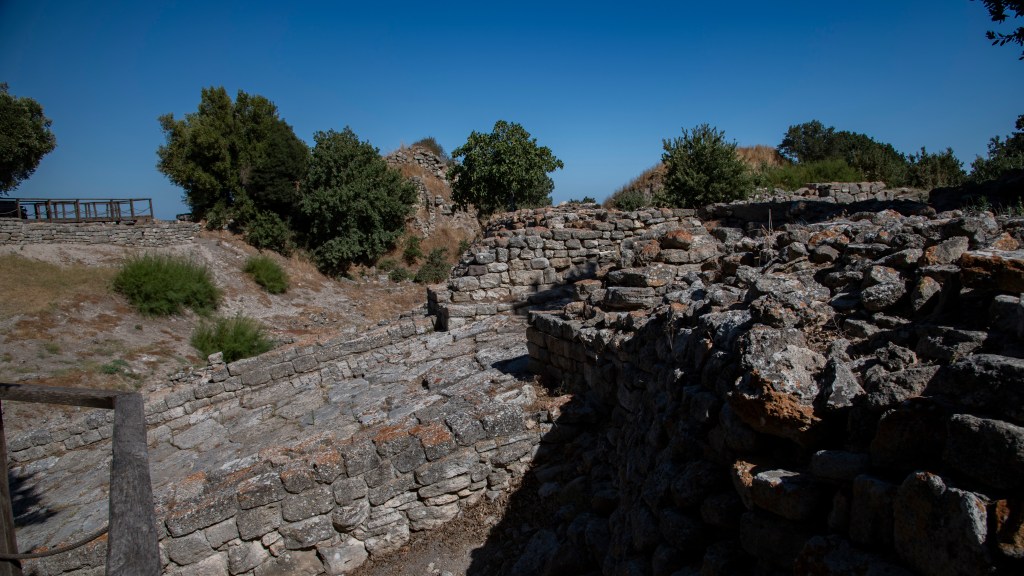
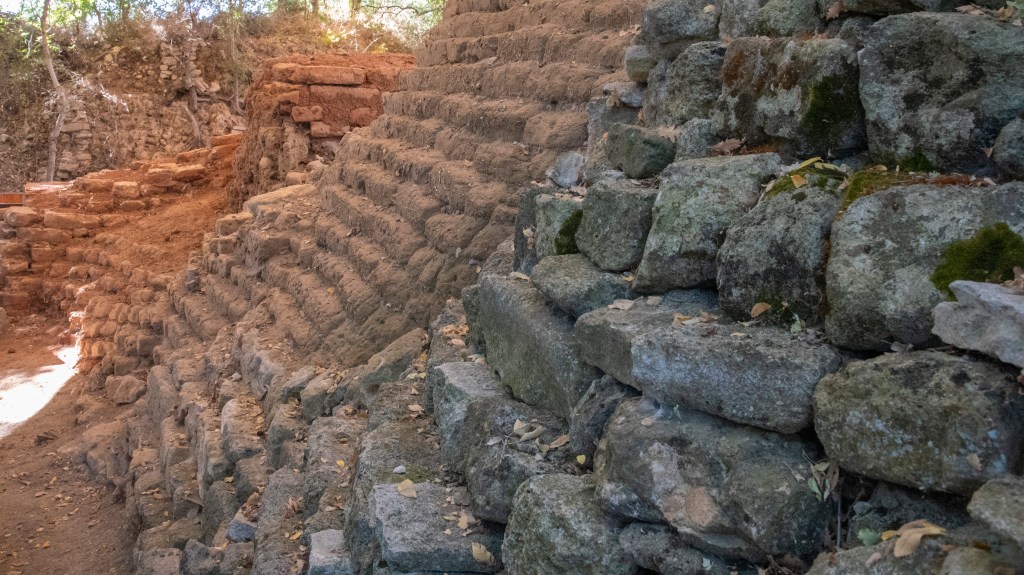
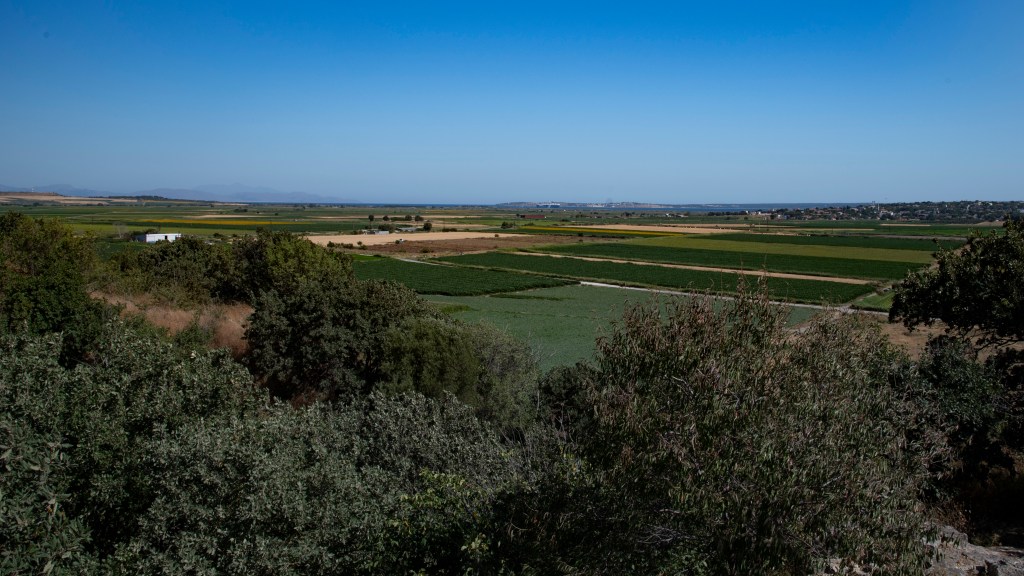
Next morning I was picked up again by a different bus and different travellers but fortunately there was one familiar face – our guide Burak. Just to prove that yesterday was not just a flash in the pan he gave us a thorough insight into the many layers of ruins in Troy.
There are 10 layers in Troy I but we focused on the seven layers of Troy II 2,500-2,200 BC. A lot of digging is still going on and new things are found all of the time. Good thing they take more time and care these days compared to the past. One so called archaeologist was so keen to get through to the older stuff that he just ploughed through and destroyed parts of the other layers.
No need to say that the Trojan Horse is pure mythology but the city of Troy was subject to numerous invasions and sieges over time. Must have been a horrible time to live. I know we still live in war time but it seems like not as often as back then.
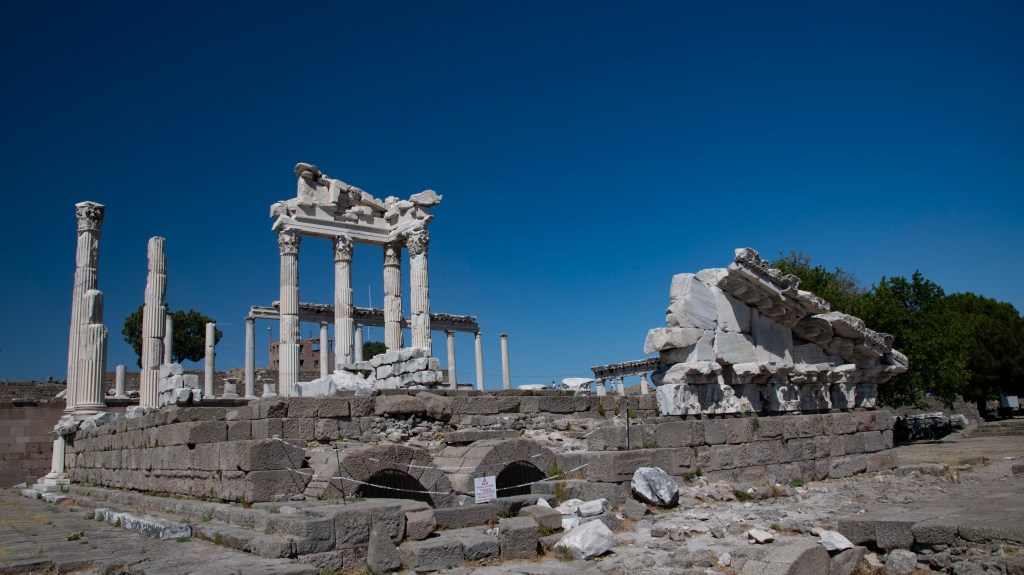
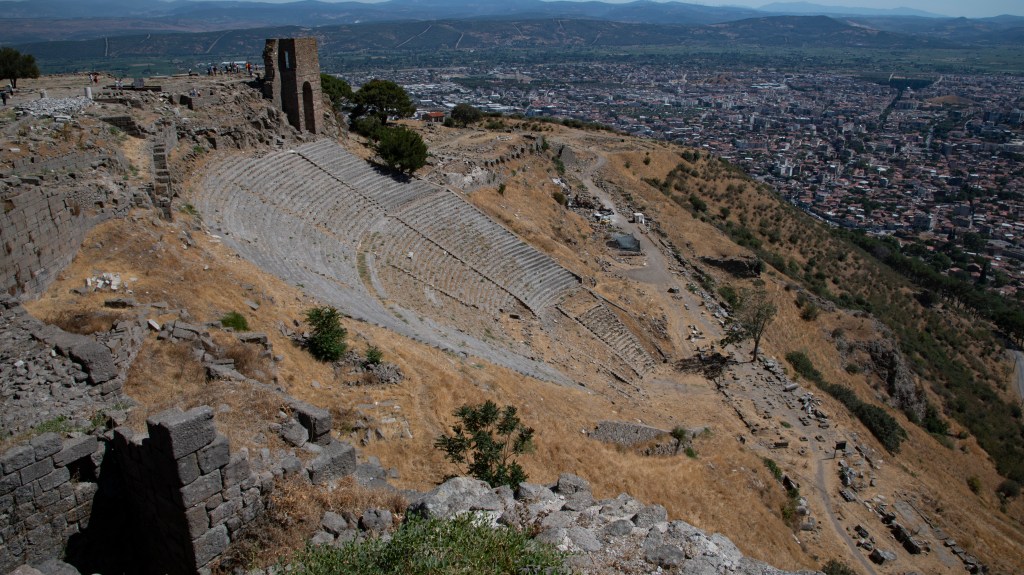
From Troy I was taken (different bus and guide) to Pergamon, an ancient Greek city perched high up on a hill above the city of Bergama more famous today as one of the 7 churches mentioned in Revelations and being referred to as “where satan lives” due to the pagan temples that are there. As far as ruined cities go this was pretty impressive. It’s as if I am going from basic to massive ruined cities (Morocco, Troy, Pergamon, Ephesus).
By this stage I was basically on my own with the guide so I got a great personal tour of this site. The wind was howling and the only way up is by cable car and the four of us in the car were nearly sick as it swayed from side to side. Four grown men shitting themselves.
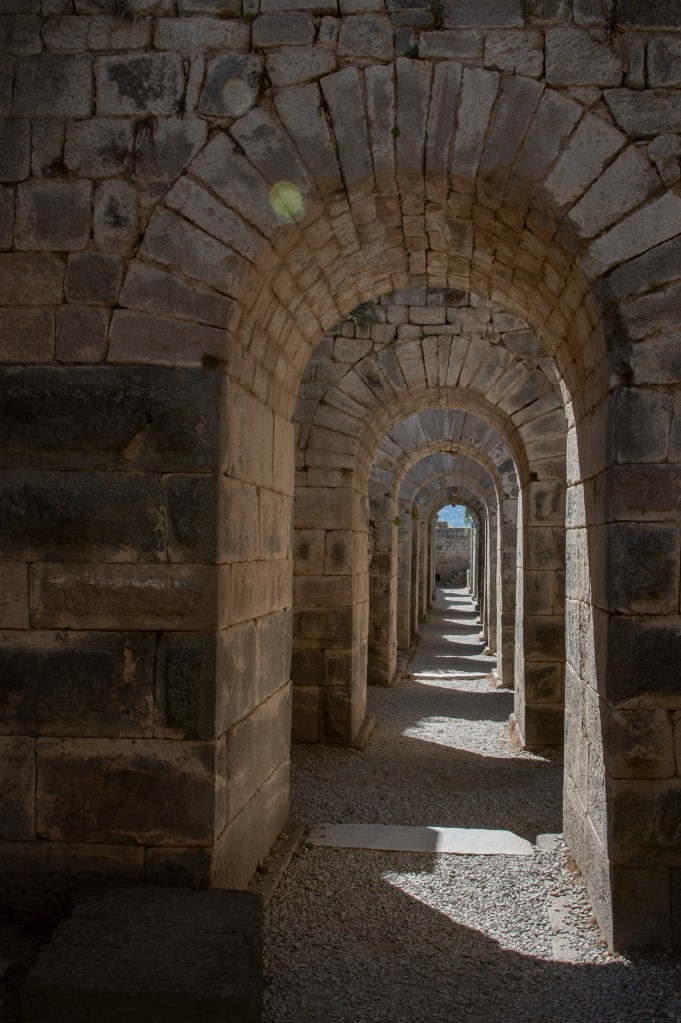
The highlights were many but the incredibly steep 10,000 seat capacity theatre was pretty cool. Also, from an engineering and construction perspective, the foundations they built to level off the ground in order to build the amazing structure above it. But truly amazing was the fact that they dragged a lot of the materials up the enormous hill. And then there was the amazingly advanced engineering that transported water from miles away to this hilltop city.



































 Altamira Sound & Vision Productions